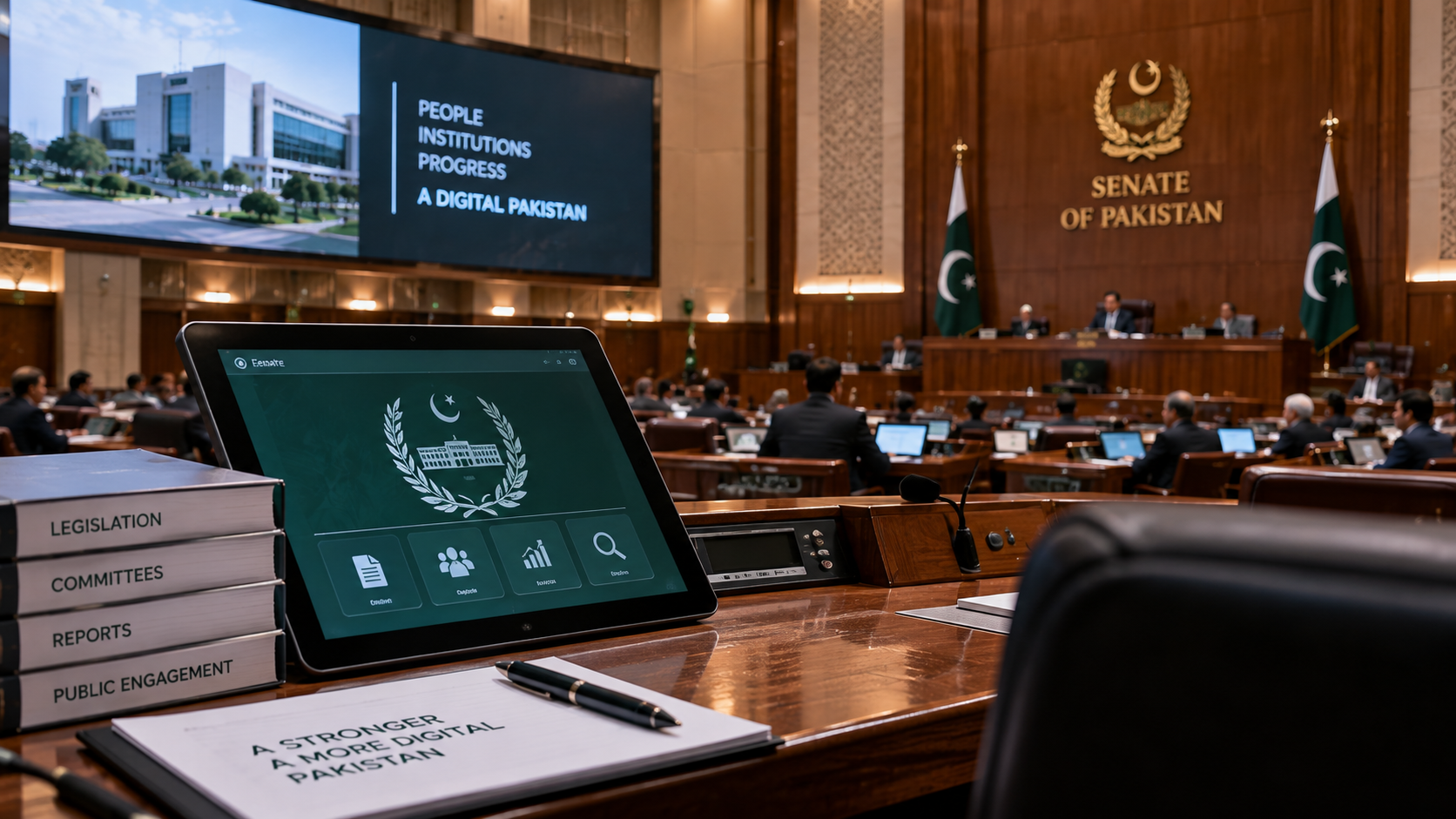
Pakistan’s Senate has launched a new mobile application as part of a wider effort to digitise parliamentary operations and make official information more accessible.
The application was launched at Parliament House in Islamabad on Tuesday, with officials describing it as another step in the Senate’s transition from traditional administrative processes toward digital systems.
The Senate’s IT Department developed the application.
What is the Senate app for?
According to the Senate Secretariat, the application is intended to support the modernisation of parliamentary working procedures and improve the dissemination of parliamentary information.
The initiative forms part of a broader digitisation programme within the upper house of Parliament.
The Senate Secretariat has already adopted an electronic office system, or e-office, as institutions across the federal government increasingly move administrative processes online.
Officials say digital systems can reduce unnecessary procedures, save time and improve access to information.
Part of Pakistan’s wider digital-government push
The launch also fits into Pakistan’s broader Digital Nation agenda.
Federal Minister for Information Technology and Telecommunication Shaza Fatima Khawaja said the government’s digital transformation programme covers three broad areas: the digital economy, digital society and digital governance.
Under the Digital Nation Pakistan Act, the government has established the Pakistan Digital Authority as part of an effort to coordinate the country’s transition toward digital public infrastructure and services.
Digitisation is increasingly extending beyond ministries traditionally associated with technology.
Government institutions are introducing electronic office systems, digital platforms and other tools intended to replace or streamline paper-based processes.
Why it matters
Parliament produces large amounts of information, including legislation, committee work, proceedings and other official records.
Making that information easier to access digitally could benefit lawmakers, journalists, researchers and members of the public.
Digital systems can also make institutional processes faster and easier to track.
However, launching an application is only the first step.
The practical value of the Senate app will depend on how useful its features are, how reliably information is updated and whether parliamentarians and the public actually adopt it.
Security, privacy, accessibility and long-term maintenance will also matter as more government processes move online.
Technology and transparency
Digital tools can potentially improve transparency by making authentic parliamentary information easier to obtain directly from official sources.
That is particularly relevant in an environment where political information can circulate rapidly through social media without context or verification.
The Senate already uses its website, social-media platforms and digital archives to distribute information about parliamentary activities.
A mobile application gives the institution another channel through which that information can reach users.
What comes next?
The larger question is whether Pakistan’s government institutions can move beyond individual apps and websites toward digital services that work together reliably.
Successful digital government requires more than putting existing processes onto screens. Systems need to be usable, secure, regularly maintained and designed around the needs of the people who use them.
The Senate application therefore represents a relatively small but visible test of Pakistan’s broader push toward digital governance.
Source: Press Information Department, Government of Pakistan; Senate of Pakistan.