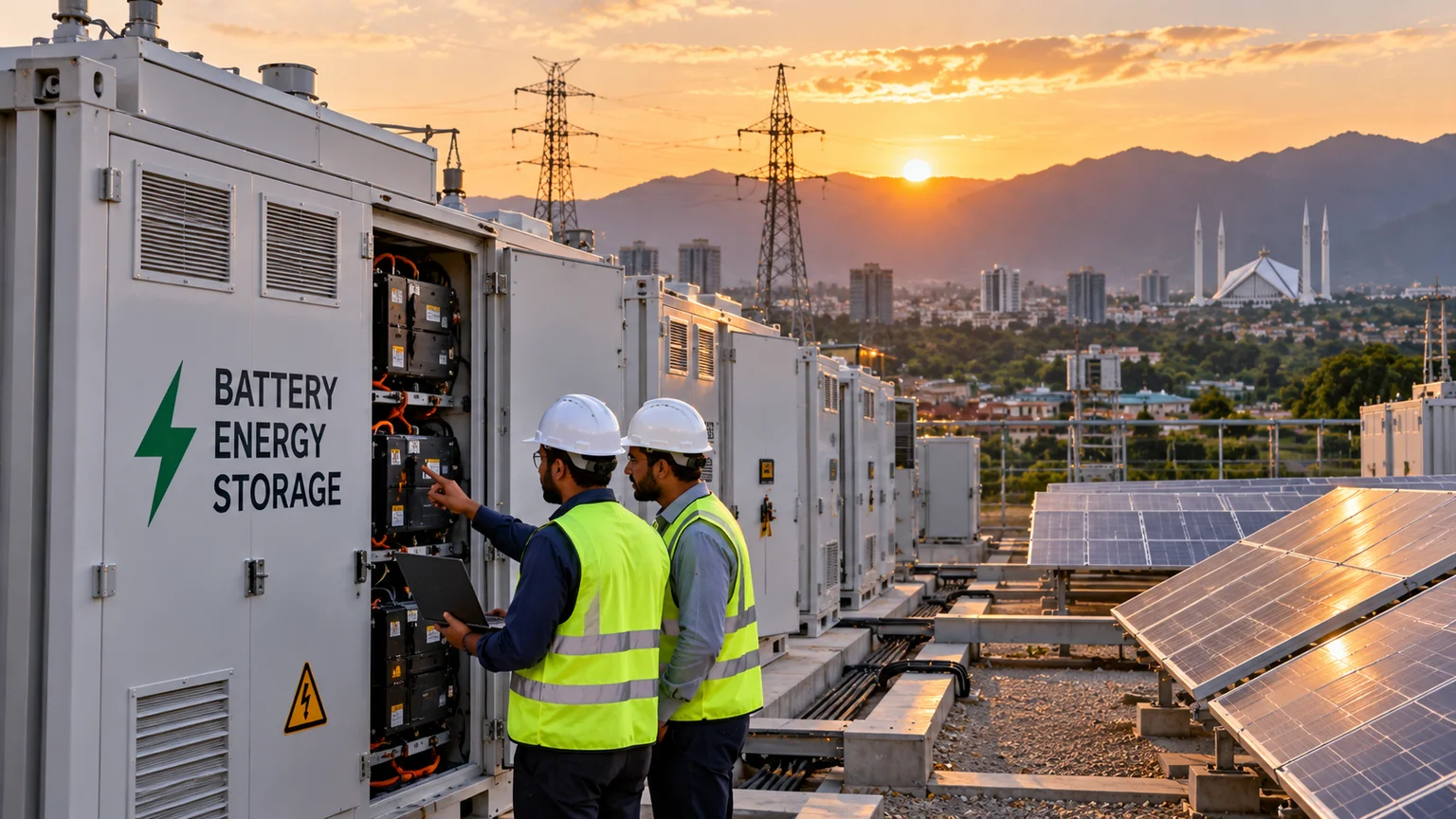
ISLAMABAD, October 30, 2026 — Pakistan’s growing use of battery energy storage systems is prompting calls for stronger safety standards, more affordable equipment and changes to electricity distribution networks as households and industries seek alternatives to expensive grid power.
The issues were discussed at a parliamentary dialogue organised by the Parliamentary Forum on Energy and Economy, where lawmakers, industry representatives and power-sector officials examined the country’s changing energy requirements.
A representative of the Pakistan Solar Association said Pakistan had imported more than 4.5 gigawatts of battery storage equipment during the first six months of 2026, compared with a reported cumulative historical figure of 9.5 gigawatts.
Participants said increasing adoption of solar panels and batteries was changing how electricity is produced, stored and consumed across the country.
Households and industrial businesses are investing in storage systems to reduce their dependence on expensive grid electricity and make greater use of power generated by solar installations.
However, lawmakers raised concerns about the quality and safety of imported batteries, the lack of adequate testing and recycling facilities, and the affordability of storage systems for lower-income consumers.
Pakistan Solar Association vice chairperson Chaudhry Uzair said taxes and customs duties on battery storage equipment amounted to approximately 35% to 40%.
During the dialogue, Power Division adviser Syed Faizan Shah said competitive tenders would be invited within 15 days for four pilot battery energy storage projects.
Each project is planned to have a storage capacity of 10 megawatt-hours, with installations proposed for electricity distribution companies serving Lahore, Multan, Islamabad and Peshawar.
Shah also said the National Electric Power Regulatory Authority (Nepra) was moving to recognise battery storage as a regulated asset, potentially allowing distribution companies to use storage systems to manage overloaded infrastructure.
The parliamentary discussion highlighted the need for coordinated policies covering equipment standards, consumer affordability, grid planning and investment as battery storage becomes a larger part of Pakistan’s energy system.