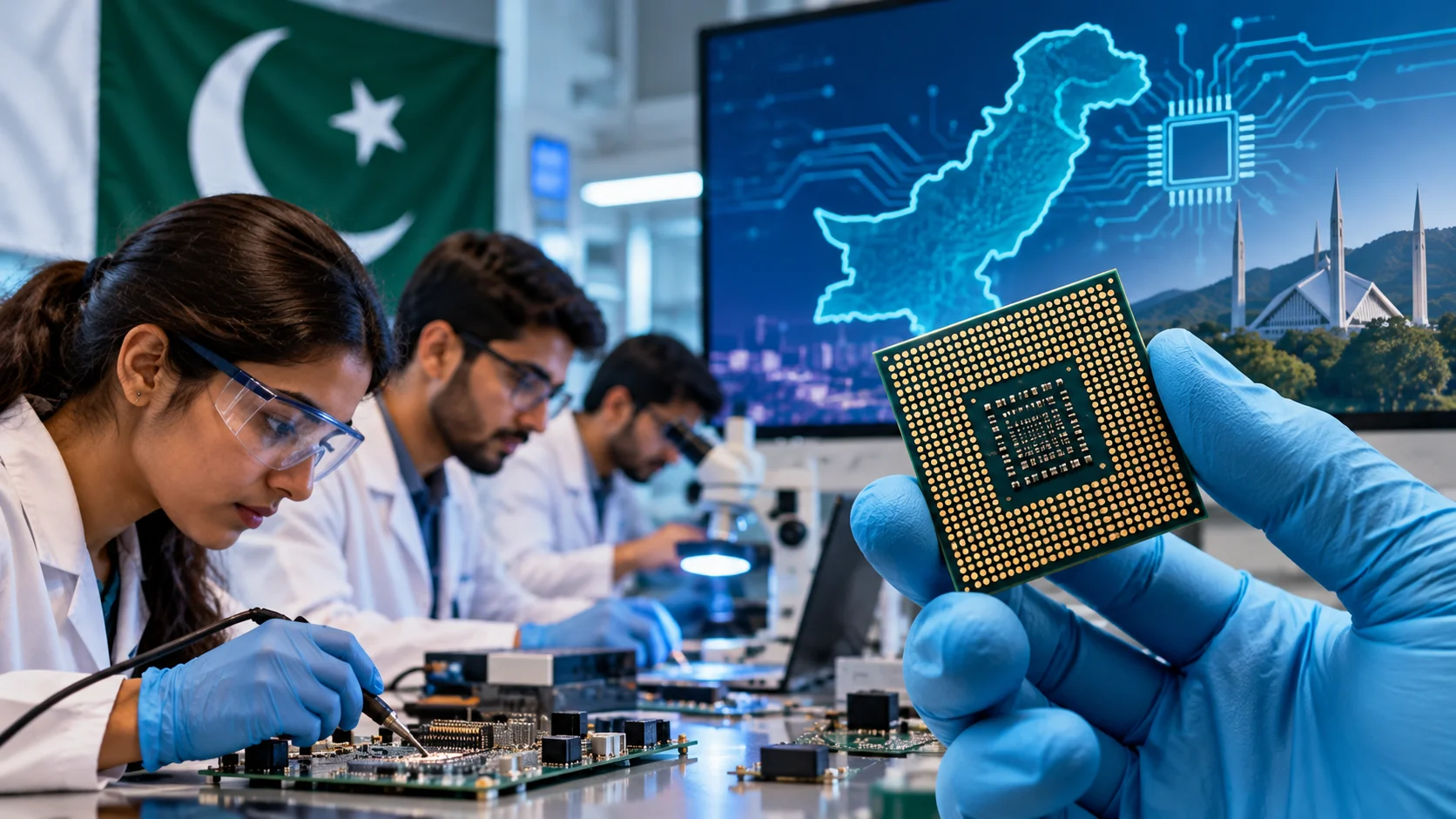
Pakistan is moving ahead with its national semiconductor skills programme, aiming to train more than 7,200 professionals by 2030 as it seeks a foothold in the international chip-design and technology industry.
The latest implementation milestone is the establishment of three regional Semiconductor Education and Research Clusters under the government’s INSPIRE initiative, which was originally launched in 2025.
The Ministry of Information Technology and Telecommunication has confirmed that NED University of Engineering and Technology has joined the programme as the lead institution for the southern region. The arrangement completes the institutional framework alongside NUST in the north and ESUPAK-UET Lahore in the central region.
Why semiconductor training matters
Semiconductors are fundamental components of smartphones, computers, telecommunications networks, industrial equipment and modern vehicles.
Although the world’s largest chip manufacturers require enormous investments in fabrication facilities, the semiconductor industry also creates opportunities in chip design, verification, testing, embedded systems and specialised engineering services.
Pakistan’s programme is primarily a human-resource and research initiative rather than an announcement of a new commercial chip-manufacturing plant.
Universities take the lead
According to the IT ministry, the current intake across the three regional clusters is expected to train 270 students.
The wider programme aims to develop more than 7,200 semiconductor professionals by 2030 through coordinated training, research and industry engagement.
The three-cluster structure is intended to distribute opportunities geographically and connect universities with a common national programme.
Its success will depend on the availability of specialised faculty, design software, laboratory resources and sustained relationships with companies that can employ trained graduates.
From training targets to industry opportunities
Pakistan has developed an export-oriented software and IT services industry, but semiconductor engineering requires a different set of technical capabilities.
Graduates need practical exposure to industry tools, verification processes and international design standards if training is to translate into commercial work.
The programme could eventually help Pakistani engineers compete for specialised international assignments and encourage local technology companies to expand into higher-value services.
The next meaningful measures of progress will be student completion rates, industry placements, research output and whether Pakistani firms secure real semiconductor-related business.
Sources: Ministry of Information Technology and Telecommunication, announcement on the completion of the National Semiconductor Cluster Framework; Dawn and Business Recorder reporting on the original INSPIRE launch.