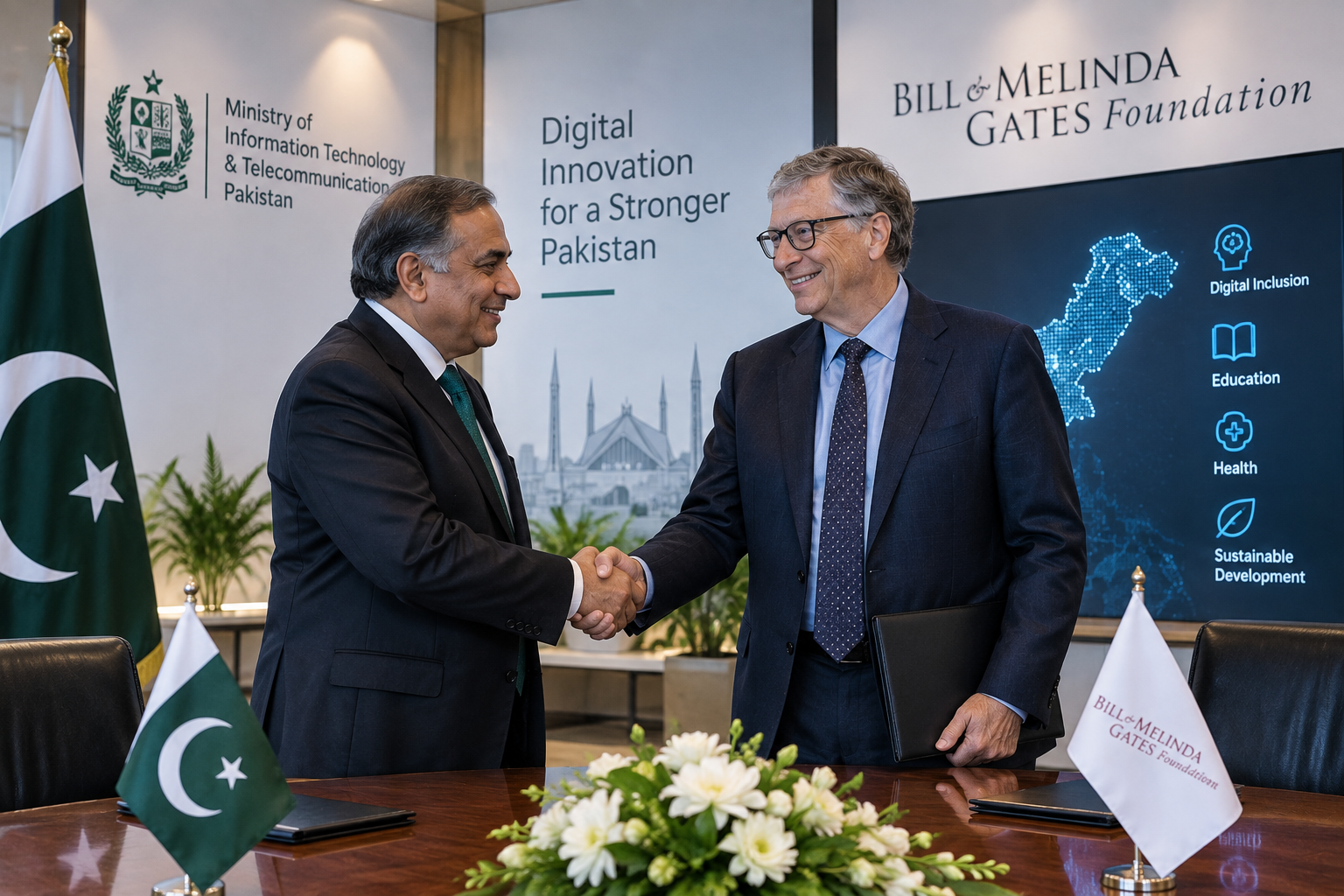
Pakistan’s IT ministry and the Gates Foundation have agreed to expand cooperation on artificial intelligence, data systems and digital services, according to an official account of their September 10 meeting.
The discussions in Islamabad also covered financial inclusion, health technology and skills development. The announcement sets out areas for collaboration without identifying a new public application, a project budget or a launch timetable.
What was discussed
The foundation delegation met the IT ministry as Pakistan continues work on its Digital Nation agenda. The published account describes an intention to deepen technical cooperation rather than a completed procurement or a service becoming available to users.
A separate Finance Division meeting the same day addressed how better information flows and digital transaction records could support small-business financing. Foundation representatives expressed interest in approaches that assess a business’s cash flow when considering credit.
That discussion is relevant to retailers and small enterprises seeking finance, but it does not mean a new lending product has opened. No application process for such a product was specified in the account.
The systems behind digital services
The foundation’s explanation of digital public infrastructure describes reusable systems for identity, payments and data exchange. These provide common functions that different services can use, rather than requiring every service to build its own separate foundations.
For readers, the distinction is between an individual app and the underlying systems that help services connect. A payment system, for example, can be useful across several providers and types of transaction. The foundation’s explanation links this approach to access to public services and economic opportunities.
The page is marked as material about a prior initiative. It is useful background on the concept, rather than evidence of a newly funded programme in Pakistan.
Why access and usability matter
In its financial-inclusion strategy, the foundation identifies practical conditions for effective payment services: broad access, reliability, affordability, usefulness and sustainable operation by providers.
It also stresses interoperability, meaning that customers can transact across providers. A service that works only inside a narrow network can offer less practical value than one that connects to the accounts and payment methods people already use.
The strategy highlights the importance of accessible ways to move between cash and digital balances, as well as protections for consumers. These are relevant considerations when assessing future Pakistani projects, rather than results established by this week’s meetings.
What happens next
The next substantive development would be a defined project with named implementing partners, resources, a timetable and clear user access arrangements. Evidence of use and service performance would then allow its impact to be assessed.
For now, the confirmed development is the agreement to pursue wider cooperation. The announcements do not establish that a new AI or financial service is ready for public use.
Sources
- IT ministry via PID — Gates Foundation delegation meeting, PR No. 108, September 10, 2026: agreed cooperation areas.
- Finance Division via PID — Gates Foundation meeting, PR No. 113, September 10, 2026: digital information and SME financing discussions.
- Gates Foundation — Digital public infrastructure, background explanation marked as a prior initiative; consulted September 11, 2026.
- Gates Foundation — Inclusive Financial Systems, payment-system design and access priorities; consulted September 11, 2026.