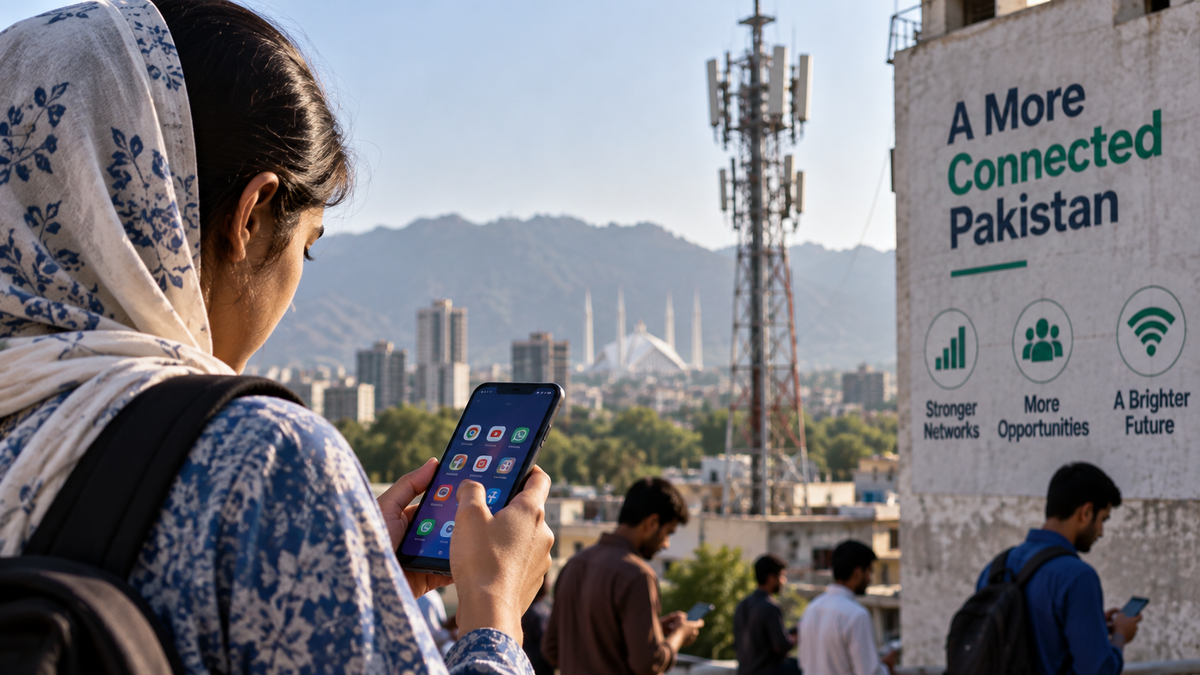
Around 140 million people in Pakistan live in areas covered by mobile broadband networks but still do not use mobile internet, according to new GSMA estimates that highlight the country’s large digital usage gap.
The figure matters because it changes the way Pakistan’s connectivity problem is understood. For many people, the obstacle is no longer simply the absence of a network signal. Mobile broadband infrastructure is already available where they live, but they remain offline.
Earlier GSMA data for 2024 showed mobile internet use at about 29 per cent of Pakistan’s population while broadband coverage reached roughly 81 per cent. The difference between coverage and actual use points to barriers such as smartphone affordability, data costs, digital skills, relevant online services and concerns about safety or usefulness.
The latest State of Mobile Internet Connectivity report places Pakistan among the countries with the largest absolute numbers of people in this position. Pakistan’s roughly 140 million covered-but-unconnected population is similar in scale to Nigeria’s, while India has by far the largest usage gap at around 710 million people.
Globally, about 3.4 billion people are not using mobile internet. The GSMA estimates that the usage gap — people covered by mobile broadband but not using it — represents about 38 per cent of the world’s population, compared with a coverage gap of only around 3 per cent.
That distinction has major policy implications.
Building more towers remains necessary in areas that still lack service, particularly remote and difficult terrain. But network expansion alone cannot bring most of the remaining offline population onto the internet if they already live within coverage.
For Pakistan, greater adoption will also depend on whether households can afford capable smartphones and regular data packages, whether people have the skills and confidence to use digital services, and whether those services provide enough practical value in education, work, finance, commerce and communication.
The economic stakes are significant. Wider mobile internet use can expand access to digital payments, online work, e-commerce, government services and information. It can also broaden the market for Pakistan’s technology and telecom industries.
The 140 million figure therefore represents both a weakness and an opportunity. Pakistan has already built network coverage for a large share of these people. The harder next step is turning available connectivity into connectivity that people can actually afford, trust and use.