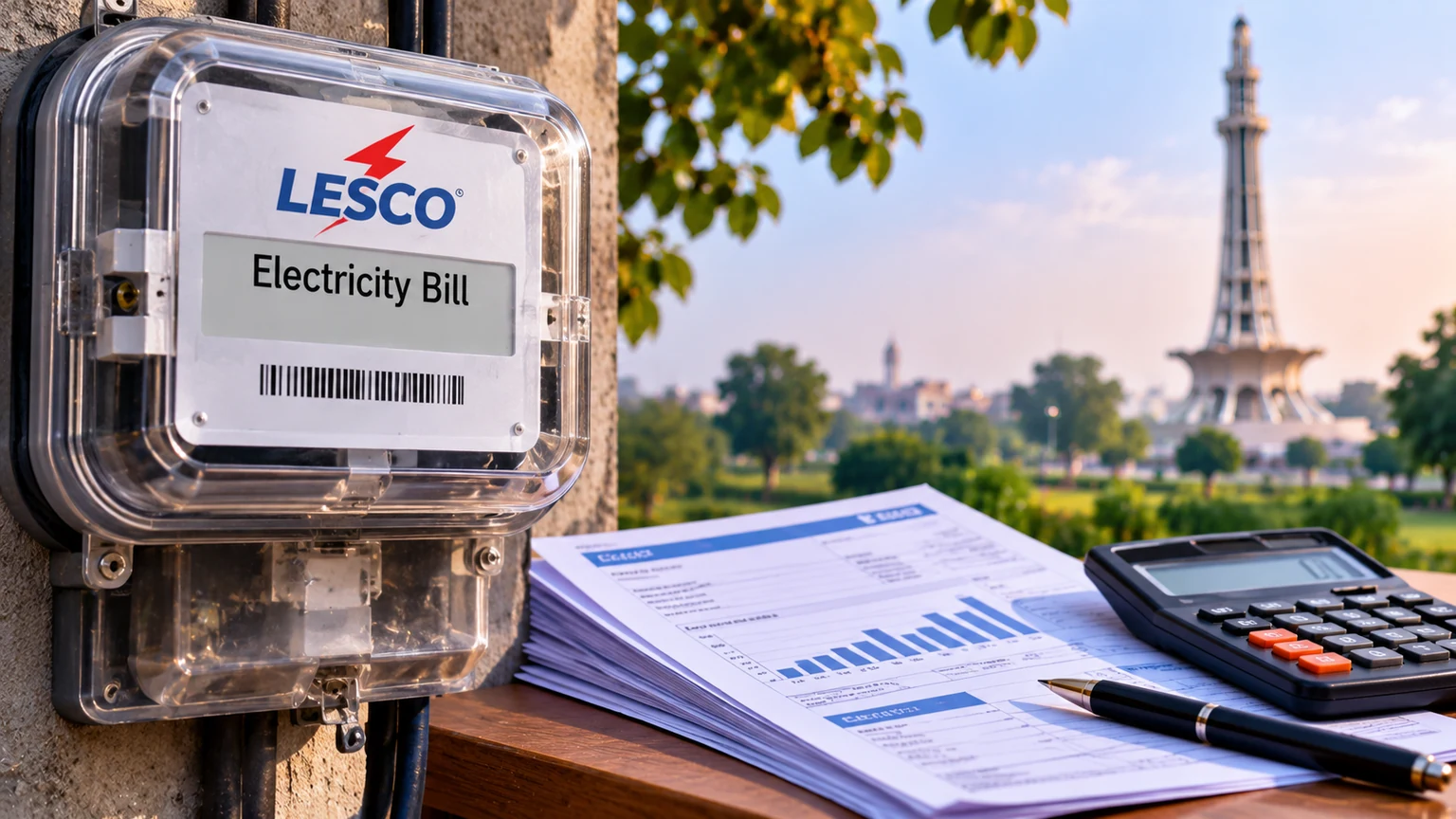
LAHORE, November 1, 2026 — A joint committee of the Punjab Assembly has recommended a forensic examination of electricity billing by Lahore Electric Supply Company (LESCO) amid concerns about excessive charges and the handling of consumer complaints.
The recommendations follow a meeting held on October 6 under the chairmanship of Punjab Assembly Speaker Malik Muhammad Ahmad Khan.
Lawmakers raised concerns about disputed electricity bills, difficulties obtaining new meters and the treatment of consumers affected by power outages.
The proposed forensic audit would seek to establish why certain bills were unusually high, whether billing records were handled correctly and where responsibility should lie if irregularities are confirmed.
A forensic examination differs from a routine billing review because it can involve detailed scrutiny of records, calculations and the procedures used to generate charges.
The committee’s concerns also extended to the wider relationship between electricity distribution companies and consumers.
Members questioned whether customers who pay their bills regularly were being exposed to costs associated with electricity theft and operational losses elsewhere in the distribution system.
The committee recommended stronger arrangements for investigating complaints and resolving disputes over billing, disconnections and restoration of supply.
Electricity supply interruptions were another major issue.
Lawmakers called for better advance notification of planned load-shedding and raised concerns about lengthy or unexpected outages.
The discussions also covered the condition of electricity distribution infrastructure, including potentially dangerous installations and procedures for investigating accidents.
Pakistan’s National Electric Power Regulatory Authority (NEPRA) maintains a Consumer Service Manual setting out obligations and procedures for electricity distribution companies.
The regulator also publishes decisions involving disputes between LESCO and individual consumers, demonstrating the importance of formal review mechanisms when disagreements cannot be resolved directly.
Separately, the federal government’s privatisation programme includes LESCO. In August, the Privatisation Commission announced that LESCO and Multan Electric Power Company had been designated major privatisation transactions.
The billing concerns therefore arise at a time when the future ownership and management of electricity distribution companies is also under consideration.
The next significant developments will be the scope of any formal investigation, the publication of its findings and the measures taken to correct verified billing problems.
For consumers, the central question is whether the proposed scrutiny leads to more accurate bills and an effective process for resolving complaints.