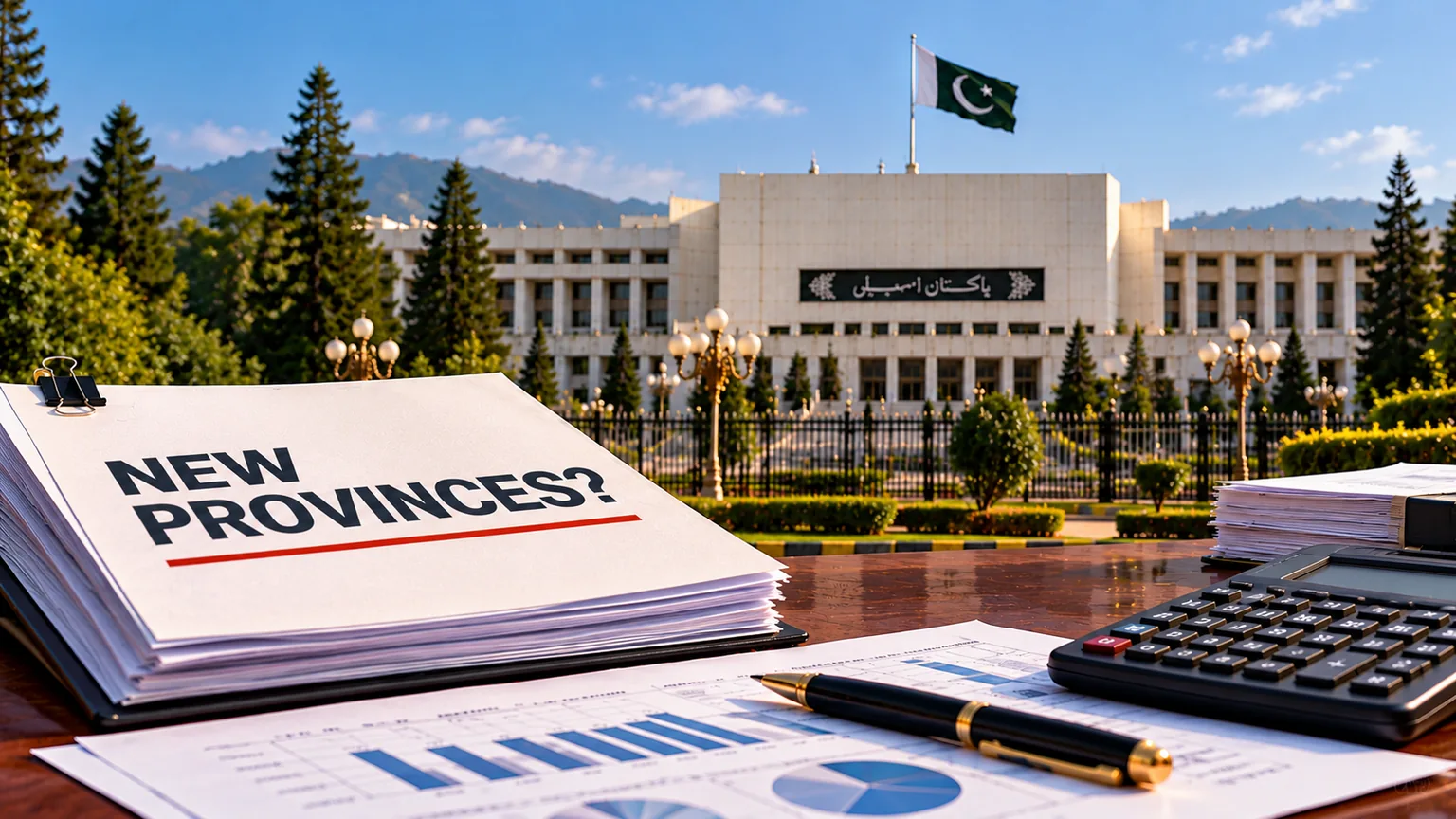
ISLAMABAD, October 30, 2026 — Creating additional provinces in Pakistan could impose substantial recurring costs on public finances, according to a new assessment by the Policy Research Institute of Market Economy (PRIME).
The think tank has estimated that establishing two additional provinces in Punjab could require approximately Rs47 billion to Rs57 billion in annual recurring expenditure.
A more extensive restructuring, under which 30 administrative divisions were converted into provinces, could raise the estimated annual cost to between Rs609 billion and Rs730 billion.
The findings were presented in PRIME’s October 2026 analysis of the financial implications of creating new provinces.
The assessment examined the administrative expenses associated with provincial governments, including the offices of governors and chief ministers, provincial assemblies, secretariats, high courts and other essential institutions.
According to the study, establishing a new provincial administration could cost approximately Rs22.4 billion to Rs25.9 billion annually, depending on the assumptions used.
The report also considered how federal resources distributed under the National Finance Commission (NFC) framework might be divided among a larger number of provinces.
PRIME warned that creating more provincial governments would not automatically increase the total resources available for public services.
Smaller provinces could face particular financial difficulties if the cost of maintaining their administrations consumed a significant share of their allocations.
The debate over new provinces has often focused on representation, administrative access and the difficulties residents face when government services are concentrated in distant provincial capitals.
Supporters of smaller administrative units argue that bringing government institutions closer to communities could improve responsiveness and local development.
However, PRIME’s analysis suggests that these potential benefits should be weighed against the continuing costs of additional provincial institutions.
The think tank recommended a detailed financial assessment before constitutional or legislative changes are pursued.
It also urged policymakers to consider strengthening local governments as an alternative way to improve public service delivery.
The findings add a fiscal dimension to the continuing discussion over provincial restructuring in Pakistan.
Any decision to create new provinces would require political and constitutional consideration beyond the financial estimates presented in the report.