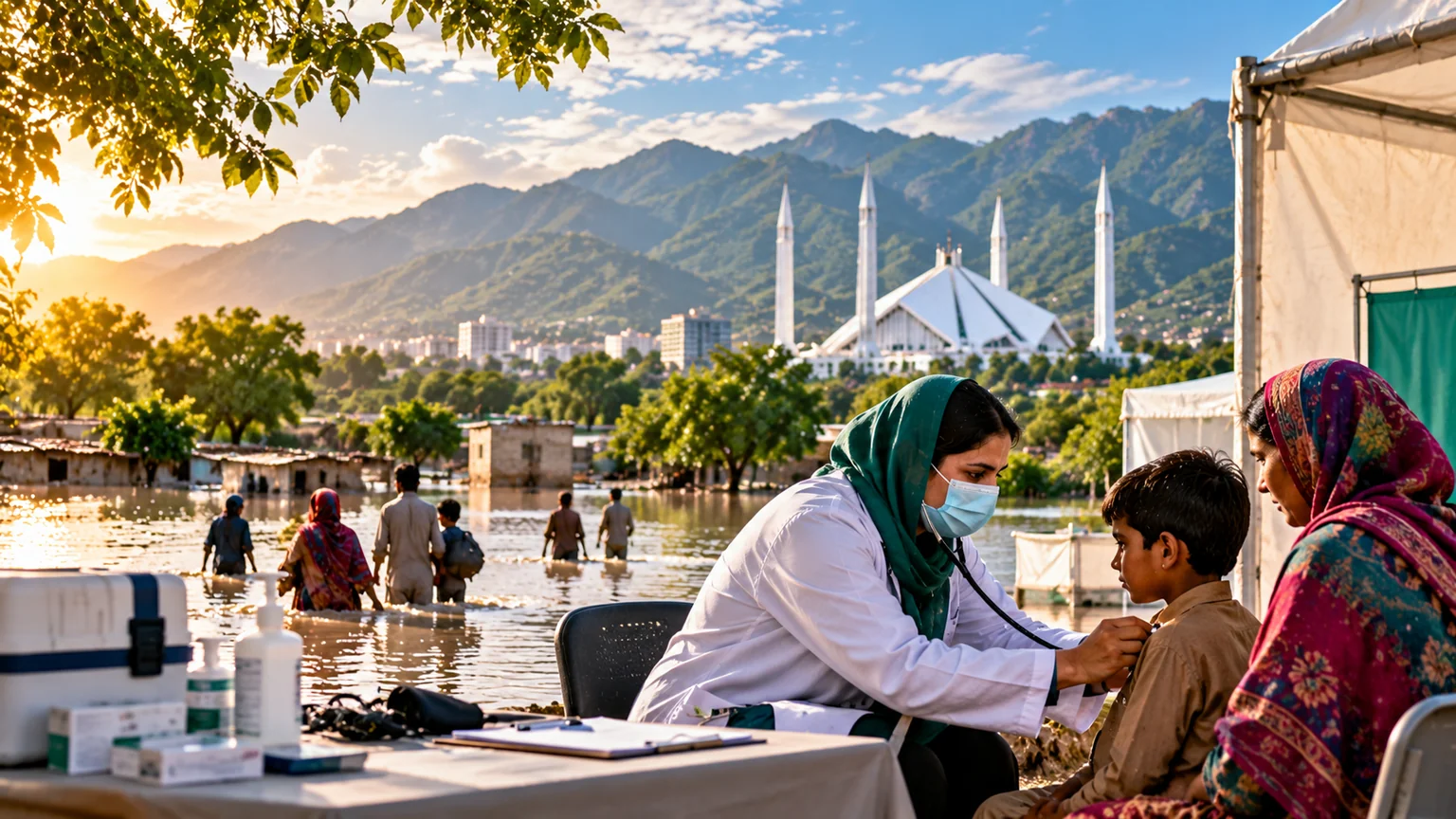
ISLAMABAD, October 30, 2026 — Health and environmental specialists have urged Pakistan to strengthen its disaster preparedness and healthcare systems following a major international report warning that climate change is placing growing pressure on public health.
The 2026 Lancet Countdown on Health and Climate Change, developed in collaboration with the World Health Organization, found that the health effects of rising temperatures and other climate-related hazards are increasing faster than the global response.
According to the report, average annual heat-related deaths worldwide have risen by nearly 36 percent in the years following the Paris Agreement compared with the preceding decade.
Heat was associated with an estimated 710,000 deaths globally in 2023, with more than 70 percent of that burden attributed to human-caused climate change.
The report also identified worsening drought conditions, increased exposure to extreme water-related events and substantial economic losses associated with heat.
Speaking to Dawn, former Punjab health minister Professor Dr Javed Akram said Pakistan needed to move away from a largely reactive approach to disaster management.
He called for stronger heat-health action plans, effective early-warning systems, climate-resilient hospitals and improved disease surveillance.
Akram also emphasised the need for safe water and sanitation, alongside dedicated funding for healthcare systems capable of coping with climate-related emergencies.
Former special assistant to the prime minister on health Dr Zafar Mirza raised similar concerns about the effects of extreme heat, flooding, deteriorating air quality and other environmental hazards on health and essential services.
He called for better coordination among the health, climate, water, energy and finance sectors.
Pakistan’s experience of the 2022 floods has demonstrated how extreme weather can disrupt healthcare access, damage infrastructure and increase the risk of waterborne disease and malnutrition.
Environmental specialist Dr Muhammad Irfan Khan also argued that Pakistan’s exposure to climate disasters should receive greater attention in international climate-health discussions.
The Lancet Countdown report called for climate change to be recognised and addressed as a global health emergency, with greater investment in adaptation and resilient health systems.
For Pakistan, the experts’ recommendations focus on preparing hospitals, communities and public-health services before extreme weather events occur rather than relying primarily on emergency responses after disasters.