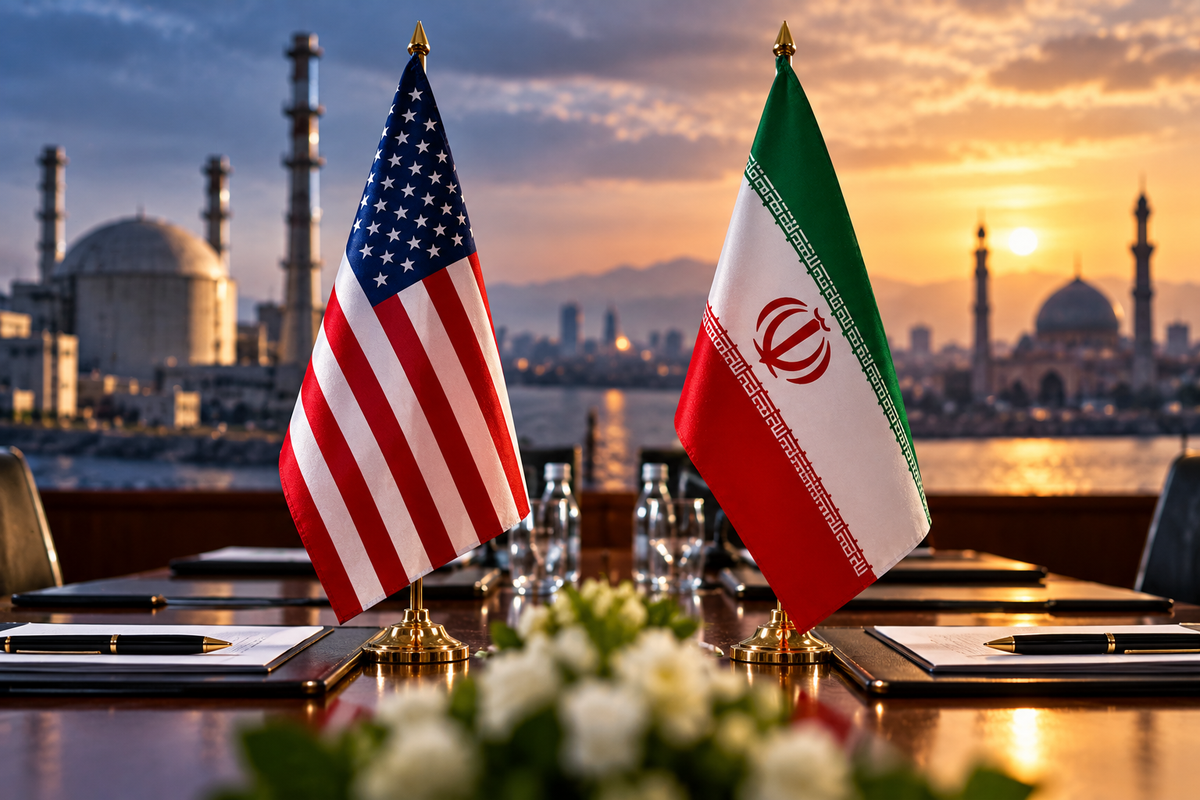
United States and Iranian officials have held separate discussions with mediators in a renewed attempt to find a negotiated route out of the seven-month conflict, with talks focusing on an amended Iranian proposal.
Reuters reported that the latest diplomatic effort involves indirect engagement rather than direct US-Iran negotiations. Officials from the two sides have been speaking separately with mediators, while Iranian Foreign Minister Abbas Araqchi remained in New York awaiting a formal US response.
The discussions centre on a revised version of an Iranian proposal presented during the United Nations General Assembly period. Elements reported as part of the proposal include steps concerning hostilities, sanctions, frozen Iranian assets, the US blockade, the Strait of Hormuz and renewed nuclear negotiations.
Those elements remain proposals under discussion. No agreement has been announced on sanctions relief, frozen assets, the reopening of the strait or Iran’s nuclear programme, and the terms should not be treated as settled.
US President Donald Trump publicly rejected an earlier version of the Iranian proposal but also indicated that diplomatic contacts could continue. Reuters reported that US officials had remained in communication with mediators.
The talks come against the backdrop of a conflict that has disrupted energy markets and shipping across the region. Restrictions affecting the Strait of Hormuz have had consequences for crude oil and liquefied natural gas flows, increasing the economic stakes of any diplomatic progress.
Previous attempts to establish ceasefires have failed, adding to uncertainty around the current initiative. The existence of renewed mediation therefore represents a diplomatic development, but not evidence that an agreement is imminent.
Iran’s proposal has linked an end to hostilities with wider economic and security issues, while the United States has maintained demands concerning Iran’s nuclear activities and other aspects of the conflict. The distance between those positions remains a central obstacle.
For Gulf states and energy-importing countries, the talks are being watched closely because any durable arrangement affecting Hormuz could have consequences for shipping costs, oil prices and LNG availability.
Pakistan also has a direct interest in regional stability because of its border with Iran and its dependence on imported energy. Pakistan has repeatedly supported peaceful dialogue, while regional disruptions have contributed to higher energy costs and uncertainty around trade routes.
The latest contacts should therefore be understood as an attempt to keep negotiations alive through intermediaries. They have created a channel for further discussion, but the reported proposals remain subject to negotiation and neither side has announced a final ceasefire or comprehensive settlement.