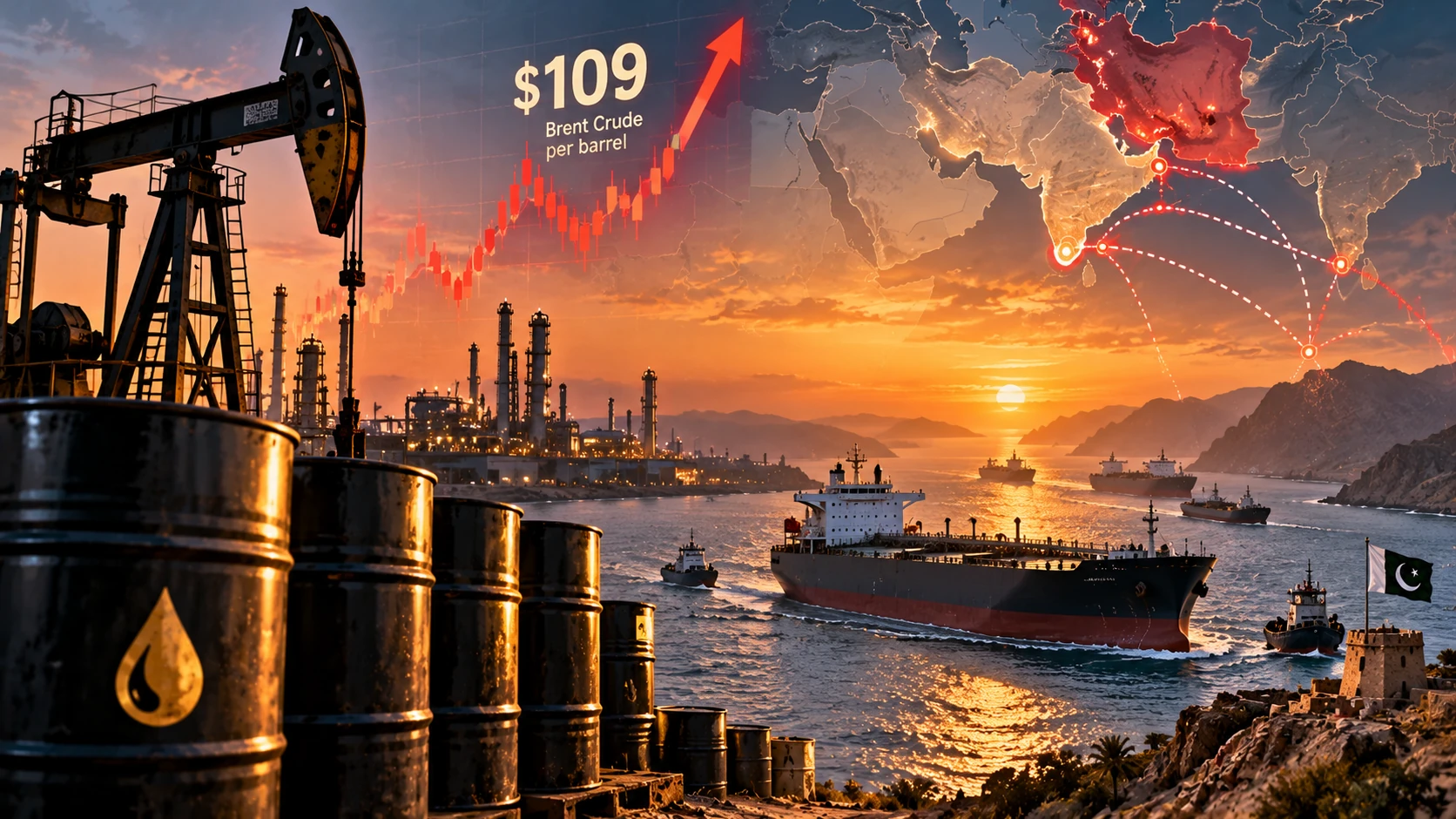
Oil prices rose above $109 per barrel on Wednesday as renewed threats to shipping routes and energy infrastructure in the Middle East heightened concerns about global petroleum supplies, adding to the cost pressures facing oil-importing economies including Pakistan.
International benchmark Brent crude futures increased by 85 cents, or 0.78%, to $109.64 per barrel at 0022 GMT, according to Reuters.
US West Texas Intermediate crude also gained 76 cents, or 0.78%, reaching $98.58 per barrel.
The gains followed reports of further maritime security incidents near important oil transportation routes and attacks affecting Saudi Arabia’s energy infrastructure.
The developments have renewed attention on the vulnerability of global oil supplies to the continuing regional conflict.
Tanker Incidents Raise Concerns Over Shipping Routes
A supertanker caught fire after reportedly striking a sea mine south of the Strait of Hormuz, according to statements attributed to Iran’s Revolutionary Guards Navy by Iranian media.
The incident came amid a series of attacks involving commercial vessels operating around the Gulf and neighbouring waters.
Shipping intelligence company Kpler reported at least 18 vessel attacks over a two-week period, illustrating the scale of the security challenges facing maritime transport.
The Strait of Hormuz is one of the world’s most important oil transit routes, connecting major Gulf producers with international markets.
Disruptions in and around the strait can affect shipping schedules, insurance costs and the movement of crude oil and petroleum products.
Security concerns have also extended towards the Gulf of Oman and the Red Sea, increasing pressure on shipping companies operating across the region.
Threats to Saudi Energy Facilities
Oil traders are also monitoring attacks involving Saudi Arabian energy infrastructure.
Yemen’s Houthi movement claimed responsibility for attacks targeting Saudi Aramco facilities at Yanbu and the Shaybah oilfield, as well as airports in Riyadh and Abha.
The claims added to market concerns about potential disruptions affecting major oil-producing and exporting facilities.
Saudi Arabia remains one of the world’s leading petroleum exporters, making the security of its production and transportation infrastructure important to international energy markets.
Oil prices had declined in the previous trading session, when diplomatic developments involving Iran and Pakistan contributed to expectations of possible mediation.
Brent settled at $108.79 per barrel on Tuesday after earlier reaching $111.99, its highest level in five months.
Wednesday’s increase reflected renewed attention to the risks surrounding energy supplies and maritime transportation.
Implications for Pakistan’s Import Costs
Higher international crude prices are particularly important for Pakistan because the country depends on imported petroleum to meet a substantial share of its energy requirements.
An extended period of elevated prices can increase the foreign exchange needed to finance petroleum imports and place additional pressure on the country’s external payments.
International crude prices are also an important component of domestic petrol and diesel pricing, alongside the exchange rate, taxes, levies and distribution costs.
For businesses, higher fuel and transportation expenses can influence production costs, freight charges and the movement of goods.
The impact is especially relevant to transport operators, agricultural supply chains and manufacturers that rely on petroleum-based fuels.
Pakistan’s domestic fuel prices are determined through the government’s pricing arrangements rather than changing automatically with every movement in international crude markets.
International Supply Conditions Remain in Focus
Beyond the Middle East, traders are also assessing petroleum inventories and refining conditions in the United States.
A Reuters survey of analysts indicated expectations that US crude inventories had fallen by approximately 800,000 barrels in the week ending October 16.
US officials have also been engaging with refiners over fuel production as tight diesel supplies contribute to higher prices.
The combination of maritime security risks, threats to oil infrastructure and developments in petroleum inventories is influencing trading across international energy markets.
For Pakistan, Brent’s movement above $109 adds significance to global oil supply conditions at a time when imported energy remains a major component of the country’s trade and foreign exchange requirements.