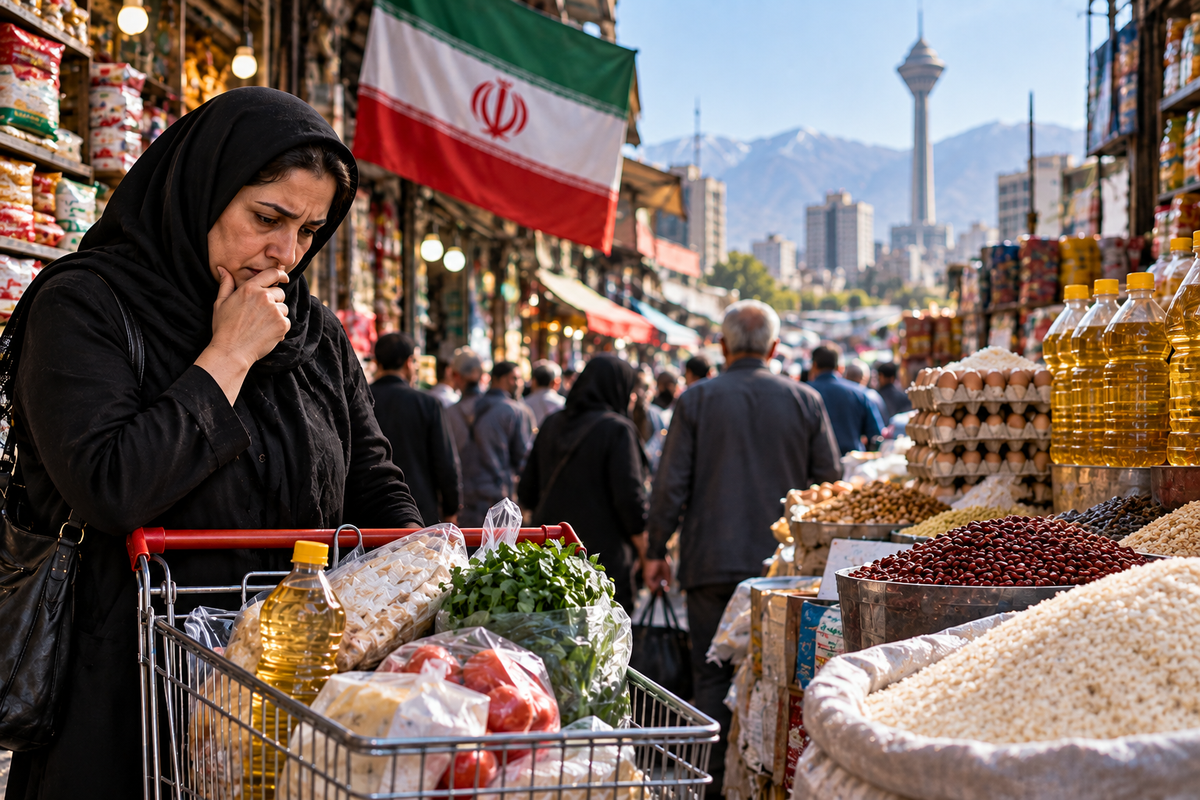
Iranian households are facing mounting economic pressure after seven months of war, with rising living costs, job losses and weaker consumer spending adding to the strain caused by restrictions on the country’s oil exports.
Reuters reporting from Iran described households cutting back on essential purchases, struggling with housing costs and, in some cases, relocating to cheaper areas as incomes fail to keep pace with expenses.
The report also documented pressure on private-sector employment and businesses as demand weakens. Some shopkeepers and employers said sales had fallen sharply, while workers described depleted savings and reduced purchasing power.
Medicine and other necessities have become increasingly difficult for some households to afford, according to the Reuters reporting. The pressure is not uniform across every part of Iranian society, but accounts from multiple cities point to a broad deterioration in household finances.
Iran’s economy was already operating under extensive sanctions before the latest conflict. The war and US blockade have added further constraints, particularly by restricting oil exports that provide an important source of foreign currency and government revenue.
Lower oil-export capacity can affect the wider economy through public finances, access to foreign exchange and business confidence. At household level, however, the effects are experienced more directly through prices, employment and the availability of goods.
The conflict has also disrupted regional transport and energy markets, complicating trade beyond Iran itself. The Strait of Hormuz has remained a central point of tension, with interruptions affecting oil and LNG movements from the Gulf.
Reuters reported that worsening economic conditions are part of the backdrop to renewed diplomatic contacts involving Iran, the United States and regional mediators. The economic strain may shape the context in which negotiations take place, but the motivations of either government cannot be reduced to household conditions alone.
The latest diplomatic effort has not yet produced a ceasefire or comprehensive settlement. Proposals involving sanctions, frozen assets, the blockade, Hormuz and Iran’s nuclear programme remain under discussion.
For ordinary Iranians, that leaves the immediate economic environment uncertain. Businesses are operating amid weaker demand, families are adjusting spending, and restrictions on energy exports continue to limit one of the country’s principal sources of external income.
The situation also carries regional implications. Iran trades with neighbouring states, including Pakistan, and instability can affect border commerce, transport routes and energy costs.
The clearest immediate development is domestic: after months of conflict, the economic burden is increasingly visible in household budgets, employment and day-to-day consumption, even as diplomatic efforts continue without a confirmed resolution.