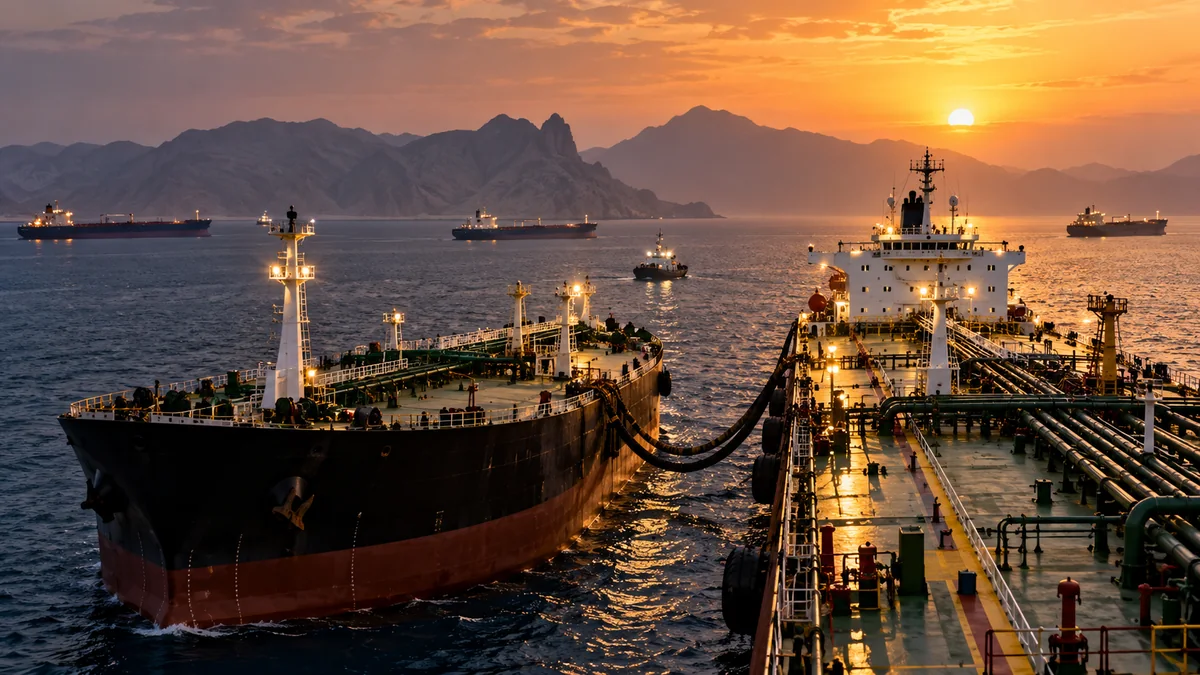
Commercial vessels transferring oil between ships in and around the Strait of Hormuz face growing security concerns amid reported threats to shipping arrangements used to keep Gulf energy exports moving during regional tensions.
The Institute for the Study of War said in an assessment reported on October 13 that Iran appeared to be targeting vessels involved in ship-to-ship oil transfers. That is an analytical assessment, not independent confirmation of responsibility for every maritime incident in the area.
Oil-transfer operations under pressure
Ship-to-ship transfers allow oil cargoes to move between vessels. Such operations can help maintain exports when conventional routes face disruption, but they also create additional logistical and security challenges.
Iranian security figure Mohsen Rezaei has made statements threatening a United States-assisted oil transport arrangement involving Gulf states. Claims about attacks and their outcomes should be treated separately from independently confirmed incidents.
The wider security situation has raised concerns for tanker operators, insurers and energy buyers. Disruption can affect shipping costs, delivery schedules and market confidence, even when the scale of physical damage remains uncertain.
Why it matters for Pakistan
Pakistan depends heavily on imported energy. Prolonged disruption in Gulf shipping could increase freight and insurance costs and complicate energy procurement. Any effect on retail fuel prices would also depend on global oil prices, exchange rates and domestic pricing decisions.
The number of vessels affected, the precise nature of threats and responsibility for individual incidents remain subject to further verification as the situation develops.
Image: Pakistan Report Illustration.