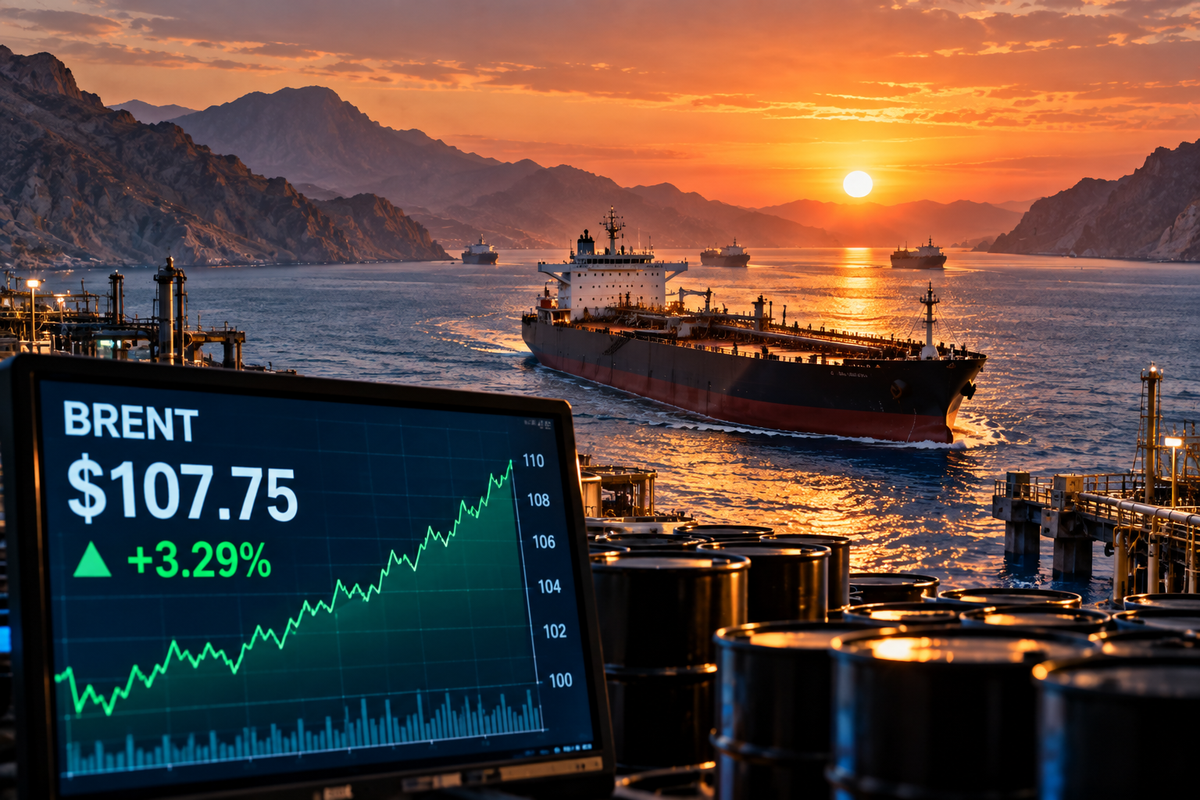
NEW DELHI — Brent crude rose more than 3% in early Monday trading as uncertainty over Iran-US diplomacy and the Strait of Hormuz restored upward pressure to oil prices after hopes for a near-term settlement weakened.
Brent futures were up $3.43, or 3.29%, at $107.75 a barrel at 05:40 GMT on September 28, according to Reuters. US West Texas Intermediate was up $2.14, or 2.32%, at $94.55 a barrel at the same point in trading.
The figures are intraday prices rather than closing levels and can change materially during the session.
Negotiations remain unresolved
The move followed US President Donald Trump’s rejection of Iran’s latest proposal for resolving the conflict and reopening the Strait of Hormuz, while further indirect talks were still expected.
Iran had presented a proposal through mediators that linked reopening the waterway to steps by Washington including easing military pressure and lifting restrictions. The United States has sought broader concessions, leaving the two sides without a final agreement.
Oil markets have reacted sharply to changes in the diplomatic outlook because the Strait is a critical route for Gulf crude, refined products and LNG.
A credible agreement that restores safer and more predictable shipping could reduce part of the geopolitical premium embedded in prices. A breakdown in negotiations, by contrast, keeps alive the possibility of further disruption to exports from Gulf producers.
Physical flows provide a counter-signal
The market is not moving on diplomacy alone. Some physical shipping indicators have improved even while the political dispute remains unresolved.
Visible Qatar-linked LNG traffic through Hormuz has increased in September after a sharp August lull, and some oil movements have also continued despite the conflict. Vessel-tracking data is incomplete because ships can turn off their transponders, but the return of visible traffic shows that the waterway is not entirely closed to commercial movement.
That creates competing signals for traders: physical flows provide some evidence of supply reaching international markets, while the unresolved conflict keeps the risk of renewed disruption unusually high.
Higher oil prices matter for Pakistan
Pakistan is a net energy importer, leaving its external account and domestic fuel costs sensitive to sustained increases in international crude prices.
A higher oil import bill can add pressure to foreign-exchange requirements and inflation, particularly when elevated crude prices are accompanied by higher freight and insurance costs. The impact on domestic retail prices also depends on exchange rates, taxation and government pricing decisions.
The latest rise in Brent comes as Pakistan is simultaneously negotiating with the IMF over its economic programme, making assumptions about imported energy costs relevant to the country’s broader fiscal and external outlook.
For now, the $107.75 level is best read as a timestamped measure of the market’s reaction rather than a fixed benchmark for the day. The direction of prices remains closely tied to whether Iran-US talks produce a workable Hormuz arrangement and whether commercial shipping continues to recover.