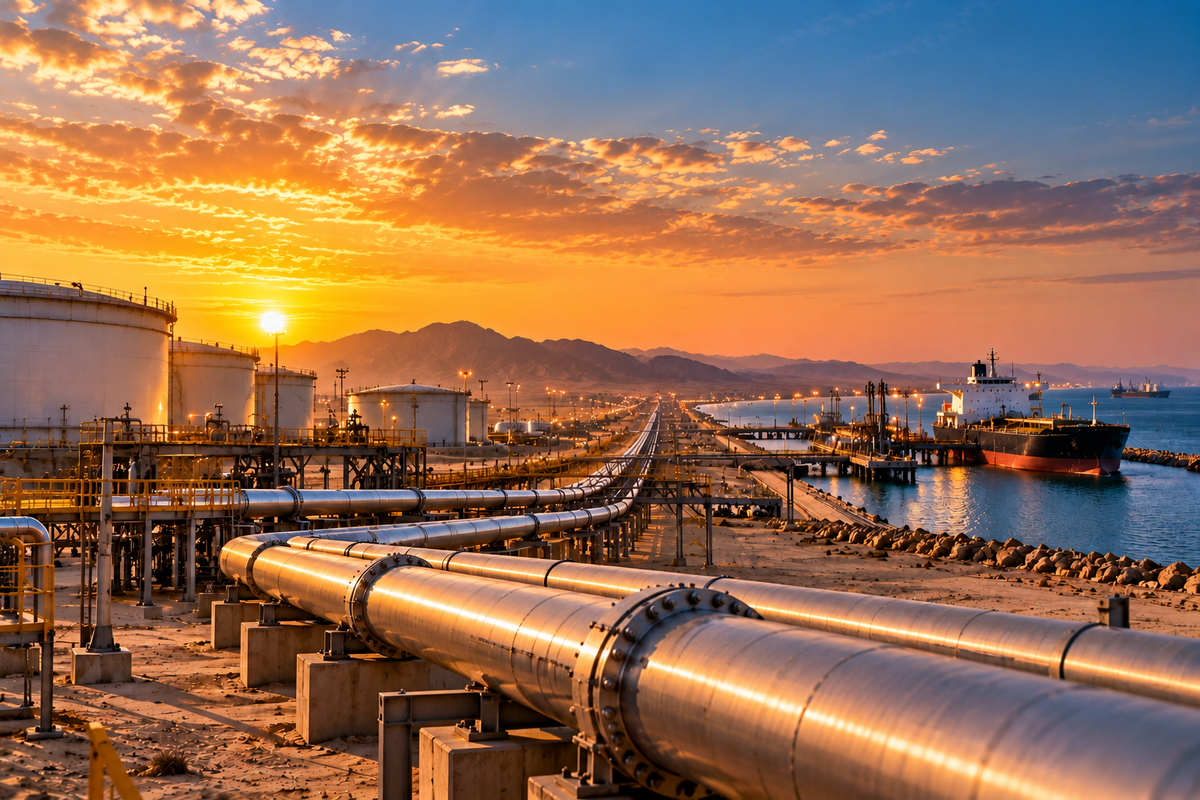
RIYADH — Saudi Arabia has restarted operations on its East-West oil pipeline at a reduced rate after a drone attack damaged three pumping stations, restoring part of a critical export route that allows Saudi crude to reach the Red Sea without passing through the Strait of Hormuz.
The pipeline resumed operations after being shut following the September 11 attack, according to Reuters reporting based on industry sources. Full restoration is expected to take longer because of damage to the pumping infrastructure.
The route carries crude from Saudi Arabia’s eastern oil-producing region across the kingdom to the Red Sea port of Yanbu. Its strategic importance has increased sharply as disruption around the Strait of Hormuz has complicated Gulf exports.
A major alternative to Hormuz
The East-West system has capacity of about 7 million barrels per day, although actual flows vary and the pipeline does not normally operate at maximum capacity.
Industry sources cited by Reuters said roughly 4 million barrels per day had been moving through the route before the attack. Three pumping stations were damaged, and full capacity could take six to eight weeks to restore.
The initial restart therefore represents a partial recovery rather than a return to normal operations.
Saudi Aramco has been working to maintain exports through a combination of routes and logistics arrangements while regional shipping remains disrupted. The company increased movements through the Gulf after the pipeline shutdown and has also used alternative arrangements to keep crude reaching international buyers.
Restoring the East-West route gives Saudi Arabia more flexibility by allowing barrels to reach Yanbu on the Red Sea coast without a tanker first having to transit Hormuz.
Export flexibility remains constrained
The restart does not eliminate the wider risks facing Saudi and regional oil exports.
The pipeline itself has now demonstrated its vulnerability to attack, while Red Sea shipping has also been affected by the regional conflict. Hormuz, meanwhile, continues to operate far below its pre-war commercial traffic levels despite continued crude movements.
That leaves Saudi export strategy dependent on maintaining several routes rather than relying on a single secure corridor.
The East-West pipeline is particularly important because few pieces of regional infrastructure can shift comparable volumes between the Gulf side of the Arabian Peninsula and the Red Sea.
A sustained return toward normal pipeline operations would increase Saudi Arabia’s ability to route crude around Hormuz and could reduce some of the logistical pressure that has built up during the conflict. But with repairs still under way, the immediate effect is more limited: a strategically important route is functioning again, but not yet at full strength.
The pace of repairs and the resumption of regular loadings from Yanbu will determine how much additional export capacity the restart provides in the coming weeks.