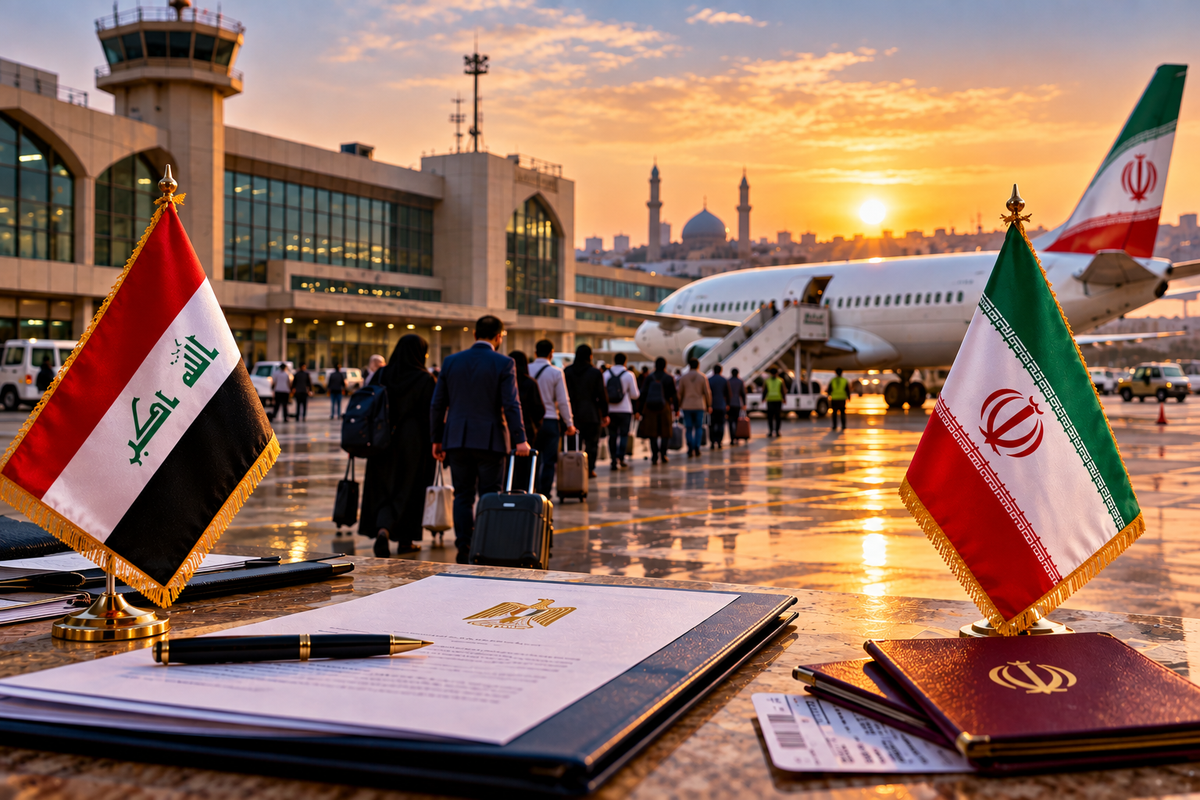
BAGHDAD — Iraq is in direct talks with the United States seeking exemptions that would allow some flights between Iraq and Iran to resume for humanitarian and civilian purposes after four Iraqi airports halted Iranian services under pressure from new US aviation measures.
The Iraqi prime minister’s office said exemptions would allow travel connected to medical treatment, education, religious visits and other civilian needs, while Baghdad continues efforts to de-escalate regional tensions.
The request follows the suspension of Iranian flights at Baghdad, Najaf, Erbil and Sulaimaniyah airports. The latest development shifts the issue from the initial shutdown to negotiations over whether Washington will permit limited services to resume.
Passengers have been pushed toward lengthy overland journeys since the suspensions. The disruption is particularly significant for religious travel, students and families with longstanding cross-border ties.
Baghdad seeks a limited route back to air travel
Iraq’s position reflects its close links with both Washington and Tehran.
The United States has expanded pressure on Iran’s aviation sector by threatening measures against companies that provide services to Iranian airlines. That can affect ground handling, refuelling and other commercial support needed for international flights even where foreign governments have not formally closed their airspace.
Iraq, meanwhile, has extensive religious, educational and social traffic with neighbouring Iran. Najaf is an especially important destination for Shia pilgrims, while Iraqi students and other travellers regularly move between the two countries.
Baghdad’s request is therefore focused on exemptions rather than a rejection of the US measures as a whole.
Iraq’s ambassador to Tehran has described the suspension as temporary and said contacts were under way to restore normal air traffic. Iranian officials have also said discussions are continuing.
Wider regional aviation pressure
The Iraqi negotiations are taking place as Iranian carriers face restrictions across several regional markets.
The effect of the US measures depends heavily on the decisions of airports, service providers and companies outside Iran. Even where an Iranian carrier is technically able to operate a route, the threat of secondary measures can make local firms unwilling to provide the services required for a flight.
That has made exemptions potentially important for countries seeking to preserve narrowly defined civilian links while avoiding broader exposure to US restrictions.
No exemption for the Iraqi airports had been publicly confirmed at the time of publication.
The next question is whether Washington agrees to a humanitarian framework and, if it does, which airports, airlines and categories of passengers would be covered. Until those details are settled, the suspension of regular Iranian services at the four Iraqi airports remains in effect.