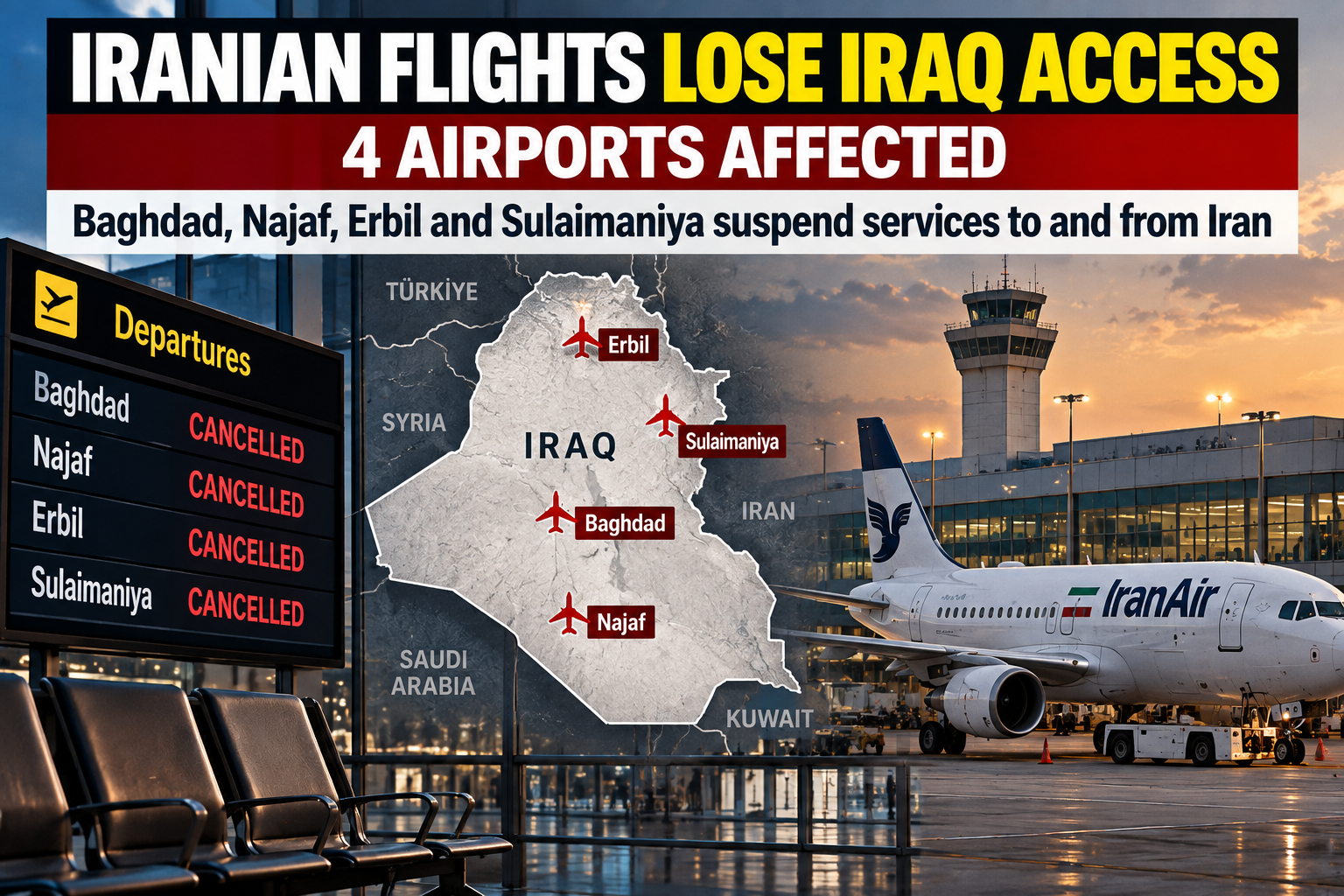
Flights to and from Iran have been suspended at all four Iraqi airports where Iranian services had been operating, widening the disruption facing Iran’s regional air links.
Baghdad, Najaf, Erbil and Sulaimaniya are now all affected by the restrictions, according to Iraqi state media and reporting citing aviation and government sources. The latest suspensions at Erbil and Sulaimaniya followed earlier action affecting Baghdad and Najaf.
The measures interrupt an important regional travel corridor used by pilgrims, students, medical travellers and other passengers moving between Iran and Iraq.
Four Iraqi airports affected
Najaf International Airport suspended Iranian flights after an instruction linked to the Iraqi prime minister’s office, while Baghdad had already halted services earlier in the week. Erbil and Sulaimaniya subsequently imposed suspensions, extending the restrictions across all four Iraqi airports that had been handling flights to and from Iran.
The decisions come as Iranian civil aviation faces growing international pressure. The United States has announced sanctions targeting companies that continue doing business with Iranian airlines, part of a broader effort to restrict Iran’s international aviation links.
Iraq’s actions are significant because the country has been one of the most important destinations for Iranian carriers, supported by close geographic, religious and commercial ties between the two neighbours.
The suspensions do not mean that all travel between Iran and Iraq has stopped. Land crossings remain a major route between the countries, but the loss of scheduled air services creates additional complications for passengers who depend on faster connections, particularly those travelling for medical treatment or long-distance religious visits.
Regional aviation pressure grows
The Iraqi restrictions add to a wider tightening of access for Iranian airlines in the region. Other countries have also imposed or expanded limits on Iranian carriers as sanctions and security concerns reshape aviation links during the conflict.
The immediate duration of the Iraqi suspensions has not been clearly established in the available announcements. That leaves airlines and passengers facing uncertainty over when normal services might resume.
The development is distinct from earlier individual airport restrictions because Iranian services are now suspended at every Iraqi airport where they had been operating. It therefore represents a broader interruption to Iran’s air access to one of its closest regional neighbours.
Further changes will depend on decisions by Iraqi aviation authorities, the impact of US sanctions and the wider course of the conflict.