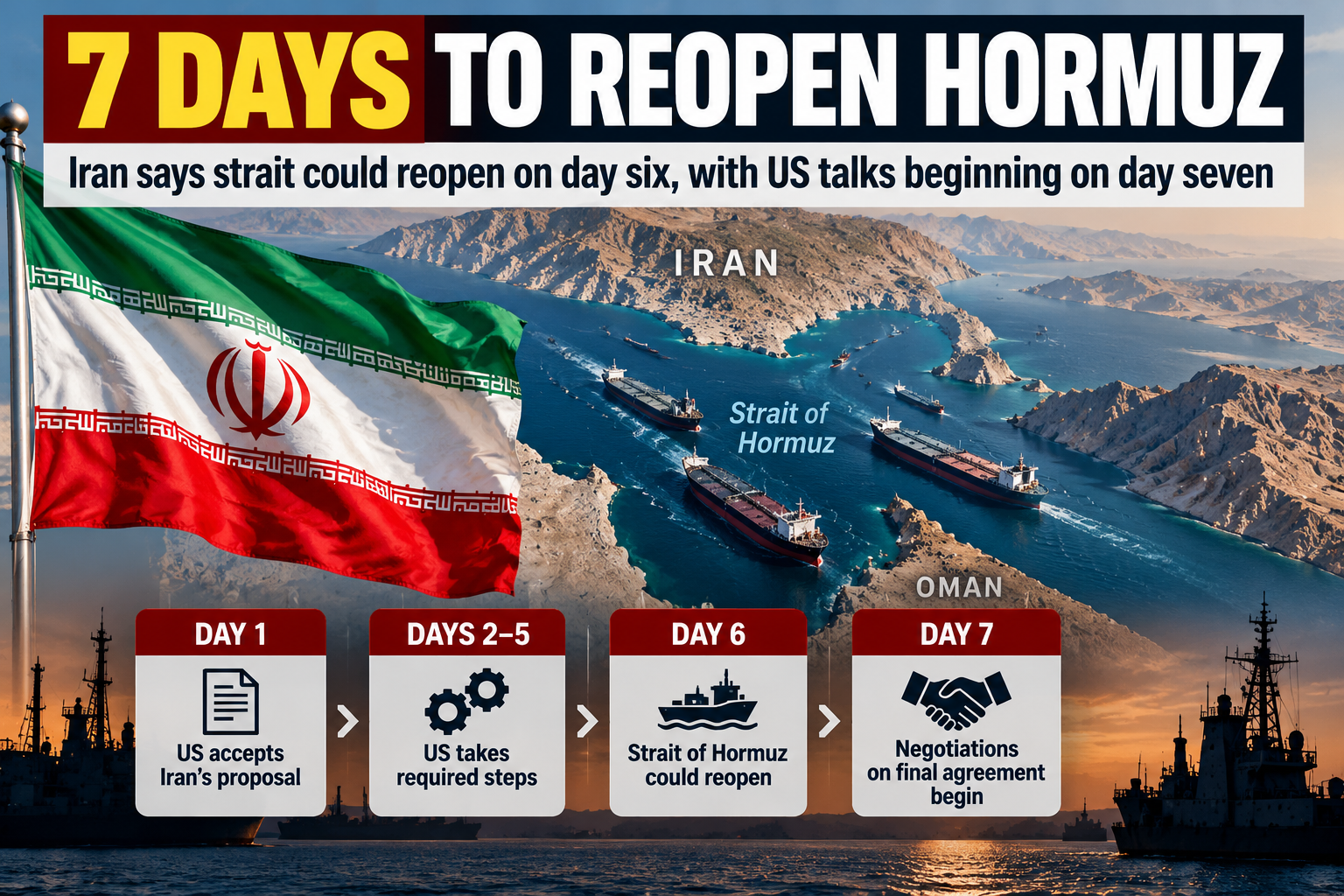
Iran has set out a seven-day roadmap under which it says the Strait of Hormuz could reopen and negotiations with the United States could resume, provided Washington first accepts Tehran’s proposal.
Foreign Minister Abbas Araghchi said the timetable would begin only after US acceptance. He told reporters in New York that initial steps would take roughly four to five days, the strait could reopen on the sixth day and talks with the United States on a final agreement would begin on day seven.
The proposal adds detail to Iran’s recent diplomatic push over Hormuz, which has become one of the central issues in the conflict because of its importance to global energy shipments.
Timetable depends on US acceptance
Araghchi said the seven-day clock would not begin automatically. It would start once Washington accepted the plan, making the timetable a proposal rather than an agreed schedule between the two governments.
Iran has said the package includes an end to the US naval blockade of Iranian ports, sanctions relief affecting Iranian oil sales and the release of frozen Iranian assets. Tehran has also linked the plan to a broader cessation of hostilities in the region.
Under Araghchi’s account, the first several days would be used for the required US steps. Iran would then reopen the Strait of Hormuz on day six, followed by negotiations on mutually agreed issues on the seventh day.
The plan was conveyed to Washington through mediators, with Qatar playing a role in the diplomatic contacts.
Hormuz remains central to negotiations
The Strait of Hormuz has become a major source of leverage in the conflict. The narrow waterway connects the Gulf with the Arabian Sea and normally carries a significant share of internationally traded oil and gas.
Restrictions and security concerns around the strait have disrupted normal shipping patterns and contributed to volatility in global energy markets, increasing pressure for a diplomatic arrangement that restores predictable commercial passage.
Iran’s latest proposal resembles elements of the earlier memorandum of understanding that sought to halt hostilities and create space for negotiations but later broke down amid renewed accusations and military action.
The accelerated seven-day timetable does not by itself signal a breakthrough. Washington has not publicly announced acceptance of the proposal, and significant differences remain over sanctions, security arrangements and Iran’s nuclear programme.
For now, the significance of Araghchi’s remarks is that Tehran has publicly described a sequence for moving from US acceptance to a possible reopening of Hormuz and then to negotiations. Whether that sequence is implemented depends on Washington’s response and the ability of mediators to narrow the remaining differences.