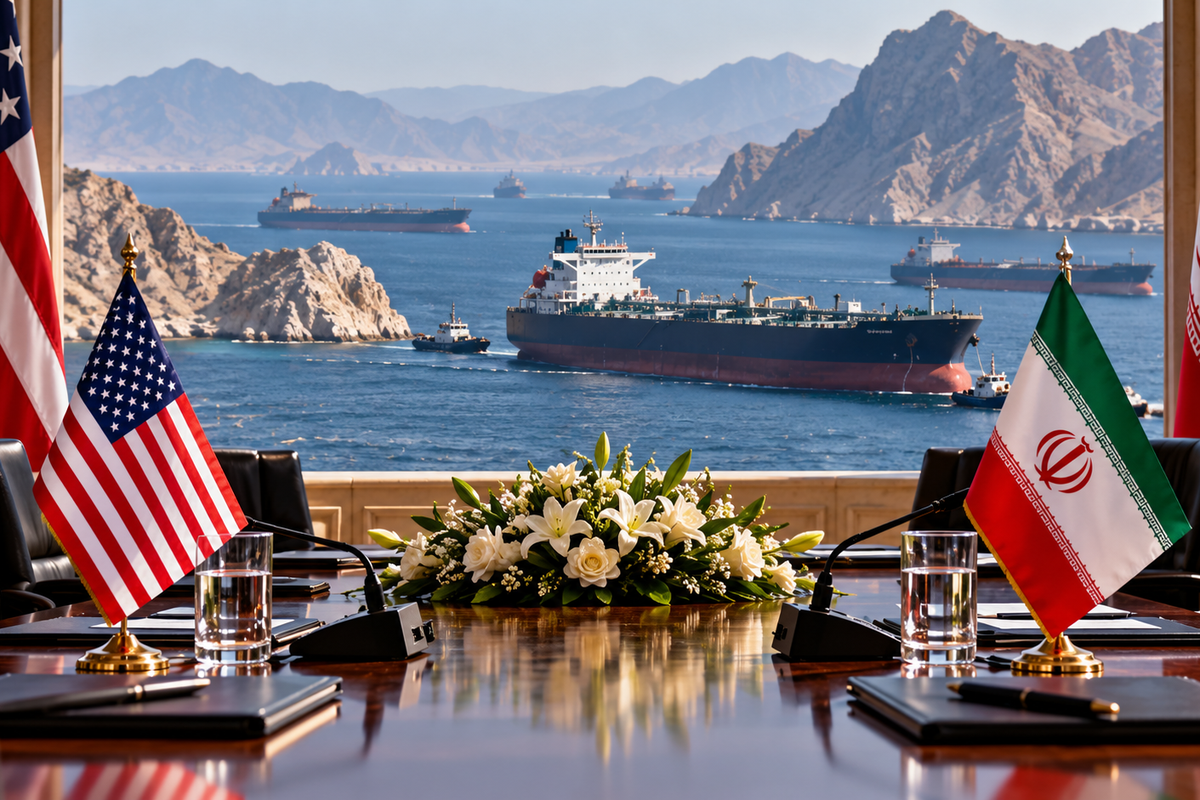
NEW YORK — Iran is standing by the conditions it set for reopening the Strait of Hormuz after US President Donald Trump rejected Tehran’s latest proposal, leaving mediators to carry a diplomatic exchange that has yet to produce an agreed path forward.
Trump said on Saturday that he had rejected the Iranian proposal, which envisaged reopening the strategically important waterway within seven days as part of a broader diplomatic process. Iranian Foreign Minister Abbas Araghchi subsequently said Tehran was not withdrawing its conditions and was awaiting a formal response conveyed through mediators.
The exchange marks a new stage in a diplomatic effort that has developed alongside months of conflict and severe disruption to regional shipping.
Iran had previously told mediators that it could reopen Hormuz within seven days if the United States eased military pressure and lifted its blockade on Iranian ports. A senior Iranian official told Reuters earlier in the week that Washington would also need to make an official commitment to resolving the dispute diplomatically and agree on a timeline for negotiations.
Trump’s rejection means those terms have not been accepted. It does not, however, end the indirect channel: Iranian officials have continued to point to mediation as the mechanism through which Washington’s position is expected to reach Tehran.
Hormuz remains central to the dispute
The Strait of Hormuz is one of the world’s most important energy chokepoints. Before the current conflict, roughly a fifth of global oil and gas shipments moved through the narrow waterway linking the Gulf with the Gulf of Oman.
Commercial traffic has remained far below pre-war norms even as crude shipments have continued at a reduced and volatile pace. Gulf producers and shipping companies have responded with alternative routes, ship-to-ship transfers and other contingency arrangements, but none fully replaces the capacity and geographic importance of Hormuz.
That makes the question of reopening the strait both an economic issue and a negotiating lever.
Iran’s proposal linked movement on Hormuz to broader US actions rather than treating shipping as a standalone matter. Washington, meanwhile, has continued to press for economic isolation of Iran while saying it remains open to diplomacy under acceptable terms.
No direct breakthrough yet
There is no indication that the latest exchange has produced a face-to-face US-Iran negotiation. The positions described publicly remain separated by substantial differences over military pressure, sanctions and the conditions for a wider settlement.
The immediate significance is therefore not an agreement to reopen Hormuz, but the continuation of an indirect negotiating process after the US rejection.
For energy markets and Gulf states, the distinction matters. A reopening agreement could materially change shipping risk and export logistics across the region, while a prolonged stalemate would leave producers dependent on a patchwork of constrained routes and costly workarounds.
The next substantive development will be whether mediators can translate the competing positions into revised terms that both Washington and Tehran are prepared to discuss.