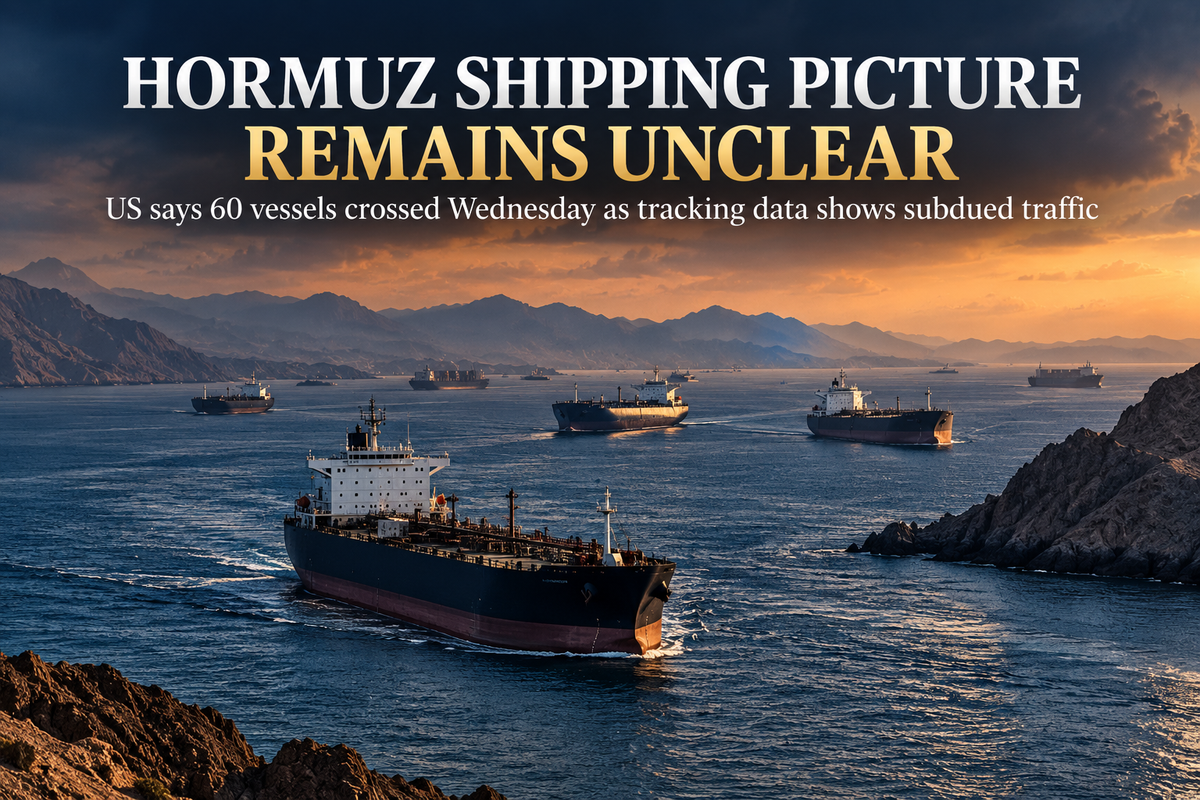
SINGAPORE: The picture of commercial traffic through the Strait of Hormuz remains difficult to measure precisely after a US official said about 60 vessels crossed the waterway on Wednesday, while preliminary commodity ship-tracking data continued to show subdued traffic.
The US official told Reuters that about 60 commercial vessels passed through Hormuz on Wednesday and that roughly 40 coordinated with the US military. The official also said the movements included about 22 million barrels of oil.
Reuters said it could not independently verify the US figures.
Separately, preliminary ship-tracking data reported on Friday showed nine commodity-vessel transits on Thursday, down from 14 on Wednesday and below a 10-day average of 18. Eight of Thursday’s nine tracked vessels were outbound.
The two sets of figures should not be treated as directly equivalent. Commercial tracking counts can differ by vessel category and methodology, while ships operating with their transponders switched off may not appear in tracking datasets.
That limitation has become increasingly important during the conflict, as some vessels have reduced or altered public tracking signals for security reasons.
Before the war began in February, the strait typically handled about 125 large commercial vessels a day, including tankers, gas carriers, bulk carriers and container ships, according to Reuters.
The latest numbers indicate that some traffic is moving, but they do not establish a return to normal conditions. Hormuz remains a critical route for global crude oil and liquefied natural gas supplies, making reliable traffic data important for energy markets and countries such as Pakistan that depend on imported fuel.