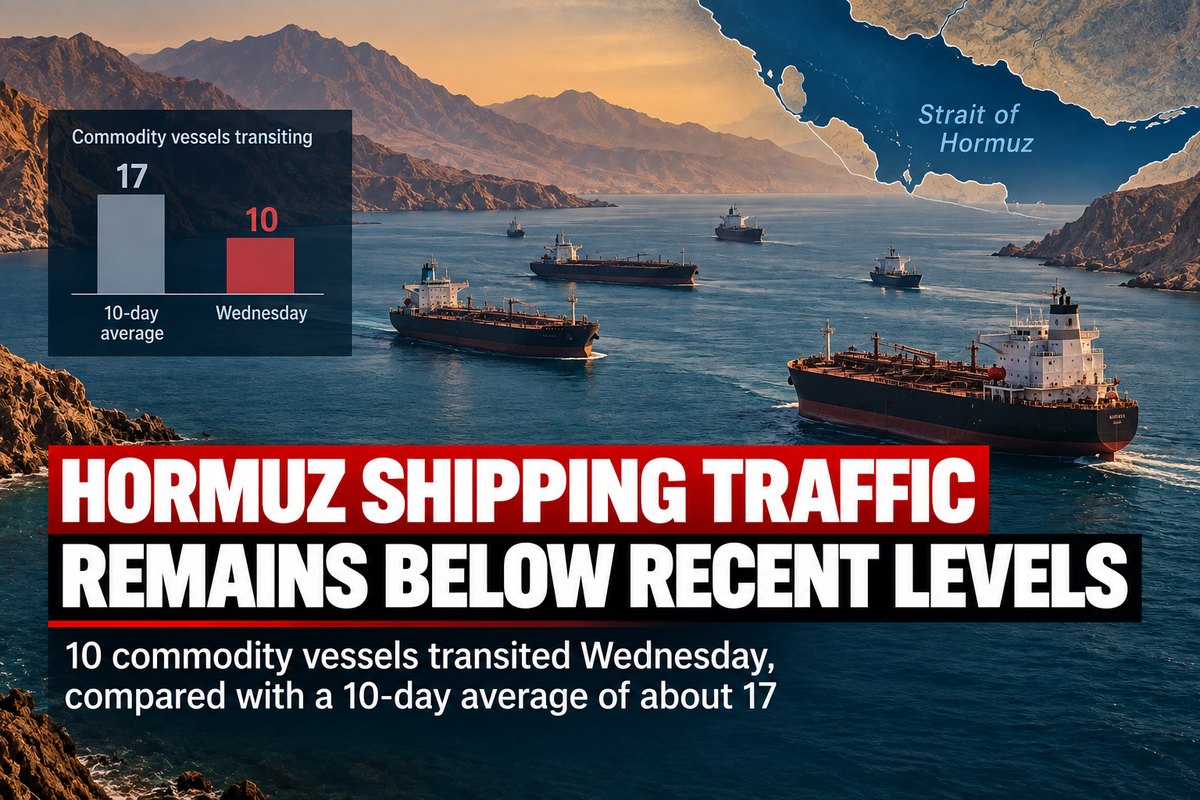
SINGAPORE: Visible commodity-vessel traffic through the Strait of Hormuz increased on Wednesday but remained below recent levels, underscoring the continuing disruption to one of the world’s most important energy and shipping routes.
Ten commodity vessels transited the strait on Wednesday, up from seven a day earlier and below a 10-day moving average of about 17, according to preliminary shipping data reported on Thursday.
Nine vessels entered the waterway, including ships carrying metals, grain and other dry-bulk cargoes, as well as an empty very large gas carrier. One Supramax vessel carrying fertiliser exited.
The figures provide a useful indication of visible commercial traffic but are not a complete count. Ships can switch off their Automatic Identification System transponders, meaning some vessels may cross without appearing in the tracking data.
Traffic remains heavily disrupted
Before the conflict began on February 28, the Strait of Hormuz typically handled about 125 large commercial vessels a day, including tankers, gas carriers, bulk carriers and container ships.
The sharp reduction has affected energy flows, shipping schedules and insurance conditions across the Gulf.
Some oil and gas cargoes are still moving through the waterway, including vessels operating with limited or no visible tracking. That makes daily AIS-based counts an indicator of disruption rather than a precise measure of all trade.
The latest increase from the previous day therefore does not signal a return to normal traffic.
Hormuz has also become a central issue in US-Iran diplomacy in New York. Iranian officials have linked reopening the strait to demands including changes to the US naval blockade and wider arrangements to end the conflict.
Until a durable maritime arrangement is reached, shipping companies face an unusually uncertain operating environment around the Gulf.