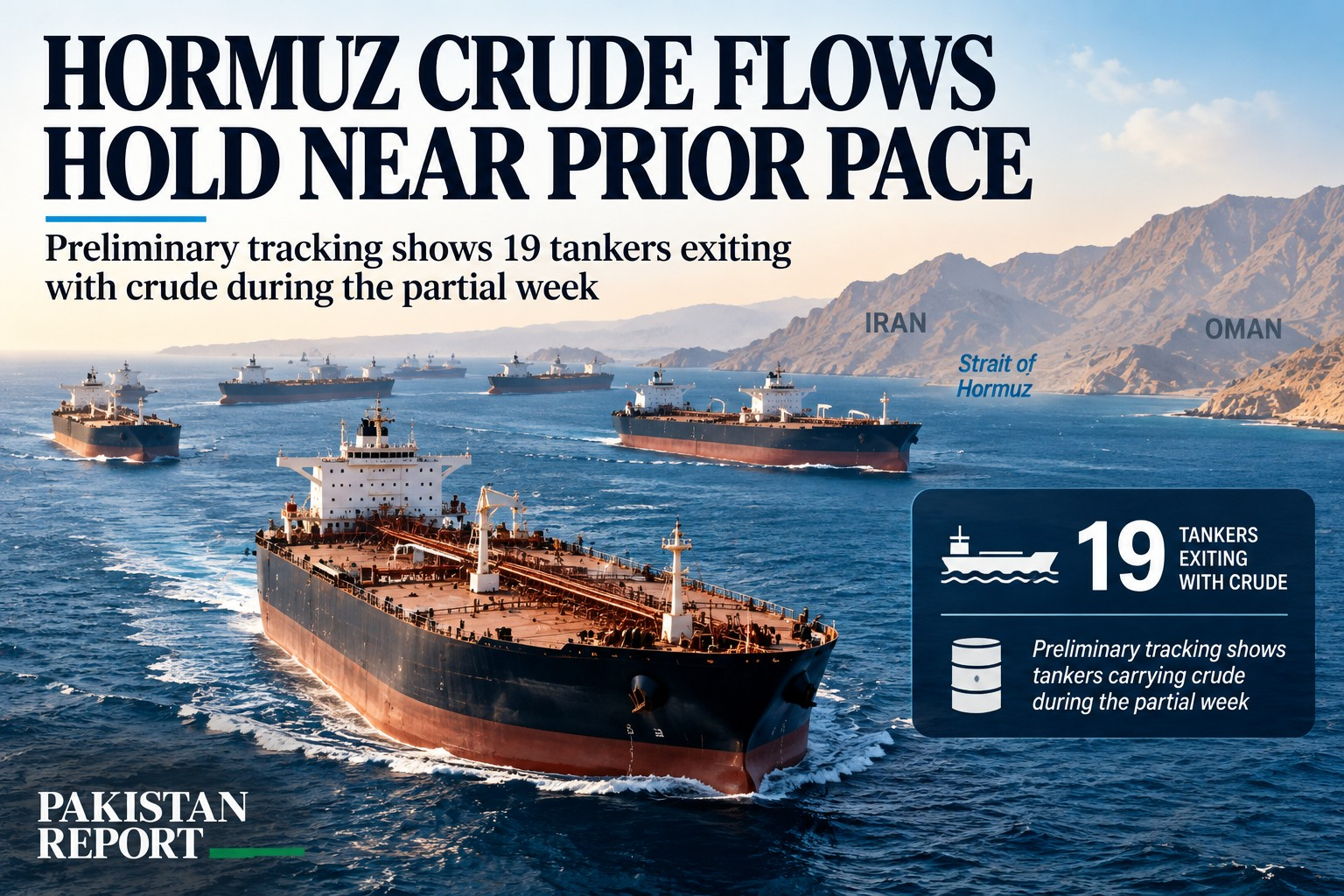
SINGAPORE — Crude oil flows out of the Strait of Hormuz reached 33.7 million barrels so far in the week beginning September 20, preliminary Kpler ship-tracking data showed, putting crude exports roughly on pace with the previous week even as overall commercial traffic through the waterway remained heavily disrupted.
The partial-week total covered 19 crude tankers, 17 of them very large crude carriers capable of carrying around two million barrels each. Most of the tracked cargoes were Saudi crude, followed by Iraqi barrels, according to Reuters reporting based on Kpler data.
The comparison requires care because 33.7 million barrels was not a completed weekly total. In the full previous week, 49.2 million barrels of crude were shipped out through Hormuz. The preliminary pace for the week beginning September 20 was therefore described as roughly in line with the prior week rather than as a direct 33.7 million-to-49.2 million weekly comparison.
The relative resilience of crude exports does not mean shipping through Hormuz has returned to normal. Kpler data cited by Reuters showed a 10-day average of 18 commodity-vessel transits, far below the roughly 125 large commercial vessels a day that typically used the strait before the Iran war began on February 28.
Traffic has also been volatile from day to day. A US official told Reuters that about 60 commercial vessels of all types transited the strait on Wednesday, carrying the highest daily crude volume since early July. Kpler data then showed commodity-vessel transits falling to nine on Thursday, eight of them outbound.
Ship-tracking figures also have limitations because vessels operating with transponders switched off may not appear in the data. The reported totals should therefore be read as preliminary observed movements rather than a complete count of every vessel passing through the waterway.
The latest figures nevertheless show that Gulf crude exports have continued through the strait at a substantial pace despite the broader disruption. Saudi Arabia has also increased Hormuz exports after attacks on its East-West Pipeline halted shipments from the Red Sea port of Yanbu, adding to the importance of the Gulf route.
For oil markets, the distinction is important: crude-export volumes can remain comparatively resilient even while the wider shipping environment is operating far below normal levels. The next full-week data will provide a clearer comparison of whether that pace is being sustained.