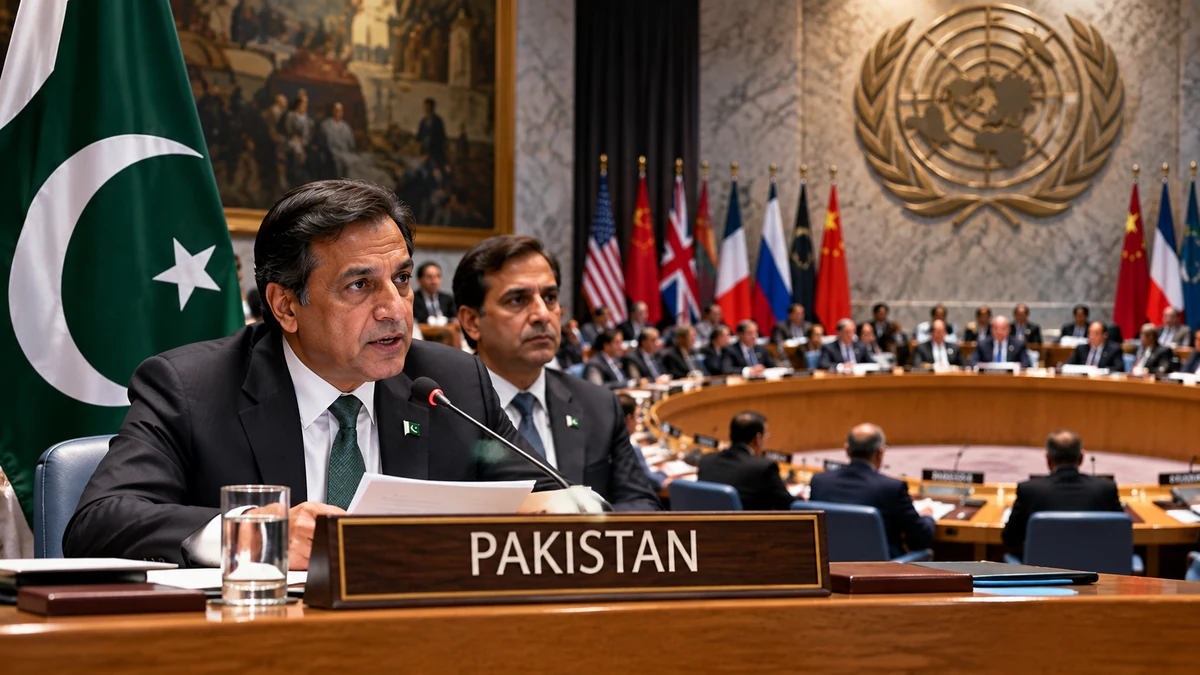
Pakistan has reiterated its opposition to adding new permanent members to the United Nations Security Council, arguing that reform should instead increase elected representation on the 15-member body.
Pakistan’s Permanent Representative to the United Nations, Ambassador Asim Iftikhar Ahmad, said Islamabad supports a more democratic, representative and accountable Security Council but does not believe creating additional permanent seats would achieve that goal.
Ahmad told Dawn that adding new individual permanent members would aggravate the existing problem rather than solve it. Pakistan instead supports expanding the number of elected members.
The position is consistent with Pakistan’s participation in the Uniting for Consensus group, which has opposed proposals that would extend permanent membership to additional individual states.
Ahmad said Pakistan and like-minded countries have advocated options that include more elected seats and medium-term seats based on periodic elections and rotation. Such an approach would give countries longer periods of representation without granting them permanent status.
The Security Council currently has 15 members. Five — China, France, Russia, the United Kingdom and the United States — are permanent members with veto power. The remaining 10 seats are held by countries elected by the UN General Assembly for two-year terms.
Debate over reform has continued for decades, with member states disagreeing over whether expansion should include new permanent members, additional elected seats, changes to veto powers or a combination of those measures.
Pakistan’s latest statement does not represent a new UN decision or an agreed reform formula. It sets out Islamabad’s position as negotiations over the Council’s composition and working methods continue among member states.
Ahmad made the comments as Pakistan approaches the end of its 2025-2026 elected term on the Security Council. He is also preparing to return to Islamabad to take charge as Pakistan’s foreign secretary.
The distinction between permanent and elected expansion is central to Pakistan’s position. Islamabad is not opposing a larger Security Council in principle; it is opposing the creation of additional permanent national seats and arguing that broader representation should come through seats subject to election and rotation.
Any change to the Security Council’s membership structure would require agreement through the UN Charter amendment process. For now, the competing reform models remain under negotiation, and Pakistan continues to back an elected-seat approach.
Pakistan Report illustration.