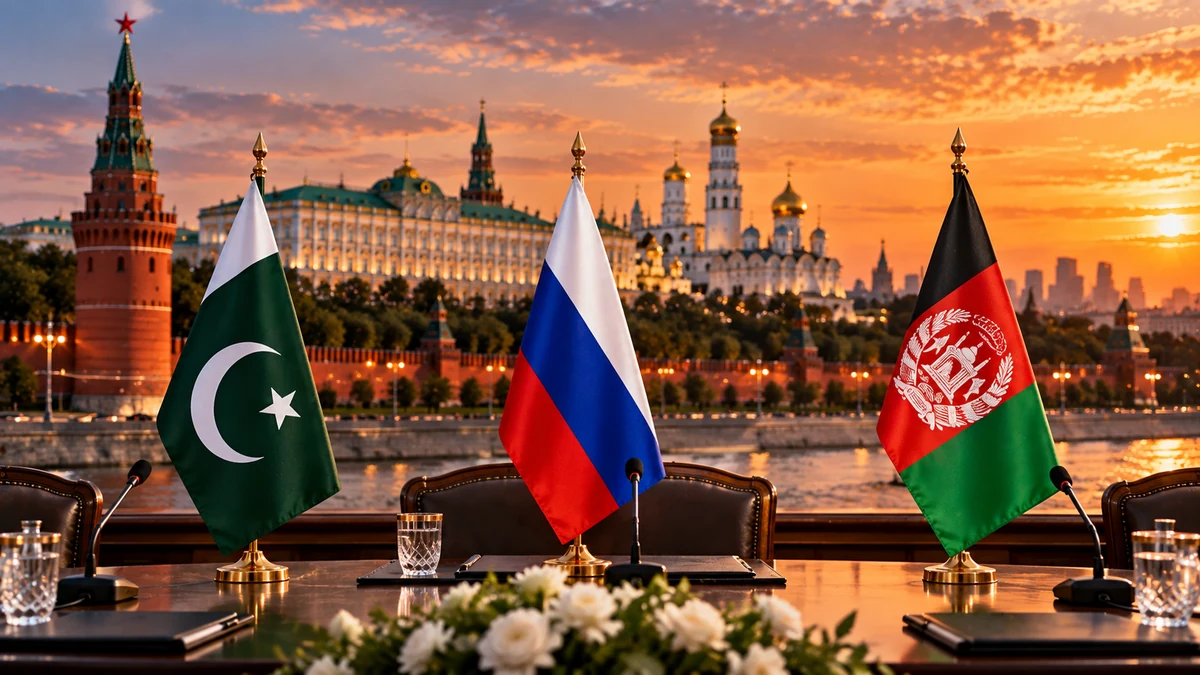
Pakistan is taking part in the eighth meeting of the Moscow Format Consultations on Afghanistan in Moscow, joining a regional diplomatic forum focused on developments in Afghanistan.
Pakistan is being represented by Special Representative for Afghanistan Ambassador Mohammad Sadiq and the country’s ambassador in Kabul, according to Pakistan’s Ministry of Foreign Affairs.
The meeting gives Islamabad another channel to discuss Afghanistan with regional states at a time when security, cross-border militancy, economic conditions and regional stability remain central concerns for Pakistan and Afghanistan’s neighbours.
The Moscow Format brings together countries with direct political, security and economic interests in Afghanistan. For Pakistan, participation is particularly relevant because developments across the border can have immediate consequences for security, trade, refugee movements and bilateral relations.
Pakistan has repeatedly argued that Afghanistan should not be allowed to become a base for militant groups threatening other countries. Islamabad and the Afghan authorities have also faced periods of heightened tension over cross-border security and competing accounts of militant activity.
Those disputes form part of the wider regional context, but the Moscow meeting is a separate diplomatic development. Pakistan’s participation does not by itself signal a new agreement with Afghanistan or with the other countries attending the consultations.
The talks also provide an opportunity for regional governments to compare positions on engagement with Afghanistan, humanitarian and economic conditions, and the security environment.
Pakistan has maintained diplomatic engagement with Afghanistan while also pressing its security concerns through bilateral and regional channels. The Moscow Format is one of several forums through which Islamabad can raise those issues alongside other states with interests in Afghanistan.
The meeting comes as regional governments continue to balance two objectives: maintaining channels with the authorities in Kabul while seeking assurances that instability and militant activity will not spill across Afghanistan’s borders.
No new Pakistan-Afghanistan agreement had been announced in connection with the meeting at the time of publication.
Pakistan’s participation should therefore be read as part of continuing regional diplomacy rather than evidence that existing disputes have been resolved.
The immediate significance for Islamabad is that Pakistan is represented in a forum where Afghanistan’s neighbours and other regional powers can discuss security and political developments collectively, rather than relying only on bilateral exchanges.
Any concrete outcome will depend on the positions agreed or statements issued after the consultations. Pakistan Report will distinguish any joint conclusions from individual claims or positions expressed by participating governments.