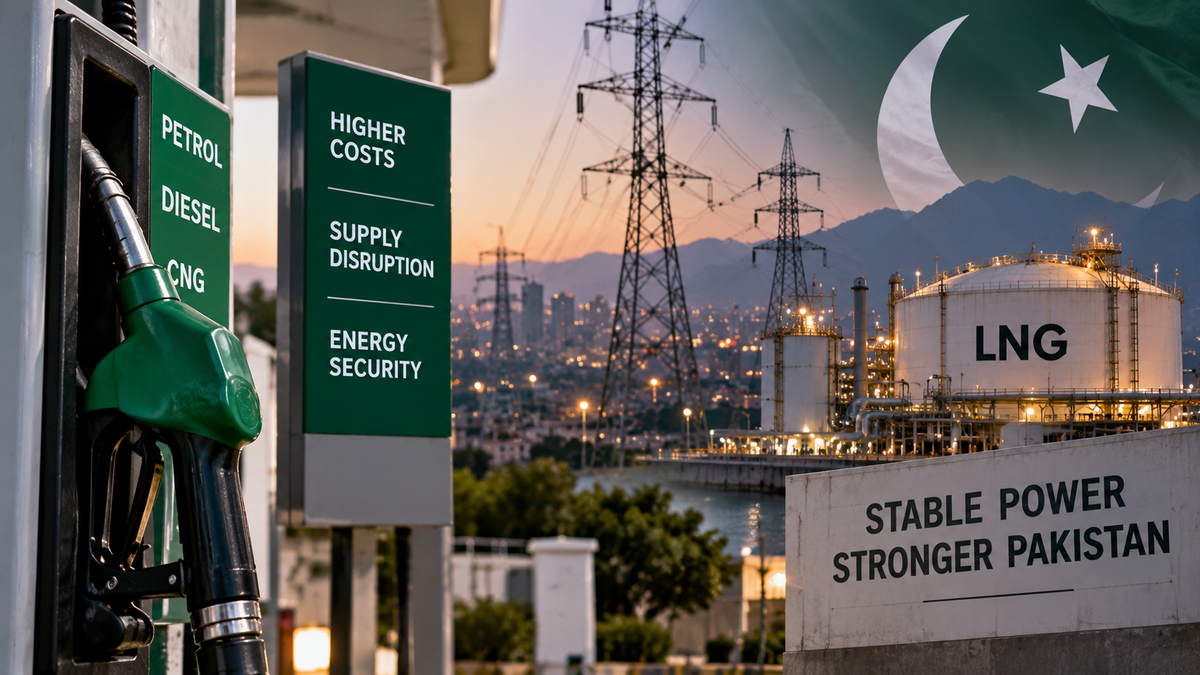
ISLAMABAD: Pakistan is facing growing pressure across its energy system as disruption to Gulf fuel and gas supplies pushes up costs and forces the government to rely more heavily on domestic resources to keep electricity generation running.
Federal ministers have acknowledged that the disruption is affecting both petroleum supplies and the power sector, although they maintain that contingency measures have so far prevented a more serious electricity shortage.
Power Minister Awais Leghari said disruption to the supply of regasified liquefied natural gas had pushed spot LNG prices to about $23.25 per million British thermal units, making imported gas exceptionally expensive for power generation.
The government instead arranged additional domestic gas for power plants, according to Leghari. He said that without the additional supply, Pakistan could have faced another hour of electricity load-shedding and would have had to rely more heavily on furnace oil or costly imported LNG.
Using those alternatives would have added around Rs10.6 billion to electricity costs, he said.
The strain on the power sector is unfolding alongside another sharp rise in transport fuel prices.
Petrol rose by Rs4.10 a litre to Rs384.34 on September 16, while high-speed diesel increased by Rs6.41 to Rs415.83. Both fuels are now dramatically more expensive than they were before the Middle East conflict disrupted regional energy flows.
The government has responded with a targeted fuel-relief programme for motorcycles, rickshaws and smaller cars rather than attempting to absorb the entire increase in international costs.
Climate Change Minister Musadik Malik said relief of about Rs100 per litre was the maximum the economy could currently sustain under the programme.
The widening energy problem reflects Pakistan’s exposure to several markets at once.
The country imports petroleum products and LNG while also depending on gas for electricity generation and industrial activity. A disruption in one fuel can therefore shift demand — and costs — into another part of the energy system.
That is particularly important when LNG prices rise sharply. Pakistan can reduce expensive spot purchases by using domestic gas, coal, hydropower, nuclear generation and other available sources, but those alternatives have their own capacity and supply constraints.
Government ministers have argued that earlier planning prevented the current disruption from turning into a more severe shortage. At the same time, their comments make clear that maintaining normal supplies has become more expensive and more difficult.
Officials have also rejected reports that the government has decided to reintroduce “smart lockdown” measures to reduce fuel consumption. Similar conservation measures were used earlier in the conflict, including restrictions on business hours, but ministers said no such decision had been taken in the current situation.
For consumers, the immediate effects are already visible at petrol stations. The longer-term concern is whether sustained high international energy prices begin to move more deeply through electricity tariffs, transport costs and the prices of goods.
Pakistan has so far managed to keep the power system operating without the additional load-shedding officials say could otherwise have been necessary. How long that position can be maintained will depend heavily on the availability of domestic gas, the reopening of regional energy routes and the price at which Pakistan can secure imported fuel.