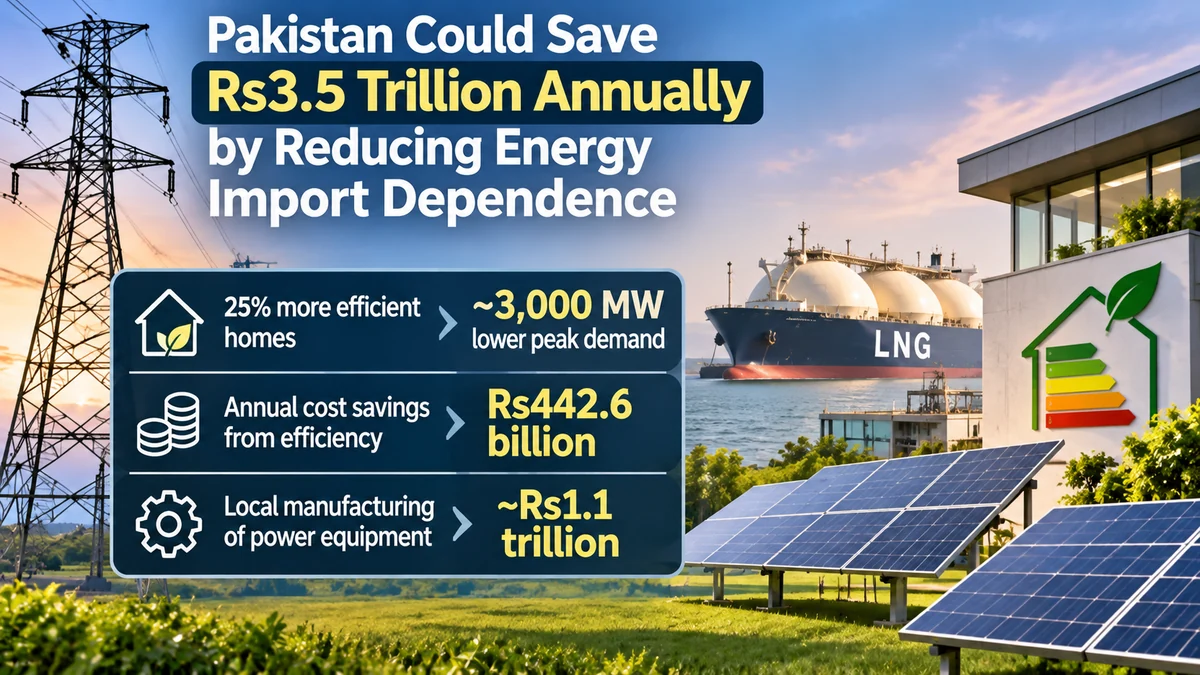
ISLAMABAD, November 6, 2026 — Pakistan could avoid approximately Rs3.5 trillion in annual energy-related costs by addressing inefficient planning, dependence on imported fuels and delays in developing domestic equipment manufacturing, according to research discussed at a LUMS Energy Institute event.
The findings were presented during a dialogue on Pakistan’s energy security attended by senior power-sector officials and researchers.
Unused Capacity and Imported Fuel
Researchers highlighted a mismatch between Pakistan’s electricity generation capacity and seasonal demand.
Although installed generation capacity exceeds 36,000 megawatts, the country’s base electricity demand remained around 8,000 megawatts between 2015 and 2023.
At the same time, Pakistan spends approximately $2.7 billion importing liquefied natural gas during four winter months, partly to meet heating requirements.
Savings Through Efficiency
The institute estimated that improving energy efficiency in just 25% of residential buildings could reduce peak electricity demand by approximately 3,000 megawatts.
That change could produce annual energy-cost savings of Rs442.6 billion.
Researchers also identified around Rs1.1 trillion in potential opportunities to manufacture electricity transmission and distribution equipment locally.
The study assessed the readiness of 49 Pakistani manufacturers.
Experts called for stronger electricity planning, implementation of energy-efficient building standards and faster progress on the Power Sector Indigenisation Plan.