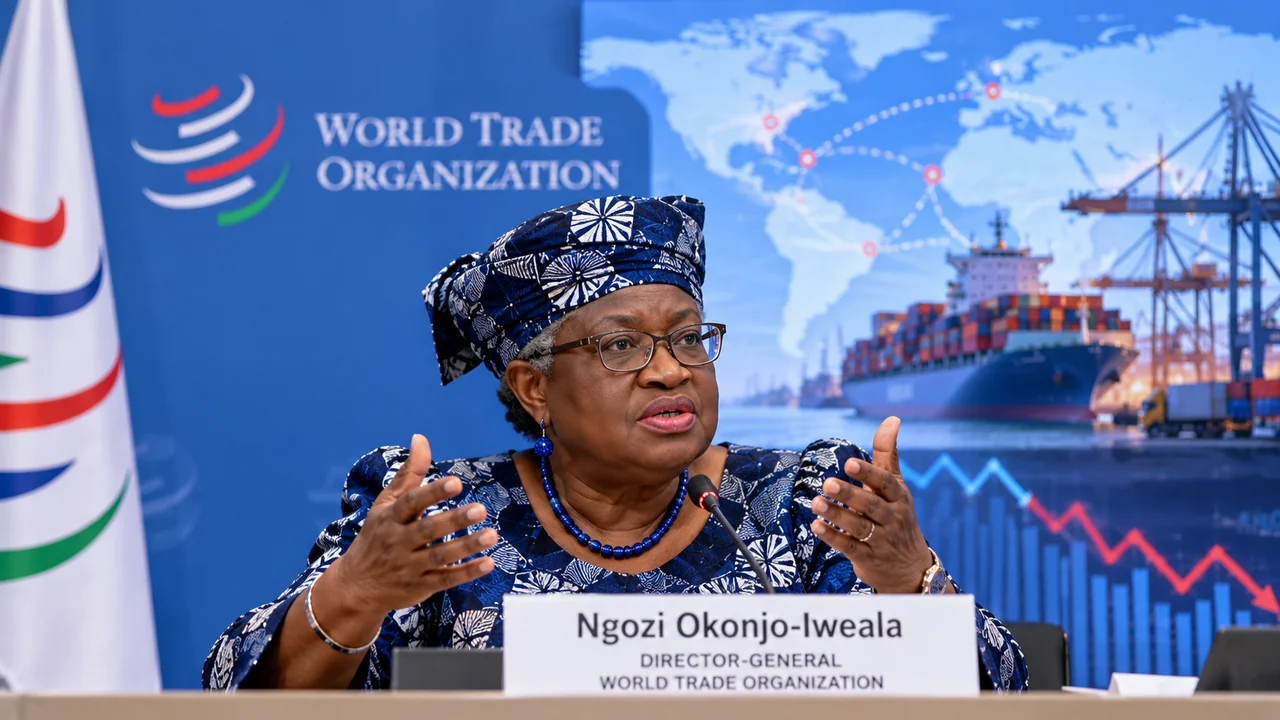
BANGKOK: World Trade Organization Director-General Ngozi Okonjo-Iweala has warned that conflict in the Middle East and wider geopolitical tensions could have lasting consequences for global trade as companies reconsider supply chains and transport routes.
Speaking to Reuters on 15 October, she said trade flows in the affected Middle East region had contracted sharply. Businesses had found some alternatives, but restoring disrupted trade would take time and certain changes could become permanent.
Supply chains under pressure
Companies facing repeated transport or supply disruptions may seek alternative suppliers, routes and production arrangements. Those decisions can change shipping patterns, logistics costs and investment even after immediate tensions ease.
The warning does not mean every temporary disruption will become permanent. It reflects the possibility that prolonged uncertainty may influence longer-term business decisions.
Regional figures are not global forecasts
Figures cited in the Reuters interview indicated that the WTO expected exports in the affected Middle East region to decline by about 17% this year and imports by approximately 15%.
These are regional estimates, not forecasts of a 17% decline in worldwide exports or a 15% decline in worldwide imports. The WTO has separately warned that global merchandise trade growth could slow during 2026.
Why it matters to Pakistan
Pakistan trades with Gulf economies and imports energy. Changes in freight costs, delivery times and fuel prices may therefore matter to local manufacturers, importers and exporters.
However, the WTO chief’s remarks do not constitute a new country-specific forecast for Pakistan. Their wider message is that prolonged geopolitical disruption can alter the structure of international commerce beyond the immediate crisis.
Sources: Reuters interview, 15 October 2026, via Investing.com; Reuters on WTO trade forecast, 19 March 2026.
Pakistan Report Illustration