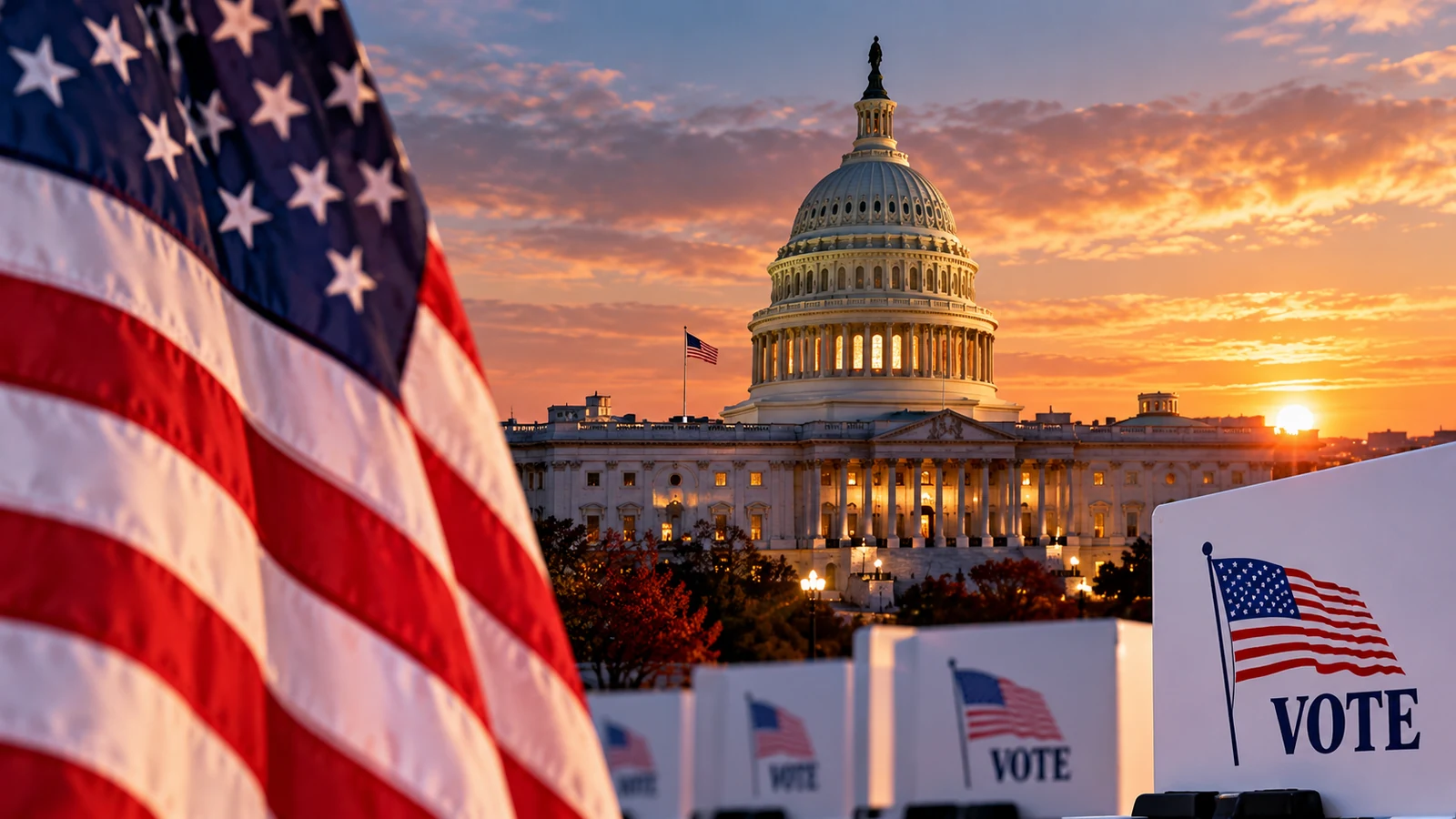
WASHINGTON, October 27, 2026: The United States is approaching its November 3 midterm elections, when voters will decide control of Congress during President Donald Trump’s second term.
All 435 voting seats in the House of Representatives are up for election, alongside roughly one-third of the Senate.
Republicans entered the campaign holding narrow majorities in both chambers, leaving competitive races capable of changing the balance of power in Washington.
Democrats are seeking to gain enough seats to control at least one chamber, which would give them greater authority over legislation, congressional investigations and government spending.
The economy is a central campaign issue, with voters weighing the cost of food, housing, healthcare and fuel.
Immigration enforcement and the administration’s approach to border security have also become major points of disagreement between the parties.
The results could affect the president’s ability to advance legislation on taxation, federal spending and domestic policy during the remaining two years of his term.
For international partners, congressional control can also influence debates over foreign assistance, trade policy and US involvement in overseas conflicts.
The Federal Election Commission confirms November 3 as the scheduled federal election date, although voting procedures and result certification are administered by individual states.
The outcome will determine whether the White House continues to work with Republican majorities in Congress or faces a divided government.