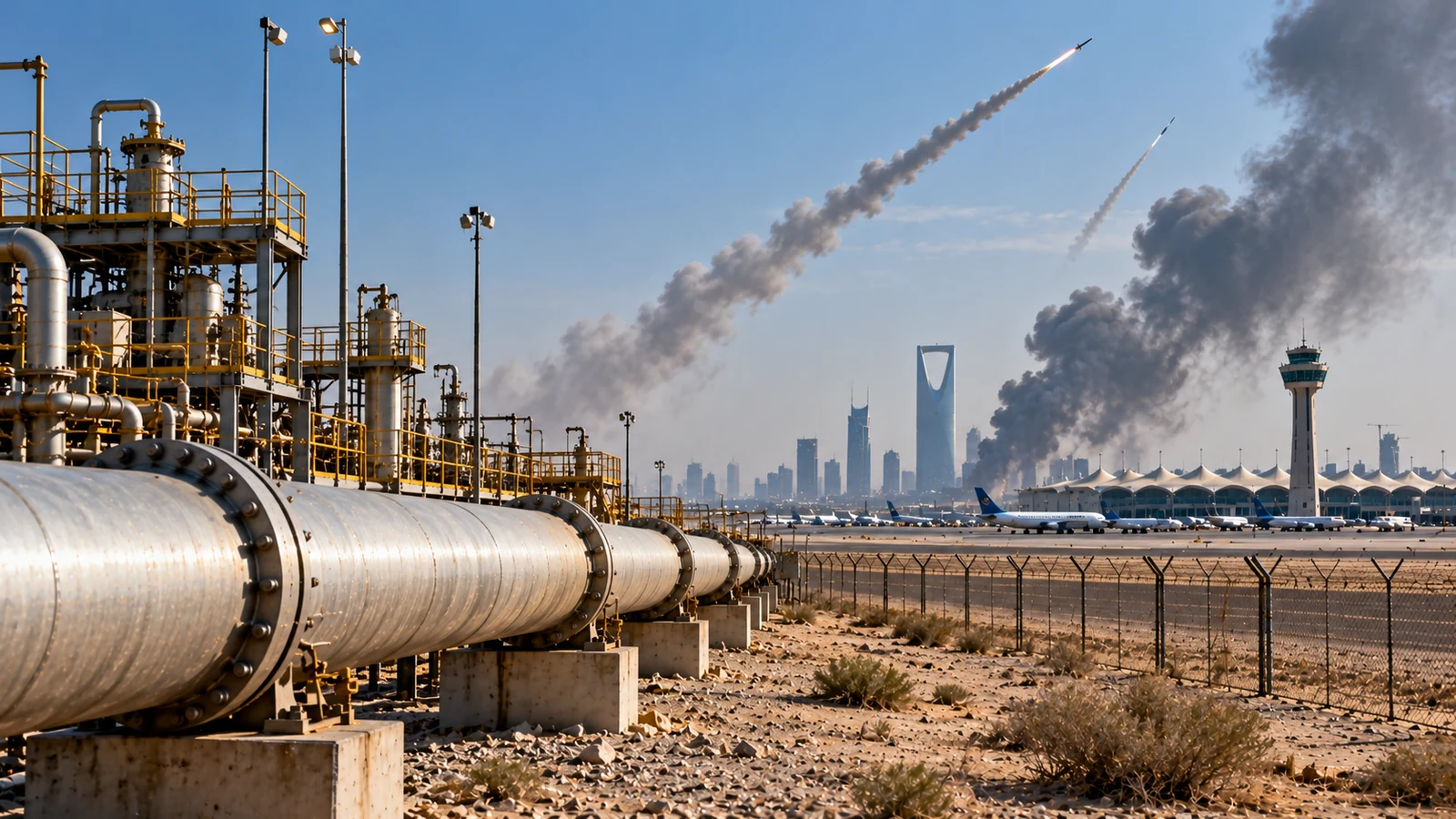
RIYADH, October 26, 2026: Security concerns surrounding Saudi Arabia’s oil export infrastructure intensified on Monday after Yemen’s Houthi movement claimed attacks on pumping stations along the kingdom’s East-West pipeline and on King Khalid International Airport in Riyadh.
Saudi authorities had not immediately confirmed the reported strikes or announced whether the claimed attacks had caused damage.
The developments have drawn renewed attention to the security of the East-West pipeline, which provides Saudi Arabia with an alternative route for crude oil exports when shipping through the Strait of Hormuz is disrupted.
The pipeline extends approximately 1,200 kilometres from the kingdom’s eastern oil-producing region to facilities on the Red Sea coast.
Its strategic importance has increased during the regional conflict because restrictions affecting the Strait of Hormuz have disrupted conventional shipping routes used by Gulf energy exporters.
The latest claims therefore carry significance beyond the immediate security situation in Saudi Arabia, although there is no confirmed evidence that Monday’s reported attacks interrupted pipeline operations.
The Houthi movement said it had targeted pumping stations and Riyadh’s main international airport as part of its continuing military campaign.
Separately, the Saudi-led coalition reported intercepting a missile directed towards Riyadh and destroying missile launchers in Yemen’s capital, Sanaa.
The coalition also announced operations against facilities it identified as Houthi missile storage and launch sites.
These accounts describe opposing military actions, but the claims concerning specific targets and damage require independent confirmation.
The latest escalation follows a series of missile and drone incidents affecting Saudi territory, including earlier Houthi claims involving oil facilities, airports and other infrastructure.
King Khalid International Airport had announced a partial resumption of terminal operations on Sunday following previous disruptions.
The renewed threats have increased uncertainty surrounding air travel and commercial activity in the kingdom.
Saudi Arabia’s energy infrastructure is particularly important to international markets because the country is a major crude oil producer and exporter.
Disruptions affecting export pipelines, terminals or transportation routes can influence market expectations even before any confirmed reduction in oil shipments occurs.
The situation is further complicated by fighting in Yemen and security concerns near the Bab el-Mandeb Strait, another important maritime passage connecting the Red Sea with international shipping routes.
The Saudi-led coalition has intensified operations against Houthi positions as hostilities have expanded, undermining the relative reduction in fighting that followed a United Nations-brokered truce in 2022.
Diplomatic efforts are also taking place against this increasingly difficult security background.
Officials from Saudi Arabia, Pakistan and Turkey were expected to engage with Iranian representatives in Tehran on Monday to discuss regional coordination, according to reports concerning the planned talks.
Pakistan has an important interest in developments affecting Saudi Arabia because of the countries’ longstanding diplomatic and economic relations.
The broader conflict also matters to Pakistan through its potential effect on imported energy costs, regional trade and the security of international transportation routes.
However, the economic consequences of the latest Houthi claims cannot be established without confirmation of whether any Saudi facilities were damaged or operations disrupted.
For now, the principal development is the renewed threat to infrastructure that has become increasingly important for Gulf oil exports.
Further information from Saudi authorities, airport operators and energy companies will be needed to determine the operational impact of the reported incidents.