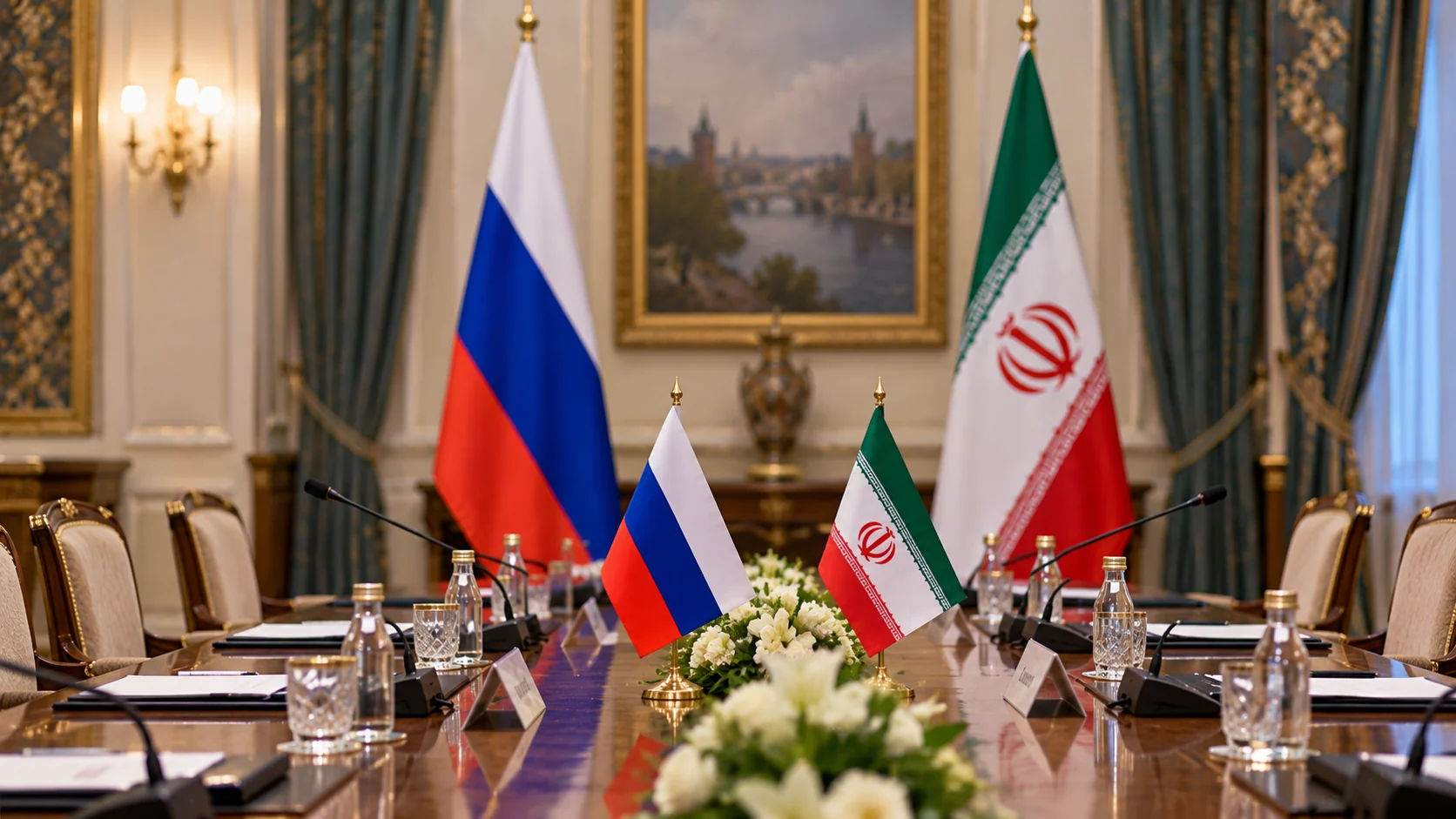
Russian Foreign Minister Sergei Lavrov held talks with Iranian Foreign Minister Abbas Araghchi in Tehran on Monday as Moscow and Tehran discussed regional tensions and diplomatic efforts surrounding the conflict in the Middle East.
The visit comes amid continuing concerns over security in the Strait of Hormuz, a major shipping route for global energy supplies.
At a joint news conference, Araghchi called for regional disputes to be resolved through diplomacy and accused the United States of contributing to insecurity in the waterway.
Tehran calls for regional security cooperation
Araghchi said countries in the region should work towards a shared security arrangement rather than rely on confrontation.
His comments came as Iran and the United States remained at odds over security and access through the Strait of Hormuz.
Disruptions to shipping through the strait can affect energy markets because of the large volumes of oil and gas transported through the route.
Iran’s position places regional cooperation at the centre of its proposed approach, although agreement among neighbouring states would require further negotiations.
Lavrov’s visit strengthens diplomatic contacts
Lavrov arrived in Tehran on Monday for consultations covering bilateral relations and wider international developments.
Iranian officials said the visit was part of continuing discussions between the two governments and efforts to follow up on existing agreements.
Russia and Iran have expanded cooperation in recent years, including in trade, energy, transport and security.
The two countries signed a long-term strategic partnership agreement in January 2025, establishing a framework for closer relations across several sectors.
The agreement does not create a formal mutual defence obligation.
Russia’s role in regional diplomacy
Moscow has advocated a diplomatic settlement to the conflict involving Iran and has maintained contact with Tehran throughout the regional crisis.
Lavrov’s visit provides an opportunity for both governments to coordinate their positions, but no new peace agreement or breakthrough in negotiations was announced in the reporting reviewed for this article.
The talks also reflect Russia’s interest in maintaining its diplomatic influence in the Middle East.
For Iran, engagement with Moscow offers another channel for discussing security concerns and international pressure.
Focus remains on Hormuz and negotiations
The Strait of Hormuz remains central to regional tensions because of its importance to international shipping and energy trade.
Araghchi’s call for diplomacy signals Tehran’s stated preference for negotiations, although differences with Washington remain unresolved.
The next developments will depend on whether diplomatic contacts produce concrete proposals for reducing tensions and restoring confidence in regional maritime security.
Source verification: Russian Foreign Ministry’s account of Lavrov’s October 19 Tehran visit. The visit and joint news conference were also independently reported by Euronews.