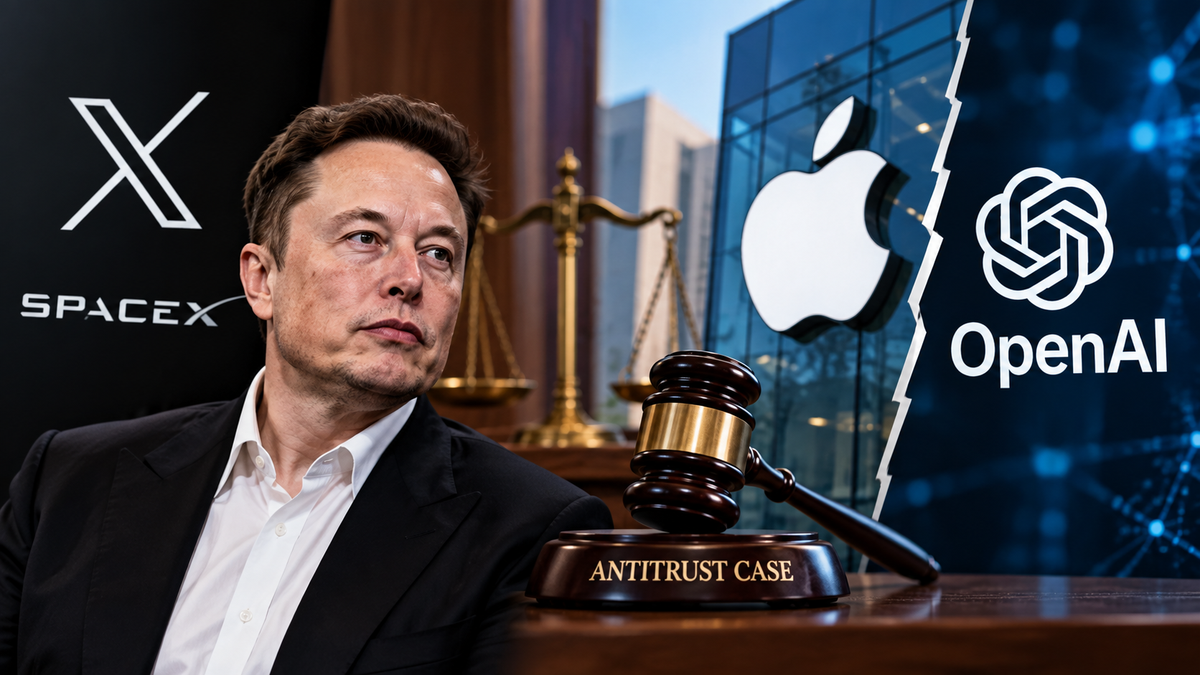
Elon Musk’s X Corp and SpaceXAI have resolved their antitrust claims against Apple, ending the Apple portion of a high-profile legal fight over competition in smartphones and generative artificial intelligence.
The companies moved in federal court in Texas to dismiss the claims they brought against Apple and OpenAI last year. The filing did not explain why the Apple claims were being dismissed or disclose whether the resolution involved a settlement.
The dispute is not entirely over. Musk’s companies said their claims against OpenAI will continue.
The case
The lawsuit accused Apple of violating antitrust law through its integration of OpenAI’s ChatGPT into Apple Intelligence features available across iPhones and other Apple devices.
X and SpaceXAI alleged that the arrangement unlawfully restricted competition and disadvantaged rival artificial-intelligence products.
Apple and OpenAI denied wrongdoing. Apple argued that its integration with OpenAI was not exclusive.
The case had previously survived an effort to halt it at an early stage, allowing the litigation to proceed.
The latest filing changes that landscape by taking Apple out of this part of the dispute while leaving OpenAI as a defendant.
OpenAI said in a court filing that it was not involved in the agreement between Musk’s companies and Apple and did not know its terms. It sought access to the agreement on the grounds that it could affect the remaining claims and OpenAI’s defence.
Why it matters
The litigation sits at the intersection of two increasingly important competition questions: how dominant mobile platforms integrate generative-AI services and whether those partnerships make it harder for competing AI products to reach consumers.
Apple’s integration of ChatGPT brought a major third-party AI system directly into its broader Apple Intelligence offering. Musk’s companies argued that the arrangement harmed competitors; Apple rejected the premise that the integration locked rivals out.
Resolving the claims against Apple removes one major technology company from the immediate dispute, but it does not produce a court ruling establishing whether the underlying antitrust theory was correct.
That distinction matters. A voluntary resolution is not the same as a judicial finding that either side won on the merits.
What happens next
The litigation against OpenAI is set to continue, and the terms of the Apple resolution have not been publicly explained in the court filing reported on Monday.
That means the remaining case could still address parts of the competition dispute surrounding generative AI, even though Apple’s direct role in this lawsuit has ended.