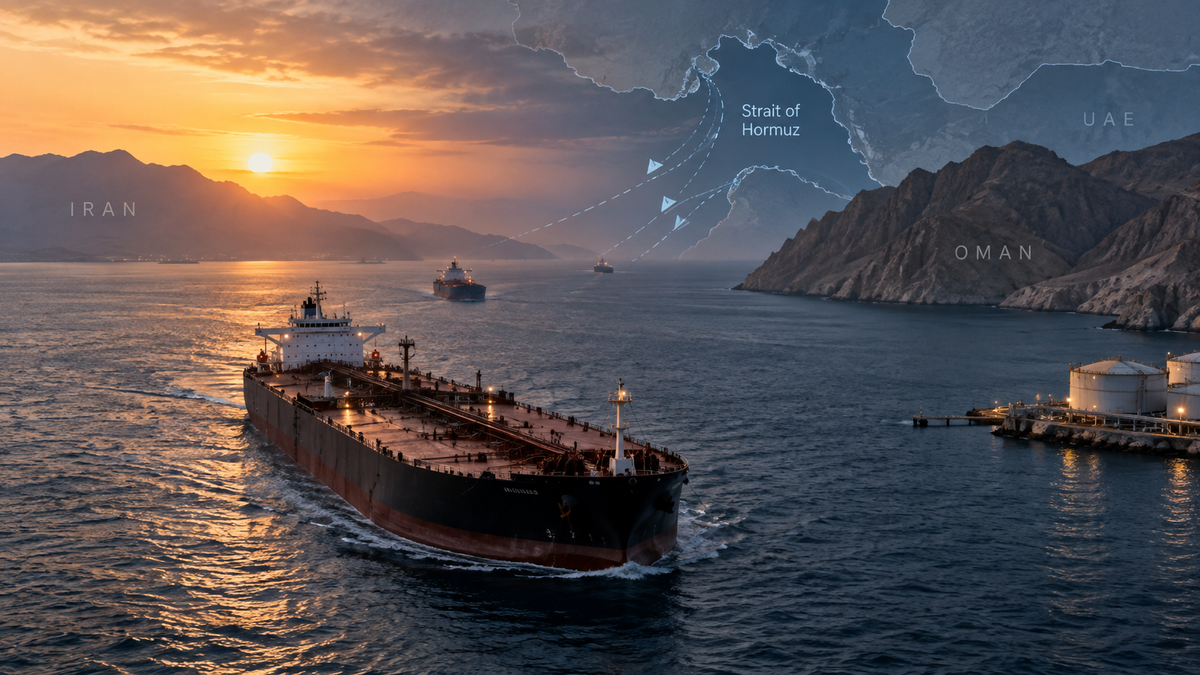
Disruption to oil shipping around the Strait of Hormuz continues to put pressure on global energy supplies, with vessel traffic through the strategic waterway remaining far below normal levels.
Only four visible ships crossed the strait on Tuesday, according to vessel-tracking data reported by Reuters, compared with a 10-day average of about 18. Two were moving into the Gulf and two were moving out, and none of the identified vessels was a very large crude carrier or liquefied natural gas tanker.
Ship-tracking data can be incomplete because vessels may switch off or alter transmissions, so visible traffic is not a perfect measure of every movement. Even with that limitation, the decline illustrates how severely normal shipping patterns have been disrupted.
Before the war, the Strait of Hormuz handled roughly one-fifth of global oil supplies as well as a major share of internationally traded LNG. That concentration makes even partial disruption important for energy markets far beyond the Gulf.
Alternative export routes are also under strain. Saudi Arabia suspended loadings at its Red Sea port of Yanbu after disruption to the East-West pipeline, limiting one of the major routes designed to bypass Hormuz. Additional crude has meanwhile been moved through ship-to-ship transfers near Sohar in Oman as producers and traders look for other ways to keep cargoes moving.
Oil prices remain elevated. In Reuters’ morning market report, Brent crude was around $107.53 a barrel and US West Texas Intermediate about $104.19.
At the same time, US inventory data offered a reminder that the market is being pulled in more than one direction. The American Petroleum Institute reported a 7.1 million-barrel increase in crude inventories, while analysts had expected a decline of about 1.6 million barrels. Larger inventories can ease some immediate supply pressure, but they do not remove the risk created by disrupted Gulf exports.
For Pakistan, the consequences are direct. The country depends heavily on imported petroleum, so higher global prices, shipping costs and supply uncertainty can feed quickly into the domestic fuel bill. Petrol and diesel prices were raised again on September 16, with petrol reaching Rs384.34 a litre and high-speed diesel Rs415.83.
The central issue for the oil market is therefore not simply how much crude exists globally, but whether it can move reliably from producers to buyers. As long as traffic through Hormuz and alternative Gulf routes remains constrained, that logistical risk is likely to remain an important part of the price of oil.