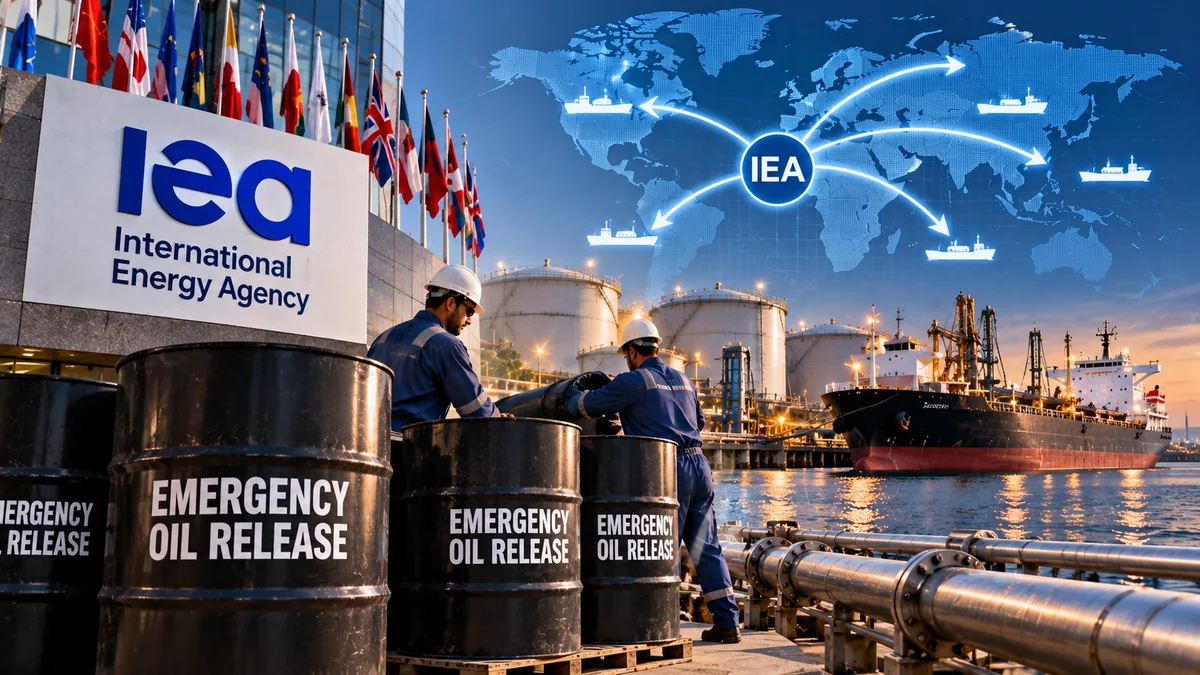
The International Energy Agency has agreed to accelerate the release of emergency oil reserves already pledged under a programme launched in March, with member countries giving priority to diesel supplies amid severe pressure on fuel markets.
The agency said on Wednesday that approximately 100 million barrels from the earlier commitment had yet to reach the market. The figure represents outstanding deliveries under the existing programme and should not be reported as a newly approved additional release of the same size.
The IEA said member governments supported completing the March releases as quickly as possible. The agency also said diesel stocks should be prioritised where feasible because of tight conditions in that market.
The March programme involved a collective release of 400 million barrels intended to address disruptions associated with the war involving Iran and pressure on international energy supplies. Not all pledged volumes had been delivered by the time of this week’s decision.
The latest move follows a Group of Seven agreement concerning 100 million barrels of crude and diesel, which initially raised questions about whether governments were offering additional emergency supply. Reuters reported that analysts and European officials interpreted the IEA’s announcement as an acceleration of existing commitments rather than a separate increase.
A European Commission spokesperson said the planned releases would remain within the quantity agreed in March. Germany likewise indicated that it would participate in delivering volumes previously approved, without confirming a new allocation beyond that programme.
The distinction is important for energy markets. Releasing stored oil sooner can ease near-term supply constraints, but moving an existing delivery forward does not increase the total quantity committed. Traders and refiners also need to know how much of the release will be diesel rather than crude oil.
The IEA did not provide a precise split between diesel and crude in its latest announcement. It said member countries still held public emergency reserves equivalent to about 1.1 billion barrels, including more than 200 million barrels of diesel.
Diesel is especially important for freight transport, farming and industry. Supply interruptions and damage to refining capacity have pushed its price higher in several markets, increasing pressure on governments and businesses.
The agency said the arrangements would be assessed at a board meeting the following week. For countries that import significant volumes of petroleum products, including Pakistan, developments in international supply and diesel prices remain relevant to transport costs and the wider economy, although the effect on domestic pump prices cannot be inferred from the announcement alone.