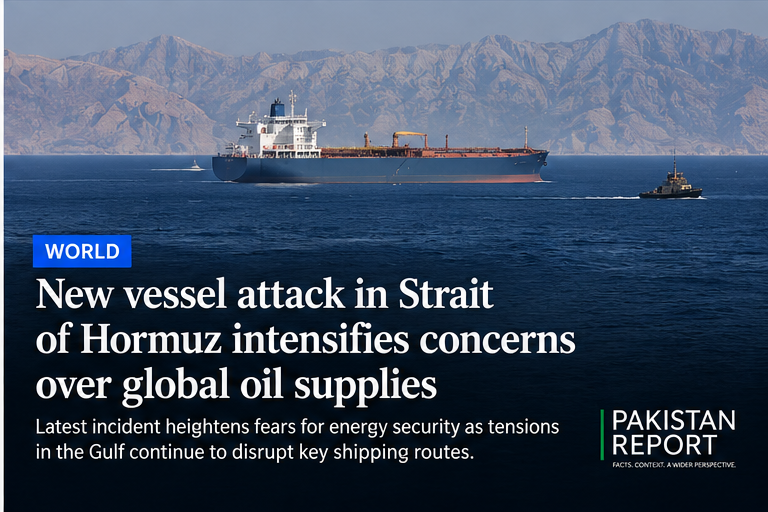
A new attack on a commercial vessel in the Strait of Hormuz has intensified concerns over global oil supplies as conflict across the Middle East puts pressure on more than one critical energy route.
The United Kingdom Maritime Trade Operations reported that a projectile struck a vessel in the strait, causing a fire and forcing the crew to evacuate. Responsibility for the attack was not immediately established.
The incident comes as regional energy infrastructure faces mounting pressure. Saudi Arabia has temporarily shut its East-West oil pipeline following a separate drone attack, while fighting around Yemen has increased concerns over shipping through the Bab el-Mandeb route into the Red Sea.
What changed
The latest vessel strike adds another direct threat to commercial shipping in the Strait of Hormuz at a time when alternative routes are also under strain.
Saudi Arabia’s East-West pipeline has become particularly important during disruption around Hormuz because it can move large volumes of crude toward the Red Sea. An attack affecting that route compounds concerns that disruptions could spread across multiple parts of the regional energy network.
Why it matters
The Strait of Hormuz is one of the world’s most important energy chokepoints. Serious disruption can quickly affect expectations for oil availability, shipping costs and global fuel prices.
The consequences extend well beyond the Middle East. Countries that import petroleum products can face higher costs when crude prices and shipping risks rise. Pakistan is particularly exposed to international energy-price movements because changes in imported fuel costs can feed through to domestic petroleum prices, transport and inflation.
Attribution also remains important. Claims about responsibility for attacks during an active conflict can have major diplomatic and military consequences, so unconfirmed responsibility should not be presented as established fact.
What happens next
Attention will focus on the safety of shipping through Hormuz, the condition of Saudi energy infrastructure and whether regional governments respond militarily or pursue efforts to contain the escalation.
Any sustained disruption to both Gulf and Red Sea energy routes would increase pressure on global oil markets. For Pakistan, the most immediate channel to watch is the effect of international petroleum prices on future domestic fuel revisions.