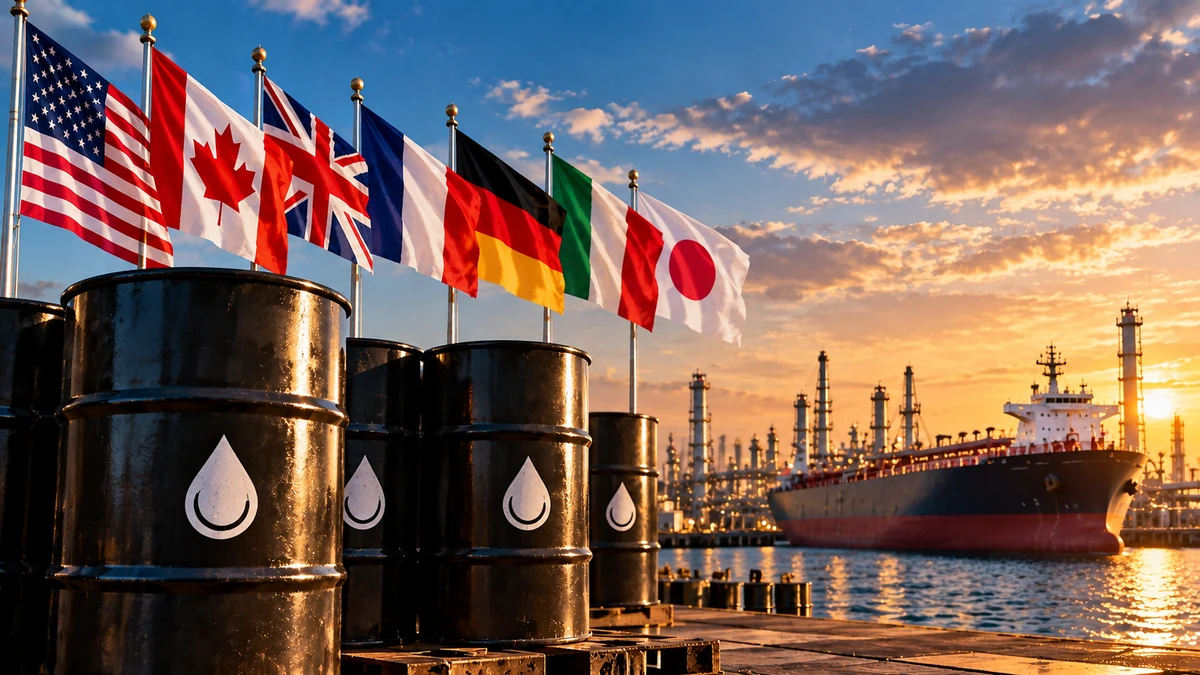
G7 countries have agreed to release 100 million barrels of crude oil and diesel from emergency reserves as governments respond to heightened risks in global energy markets.
The decision was agreed on October 2 and is being coordinated through the International Energy Agency. The release is expected to take place over four months.
The timing matters because the measure was not first announced on October 5. By Monday, markets were assessing how the additional emergency supply, alongside stronger Middle Eastern exports, could affect the immediate balance between supply and demand.
Brent crude was trading at around $101.59 a barrel in early Monday dealings, remaining above $100 despite the additional supply planned by G7 countries.
Emergency reserves are maintained to help governments respond to serious disruptions in energy supply. Releasing crude and refined products can add temporary supply to the market, but it does not permanently increase production capacity.
The measure includes both crude oil and diesel, giving governments flexibility to address pressure at different points in the fuel supply chain.
Oil markets remain sensitive to developments in the Middle East, where conflict and attacks on shipping have raised concerns over the security of major export routes.
At the same time, recent export data have indicated that Middle Eastern crude flows have remained resilient, helping ease some immediate fears of a severe supply shortage.
For consumers and energy-importing economies, the key question is whether the reserve release and continued exports are sufficient to contain prices if security risks persist.
The G7 action provides an additional supply buffer, but the direction of oil prices will continue to depend on shipping security, actual export volumes, demand and any further disruptions to production or transport.