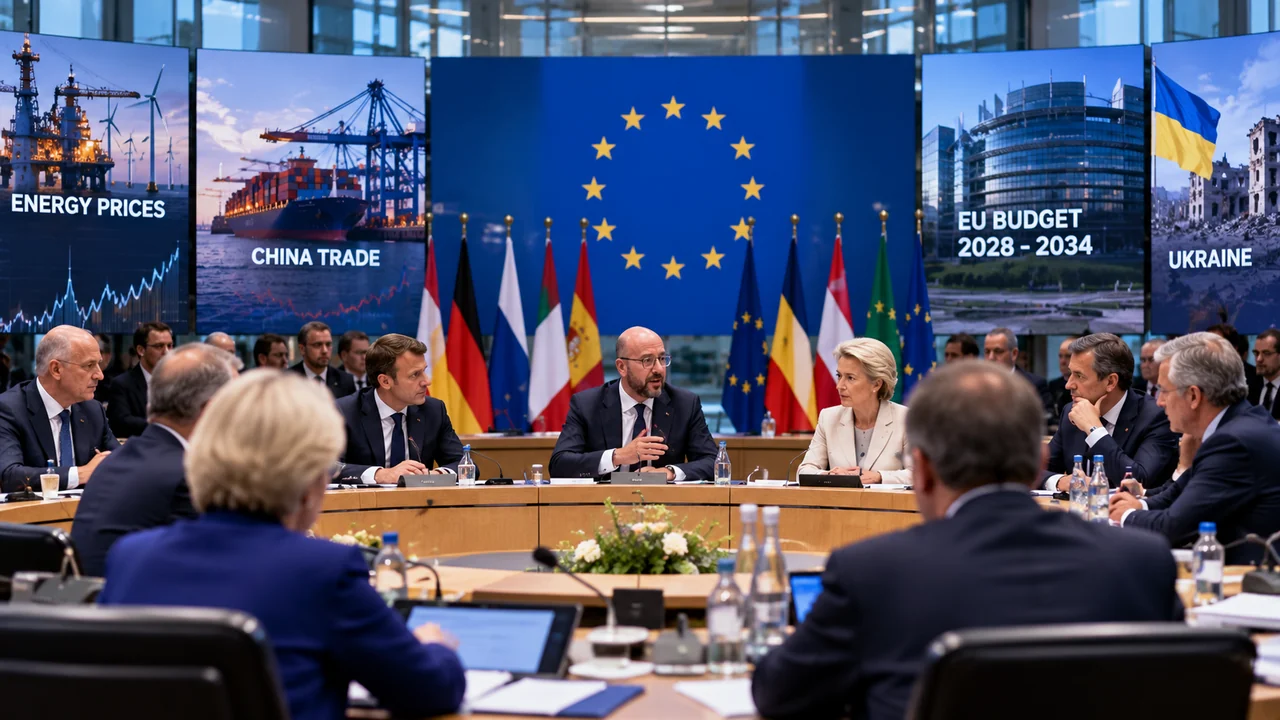
BRUSSELS: European Union leaders began a two-day summit in Brussels on 15 October, with energy prices, economic competitiveness, trade with China and the bloc’s next long-term budget on the agenda.
The European Council meeting runs from 15 to 16 October and also includes discussions of Ukraine, migration, European security and the Middle East.
Energy costs and industry
According to the published European Council agenda, leaders are considering targeted, temporary measures to address high energy costs alongside longer-term efforts to reduce dependence on fossil fuels.
Energy costs are an important issue for European manufacturers competing in international markets. The talks are intended to consider both immediate pressures and longer-term competitiveness.
Relations with China
Reuters reported that leaders were examining Chinese exports and concerns about trade imbalances. Member states face different pressures as they weigh protection for domestic industries against the benefits of trade and the risks of further disruption.
Discussion of possible measures does not mean new restrictions have been adopted.
The 2028–2034 budget
The EU’s next long-term budget is another major subject. Negotiations must balance demands for security, development and other spending with questions about contributions from member states. Continued support for Ukraine forms part of the wider agenda.
Implications beyond Europe
The European Council agenda also addresses maritime security and freedom of navigation in the Middle East, which matter to energy, food and fertiliser supply chains.
EU decisions on trade, industry and energy may have implications for countries outside the bloc, including Pakistan. The summit was still under way when this article was prepared, so agenda items and proposals must not be presented as final summit conclusions.
Sources: European Council, 15–16 October 2026 summit agenda; Reuters, 15 October 2026.
Pakistan Report Illustration