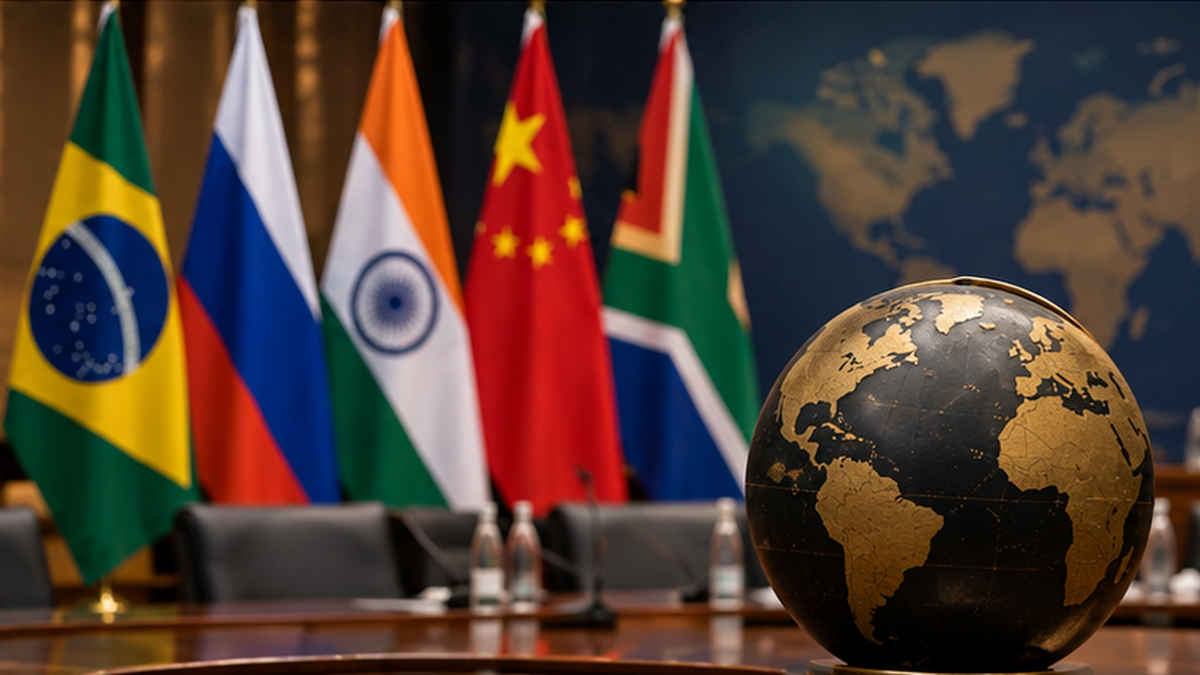
BRICS leaders have adopted a joint declaration expressing deep concern over the escalating conflict in the Middle East and calling on the parties to exercise maximum restraint.
The New Delhi Declaration was agreed at the bloc’s summit in India despite the difficult positions of members including Iran and the United Arab Emirates. It calls for avoiding actions that could further aggravate the situation and reiterates support for resolving international disputes through dialogue, consultation and diplomacy.
The agreement comes as the conflict involving Iran, the United States and Israel continues to disrupt regional security and global energy markets.
What changed
The significant development is that the expanded BRICS grouping succeeded in reaching a common position on the Middle East crisis.
That consensus was not guaranteed. Iran is itself a BRICS member, while the UAE has close ties with Washington and has been directly affected by the regional confrontation.
The declaration also expresses concern over attacks on civilian infrastructure and peaceful nuclear facilities under International Atomic Energy Agency safeguards.
Why it matters
BRICS now includes major economies and states with sharply different strategic relationships. A consensus declaration therefore provides an indication of where those governments can find common diplomatic ground even during an active conflict.
The statement does not end the fighting or create a ceasefire mechanism. Its significance lies instead in the ability of the bloc to agree on restraint and diplomacy while the war is affecting shipping, energy supplies and relations across the Gulf.
The conflict’s economic consequences are already international, particularly through higher oil prices and disruption around major maritime routes.
What happens next
Diplomatic attention will shift to whether BRICS members can translate the declaration into practical mediation or other efforts to reduce tensions.
Separate talks involving Iran and Gulf states will also be important. For global markets, the immediate question remains whether diplomatic activity can reduce the risks facing energy infrastructure and shipping through the region.