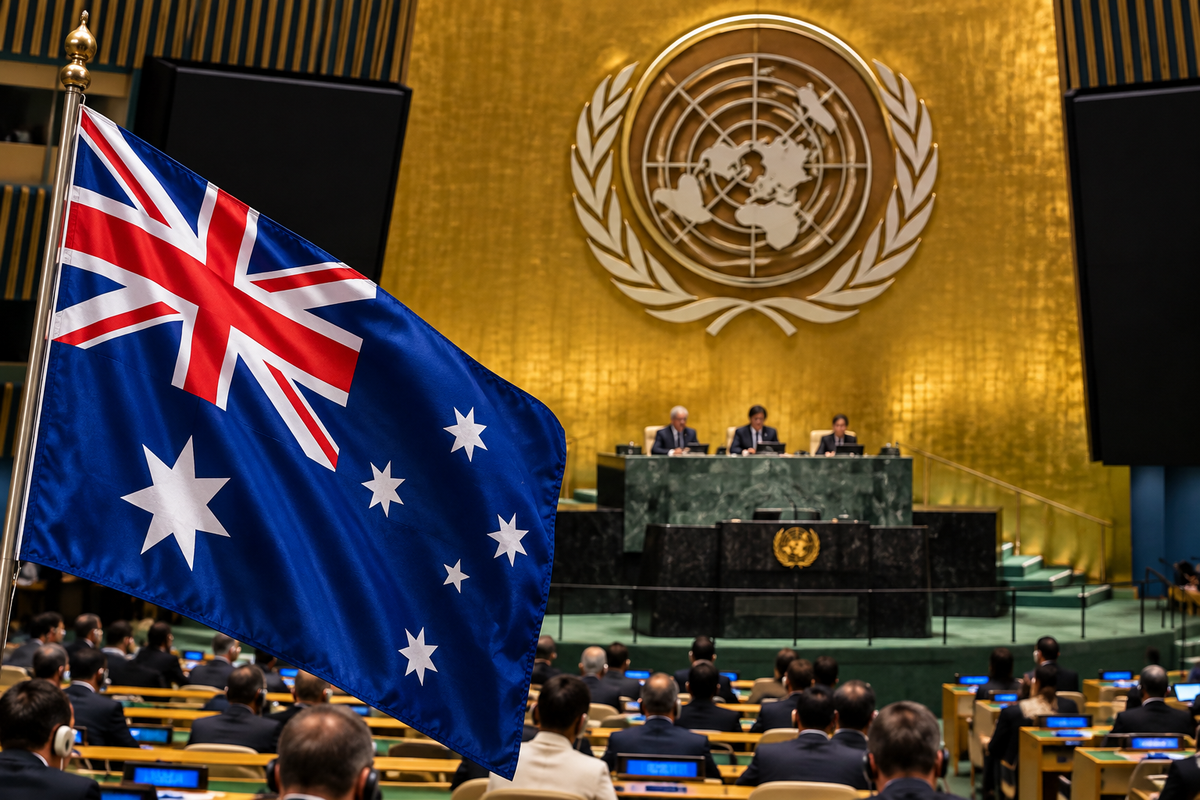
NEW YORK — Australia has formally launched its campaign for a non-permanent seat on the United Nations Security Council for 2029–30, setting out conflict prevention, ocean and climate security and resilient digital systems among the priorities it would pursue if elected.
Prime Minister Anthony Albanese and Foreign Minister Penny Wong announced the bid on September 21, arguing that international cooperation and rules-based institutions remain central to Australia’s security and economic interests.
The campaign begins years before the term itself, reflecting the diplomatic work required to secure support among UN member states.
A bid built around prevention and regional interests
Australia says it would use a Security Council term to work across regions on preventing conflict, strengthening ocean and climate security and promoting peaceful, resilient and inclusive digital futures.
The Security Council has primary responsibility for maintaining international peace and security under the UN system. Its 15 members include five permanent members and 10 non-permanent members elected by the General Assembly for two-year terms.
For Canberra, the campaign also offers a platform to argue that developments far beyond Australia’s borders can directly affect its economy, security and region.
Australia has previously served on the Security Council, most recently in 2013–14.
A long diplomatic campaign
Winning a non-permanent seat requires support in the General Assembly, making sustained diplomatic outreach a central part of any campaign.
Australia’s announcement frames the bid around practical areas where Canberra says it can contribute rather than around a single geopolitical dispute. Climate and ocean security are particularly relevant to Australia’s engagement with Pacific countries, while conflict prevention and digital resilience give the campaign a broader global scope.
The 2029–30 term remains several years away, so the composition of the international agenda at the time of the election may differ substantially from today’s.
For now, the launch marks the start of Australia’s effort to persuade UN members that it should return to the Security Council and take a direct role in decisions on international peace and security.