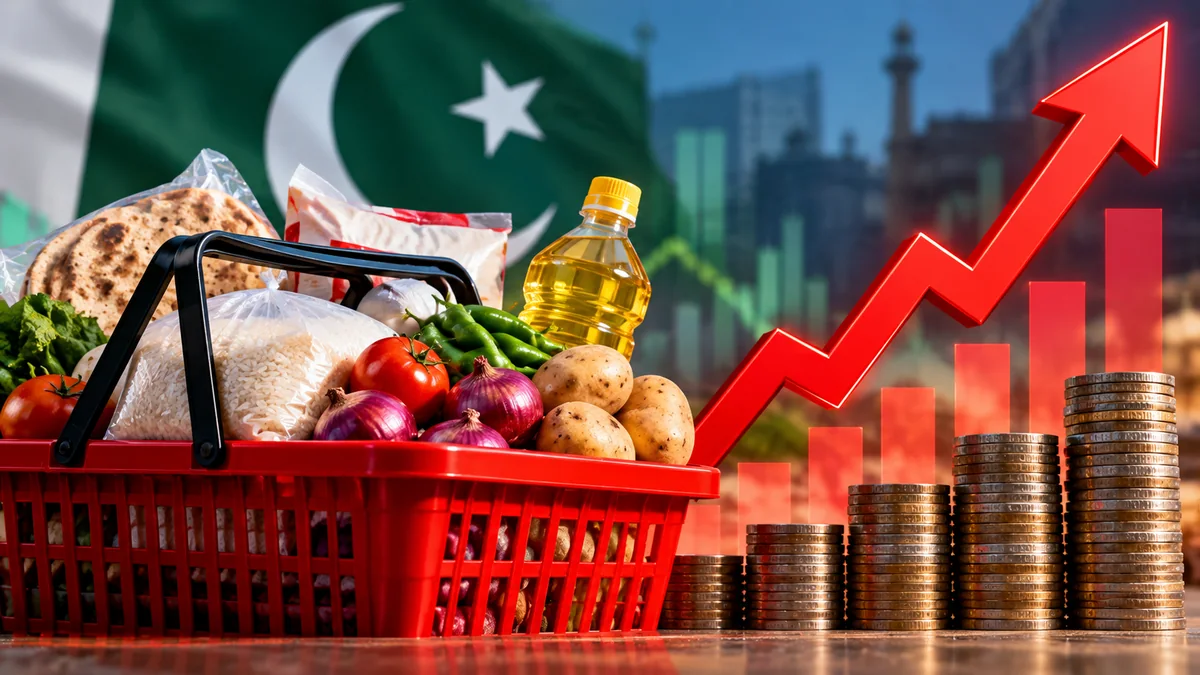
Pakistan’s Sensitive Price Indicator (SPI) rose 11.97% compared with a year earlier in the week ended October 8, according to Pakistan Bureau of Statistics data.
The weekly index also increased by 0.57% from the preceding week, reflecting further pressure on the prices of selected essential goods.
Wheat flour was among the main contributors, rising 5.69% during the week. Chicken prices increased 4.93%, while gram pulse became 3.99% more expensive.
These changes show that price movements can vary substantially between individual food items.
What the figures mean
The 11.97% headline figure is a year-on-year comparison. It does not mean prices increased by nearly 12% in a single week.
The separate 0.57% figure measures the change from the previous week.
SPI tracks a selected basket of frequently purchased goods and is designed to provide a timely picture of price movements affecting households.
It is different from the monthly Consumer Price Index, which covers a broader range of goods and services. The two measures should not be treated as interchangeable.
Pressure on household budgets
Higher prices for staple foods can affect families quickly, particularly those spending a large share of their income on groceries.
A weekly rise in flour or chicken prices may also be more noticeable to shoppers than movements in the broader inflation index.
However, one week’s data cannot establish a lasting trend. Prices of perishable foods and agricultural products can change because of supply conditions, transport costs and seasonal demand.
The next SPI releases will help show whether the increases persist or begin to reverse.
For now, the October 8 reading indicates that essential-item inflation remained a concern, even as individual products followed different price paths.