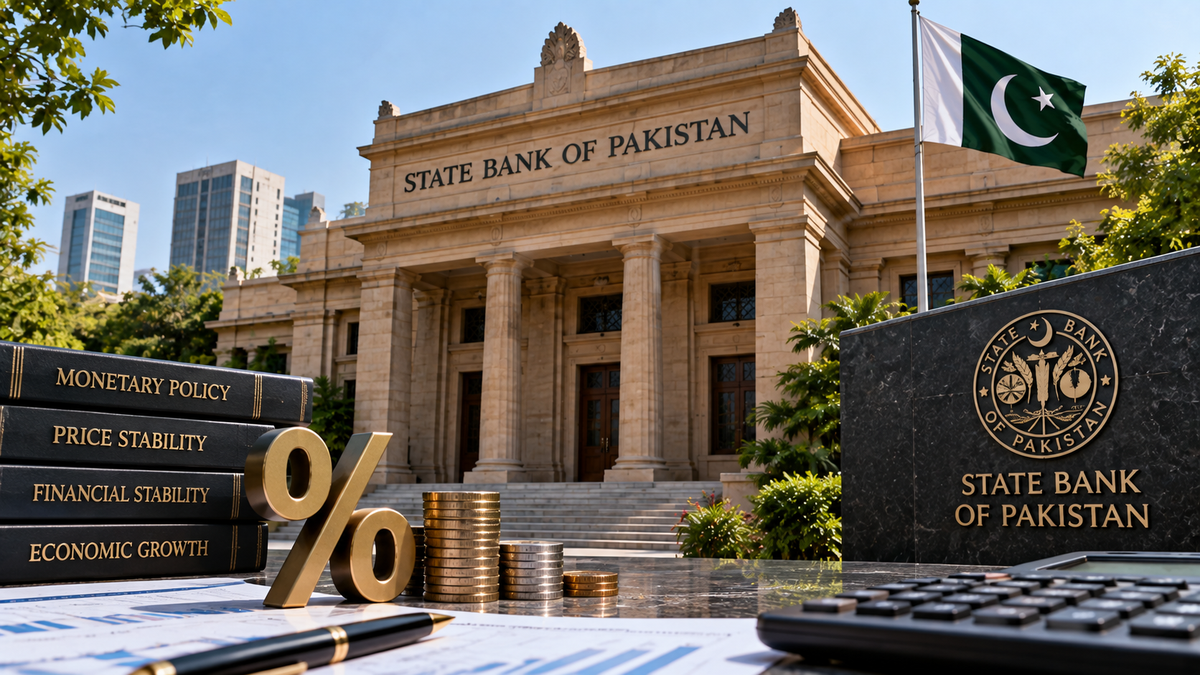
The State Bank of Pakistan kept its benchmark policy rate unchanged at 11.5% at its September 14 meeting, as rising inflation and uncertainty over global energy prices prompted a cautious approach.
Seven of the Monetary Policy Committee’s ten members voted to maintain the rate.
Annual consumer inflation reached 11.1% in August, up from 9.2% in July. The central bank also reported core inflation of 8.7%, indicating price pressures beyond the most volatile food and energy items.
The bank’s medium-term inflation target is 5% to 7%. It expects inflation to ease towards the upper end of that range by June 2027, although higher international commodity prices could complicate that outlook.
Why the rate was held
The policy rate influences borrowing costs across the economy. Keeping it unchanged avoids an immediate additional increase in financing costs for businesses and households, but borrowing remains relatively expensive.
The central bank must balance efforts to control inflation with the need to support economic activity.
Pakistan’s foreign exchange position has improved. The committee noted that State Bank reserves had risen to about $21.4 billion, helped by proceeds from the government’s Eurobond issuance and the central bank’s foreign currency purchases.
Stronger reserves can help Pakistan manage payments for imports and external debt. They do not, however, prevent imported fuel and other commodities from becoming more expensive.
The committee also observed a pickup in economic activity, while warning that Middle East tensions and disruptions to supply chains could push up costs.
Future decisions will depend on consumer prices, international energy markets and Pakistan’s broader economic conditions.
For now, the bank has chosen to hold interest rates steady rather than risk adding to inflationary pressure through an early reduction.