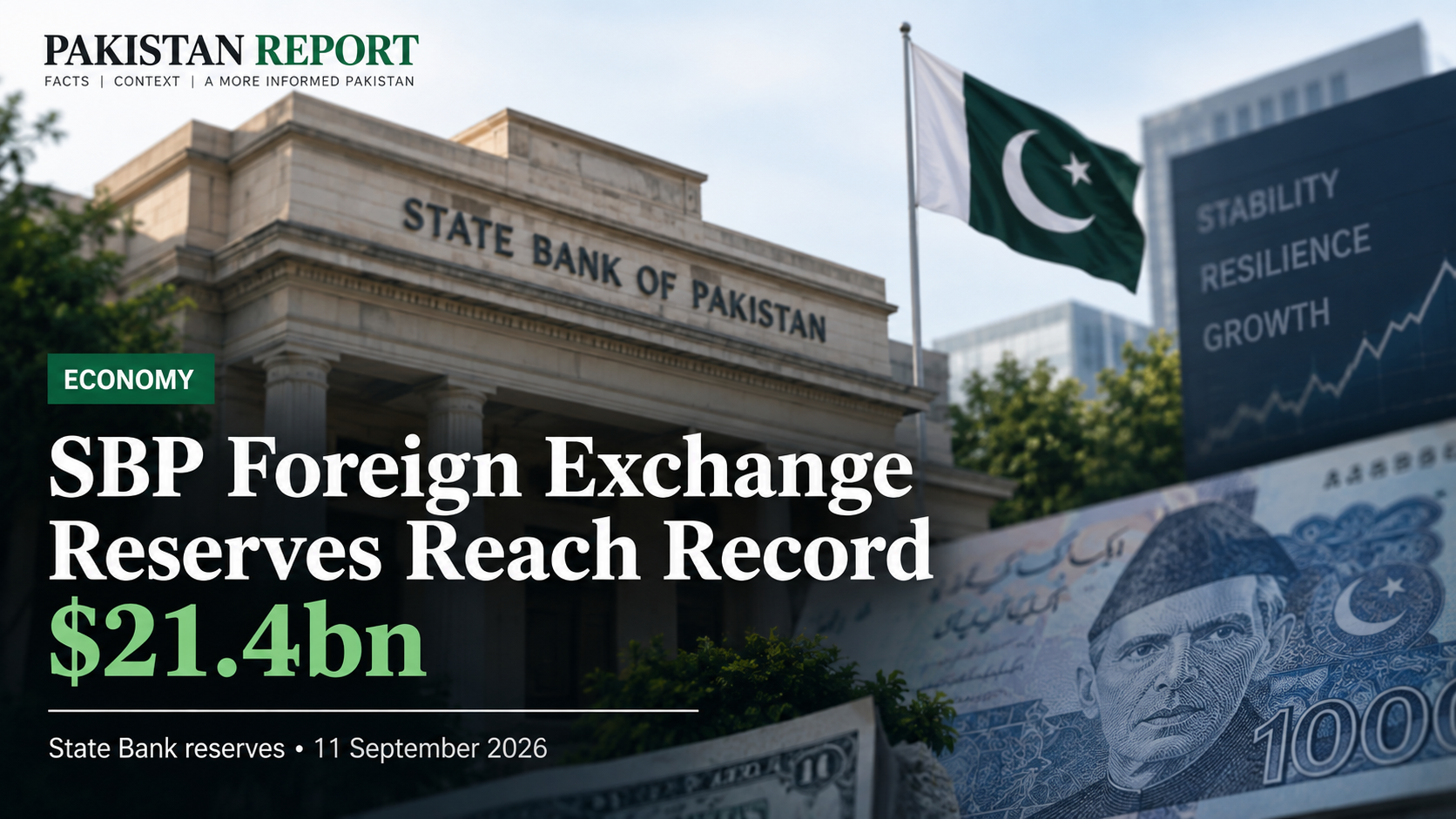
Pakistan’s central bank reserves rose to $21.389 billion in the week ending September 11, 2026, after the government received proceeds from an international Eurobond issuance.
State Bank data show a weekly increase of $3.061 billion from approximately $18.33 billion.
Commercial banks held another $5.402 billion, bringing the country’s combined liquid foreign exchange reserves to $26.791 billion.
The distinction matters: the $21.4 billion headline refers to reserves held by the State Bank, while the higher figure includes foreign currency held by commercial banks.
What drove the increase?
The State Bank attributed the unusually large weekly rise to Eurobond proceeds. The immediate jump was therefore linked to money raised through borrowing on international capital markets.
Prime Minister Shehbaz Sharif welcomed the increase, pointing to broader improvements in remittances, services exports and economic management.
Those factors may support reserves over time, but the State Bank identified the Eurobond inflow as the direct reason for the September 11 weekly increase.
Pakistan’s reserves were much lower during the foreign exchange crisis of 2023, when central bank holdings briefly fell below $3 billion.
Why reserves matter
Foreign currency reserves help Pakistan pay for imports and meet international debt obligations. They can also reassure businesses and investors about the country’s ability to obtain dollars for essential payments.
However, borrowed money increases reserves while creating future repayment obligations. A rise driven by bond proceeds should not be confused with a permanent improvement in export earnings.
The combined reserve figure was close to, but below, levels recorded in September 2021.
The next weekly releases will show whether the central bank can maintain the higher reserve level as import payments and debt obligations continue.
For now, the figures show a substantial strengthening in Pakistan’s foreign currency holdings, with the latest jump directly linked to the Eurobond issuance.