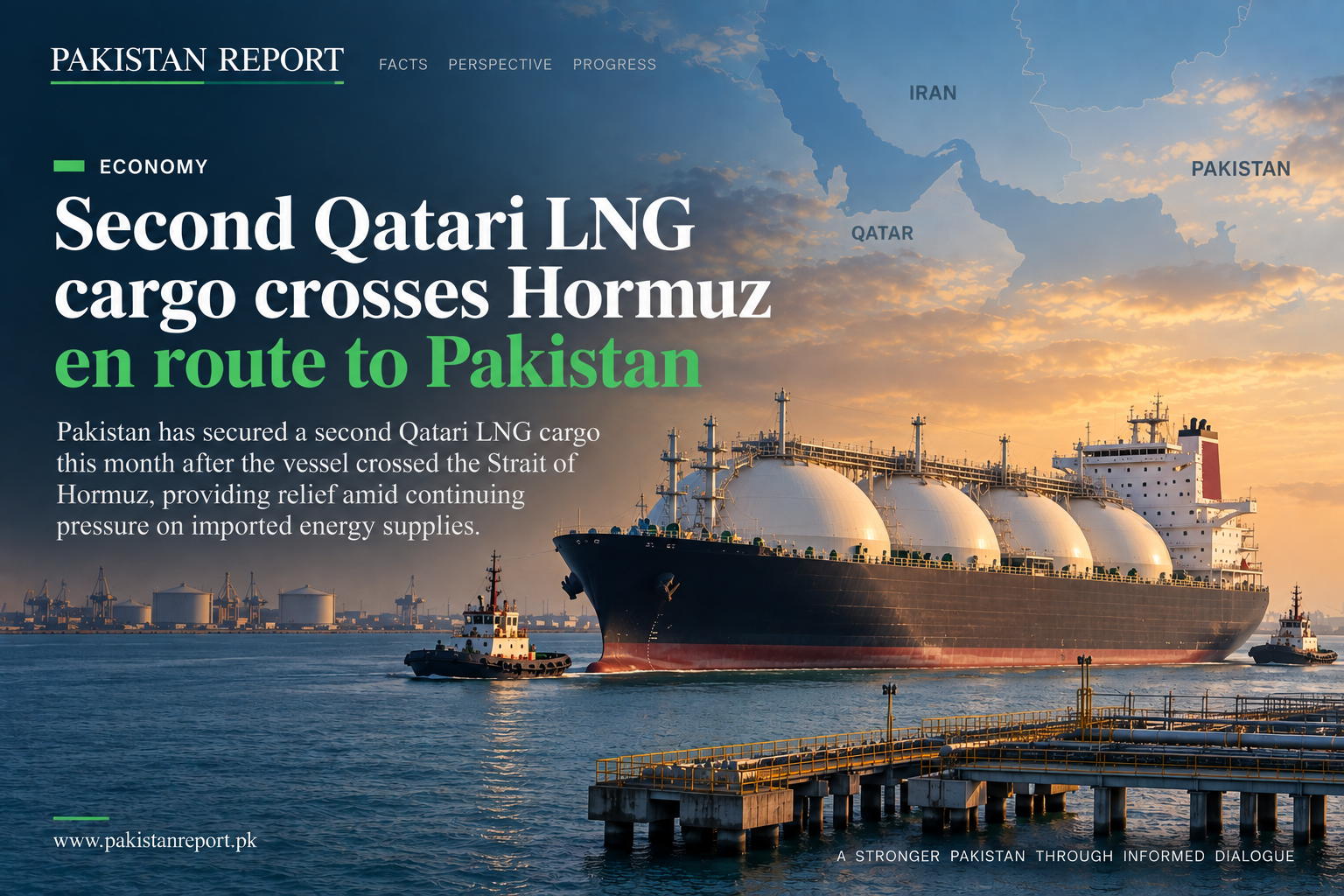
Pakistan has secured a second liquefied natural gas cargo from Qatar this month after the shipment crossed the Strait of Hormuz, offering near-term relief as disruption in the Gulf continues to complicate the country’s energy supplies.
A Petroleum Division official told The News that the cargo had successfully transited the strategically important waterway and was expected to reach Pakistan’s LNG import facilities at Port Qasim. Business Recorder, citing a Bloomberg report and ship-tracking data, also reported that the tanker had crossed Hormuz after loading at Qatar’s Ras Laffan facility.
The shipment follows the arrival of another Qatari cargo on September 10. That vessel, Al Marrouna, carried about 81,936 tonnes of LNG from Ras Laffan and crossed Hormuz on September 7 under Pakistan’s government-to-government supply arrangements with Qatar, according to current reporting.
Officials cited by The News said the latest cargo was secured at a price equivalent to 13.37% of Brent crude.
Hormuz disruption strains LNG supplies
The Strait of Hormuz is critical to Pakistan’s energy security because the country relies heavily on imported fuel from the Gulf, including LNG supplied by Qatar under long-term contracts.
Regional hostilities have disrupted normal energy flows through the waterway and complicated Pakistan’s access to contracted Qatari supplies. Earlier interruptions forced the country to seek emergency LNG and consider additional purchases from the international spot market, where prices rose sharply as supply risks increased.
Business Recorder reported that Pakistan had been considering a tender for a replacement cargo if the latest Qatari shipment could not pass through Hormuz. Receiving the contracted supply reduces the immediate need to buy an additional cargo at elevated spot-market prices.
The News reported that the latest passage followed diplomatic engagement involving Iranian officials. Business Recorder, citing Bloomberg, said safe passage had been negotiated between government officials. Pakistan Report has not independently verified the details of those negotiations, and the reported diplomatic arrangements are therefore being treated as attributed accounts rather than an official public description of the talks.
The additional LNG arrives as Pakistan’s gas system is also dealing with constraints in domestic production. Officials cited in current reporting pointed to reduced or disrupted input at several fields and facilities, although they said there was no forced curtailment from any source on the Sui Northern Gas Pipelines network at the time of reporting.
Temporary relief, continuing exposure
Imported LNG is used in electricity generation and other parts of the economy. Delays to contracted cargoes can therefore affect gas availability and power generation, while replacement purchases at higher international prices can add to energy costs and Pakistan’s import bill.
The successful transit of a second September cargo eases some immediate pressure but does not remove the broader risk. QatarEnergy has warned that the Hormuz crisis could affect the timetable for parts of its LNG expansion programme, while regional disruption continues to influence shipping and international gas markets.
For Pakistan, the key issue is whether contracted Gulf energy supplies can continue to move reliably through the region. A prolonged disruption would leave the country more exposed to expensive spot purchases, alternative fuels and tighter management of domestic gas and electricity supplies.
The latest cargo therefore provides useful near-term supply support, but Pakistan’s energy system remains sensitive to developments around one of the world’s most important oil and gas transit routes.