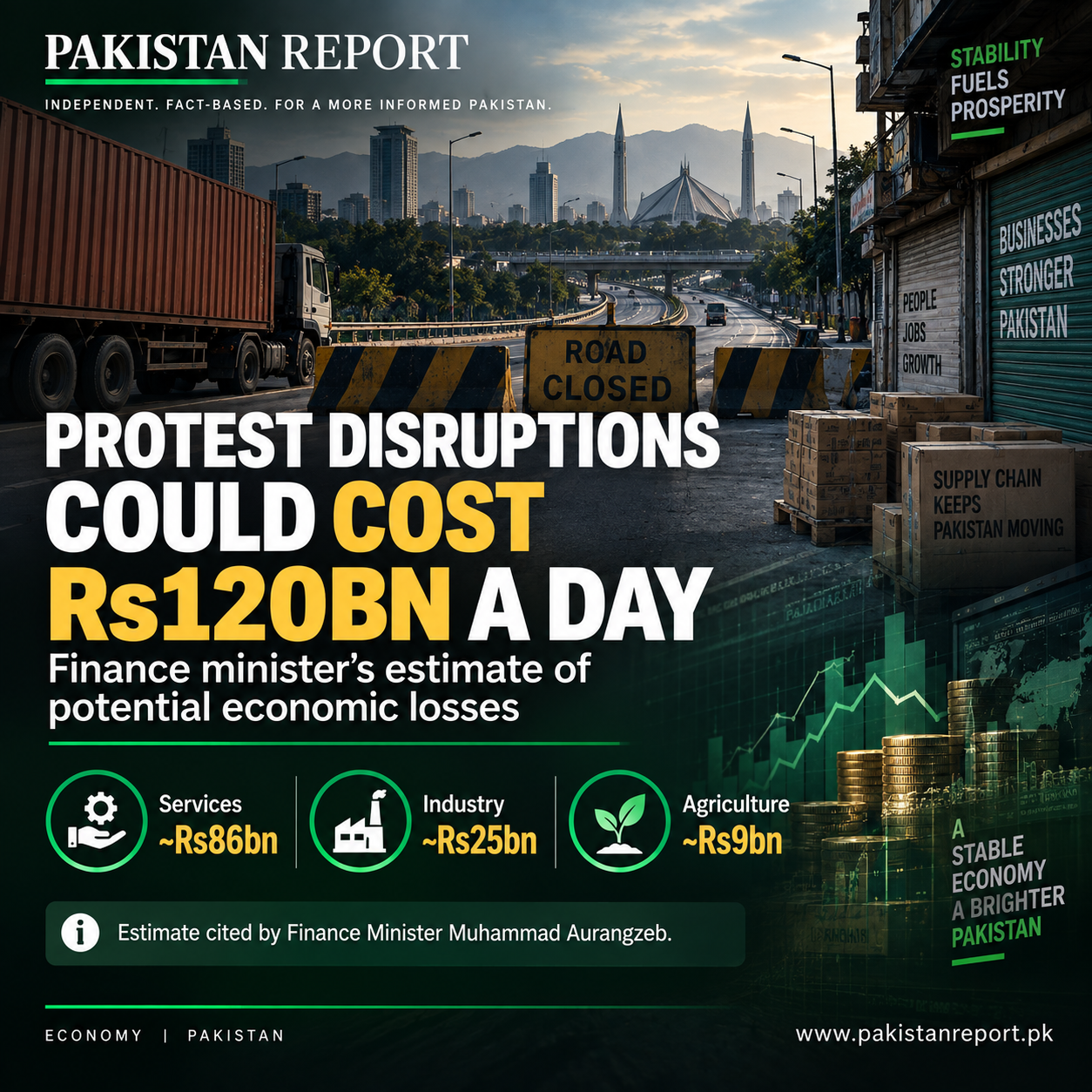
Finance Minister Muhammad Aurangzeb has said strikes, sit-ins, long marches and road closures could cause economic losses of around Rs120 billion a day by disrupting commercial activity.
The figure is the finance minister’s estimate of potential losses rather than a recorded daily loss.
Aurangzeb estimated that the services sector could account for around Rs86bn of the total, industry around Rs25bn and agriculture around Rs9bn.
He said disruption could affect transportation, retail and wholesale activity, construction, movement of finished goods and raw materials, supply chains and agricultural trade. Perishable goods and dairy supply chains could also be exposed when transport networks are interrupted.
His comments came as several political and interest groups prepared protest activity and marches in and around Islamabad.
The finance minister argued that interruptions to economic activity would also affect daily-wage workers, small businesses and shopkeepers. Opposition parties and protest organisers, meanwhile, have presented their planned demonstrations as responses to political or economic grievances.
What the estimate means
The Rs120bn figure should be read as a government estimate of the possible economic effect of widespread disruption. The eventual impact of any protest would depend on its duration, geographic reach, road closures and the extent to which businesses and supply chains were actually interrupted.
Sources
- Business Recorder, “Strikes, road closures may cause Rs120bn daily economic loss: Aurangzeb,” September 20, 2026.
- Dawn, “Finance minister says protests could cause daily loss of around Rs120bn,” September 20, 2026.