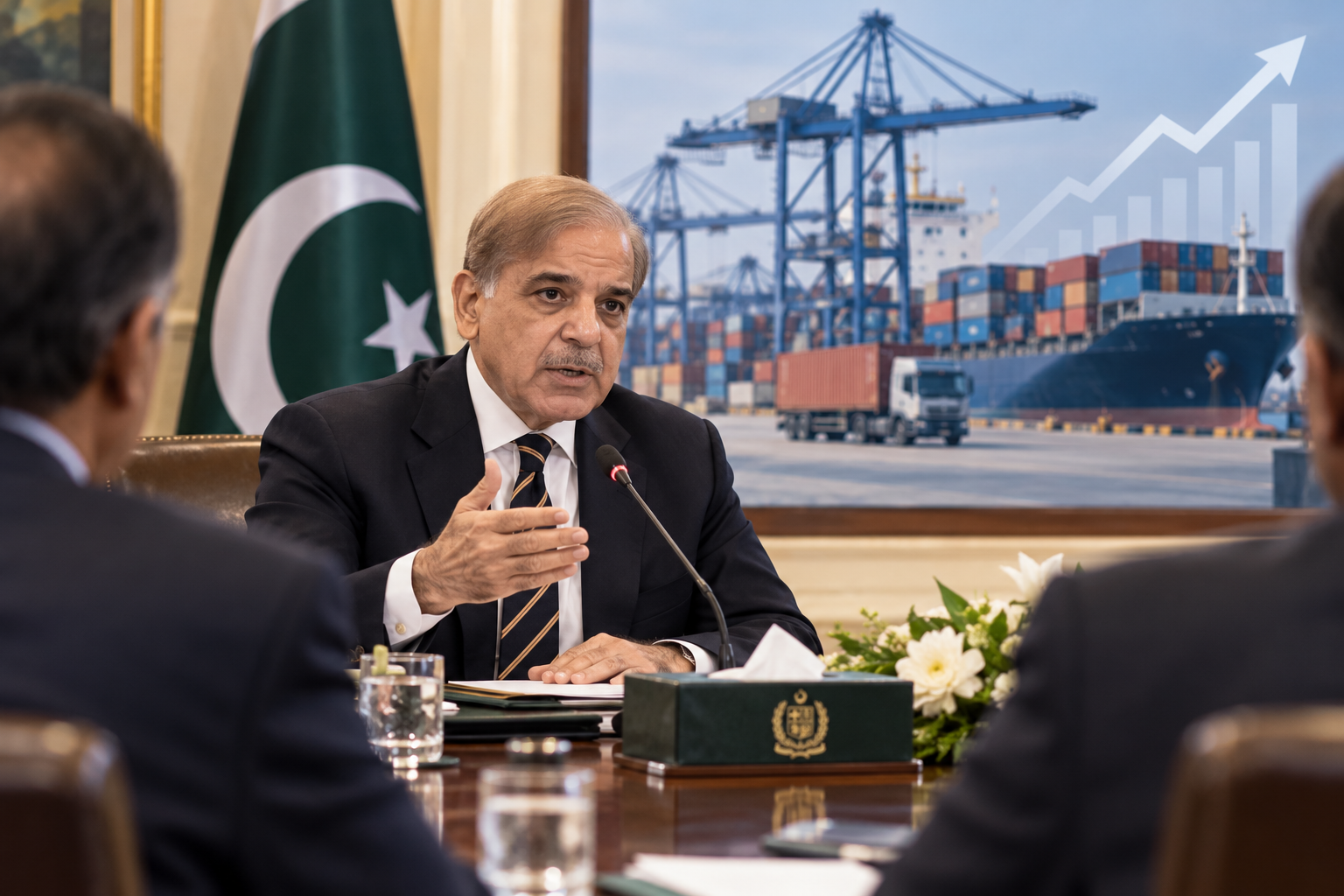
Prime Minister Shehbaz Sharif says the government recovered Rs800 billion through tax enforcement over the past year without introducing new taxes.
He made the claim during a meeting with business leaders and industrialists focused on increasing exports and improving conditions for investment.
The Rs800 billion figure is the government’s stated result. It should not be treated as an independently audited assessment of additional tax revenue.
Exporters asked for proposals
The prime minister invited business representatives to submit recommendations on export growth, taxation and investment.
He also directed officials to examine whether the super tax exemption available to exporters could be extended.
That review is not a final policy decision. Any extension would require formal approval and implementation.
The government identified high energy costs and regulatory burdens as obstacles facing businesses. It is pursuing a programme to remove or simplify unnecessary rules, sometimes described as a regulatory “guillotine”.
The effect on companies will depend on which requirements actually change and whether compliance becomes easier in practice.
Tax collection and growth
Improving tax enforcement may raise revenue without increasing headline tax rates. However, the long-term benefit depends on whether collections are sustainable and whether enforcement brings more economic activity into the tax system.
The government’s claim also needs to be considered alongside published revenue figures and the costs businesses face.
For exporters, affordable energy, reliable supplies and predictable regulations can matter as much as access to tax incentives.
The meeting therefore brought together two connected goals: improving government revenue and helping Pakistani businesses earn more from overseas markets.
Business groups are expected to submit their proposals. The next important developments will be any formal decision on exporters’ tax treatment and measurable changes to business regulations.
The wider test is whether enforcement and reform produce stronger exports and investment, rather than simply increasing pressure on companies already paying taxes.