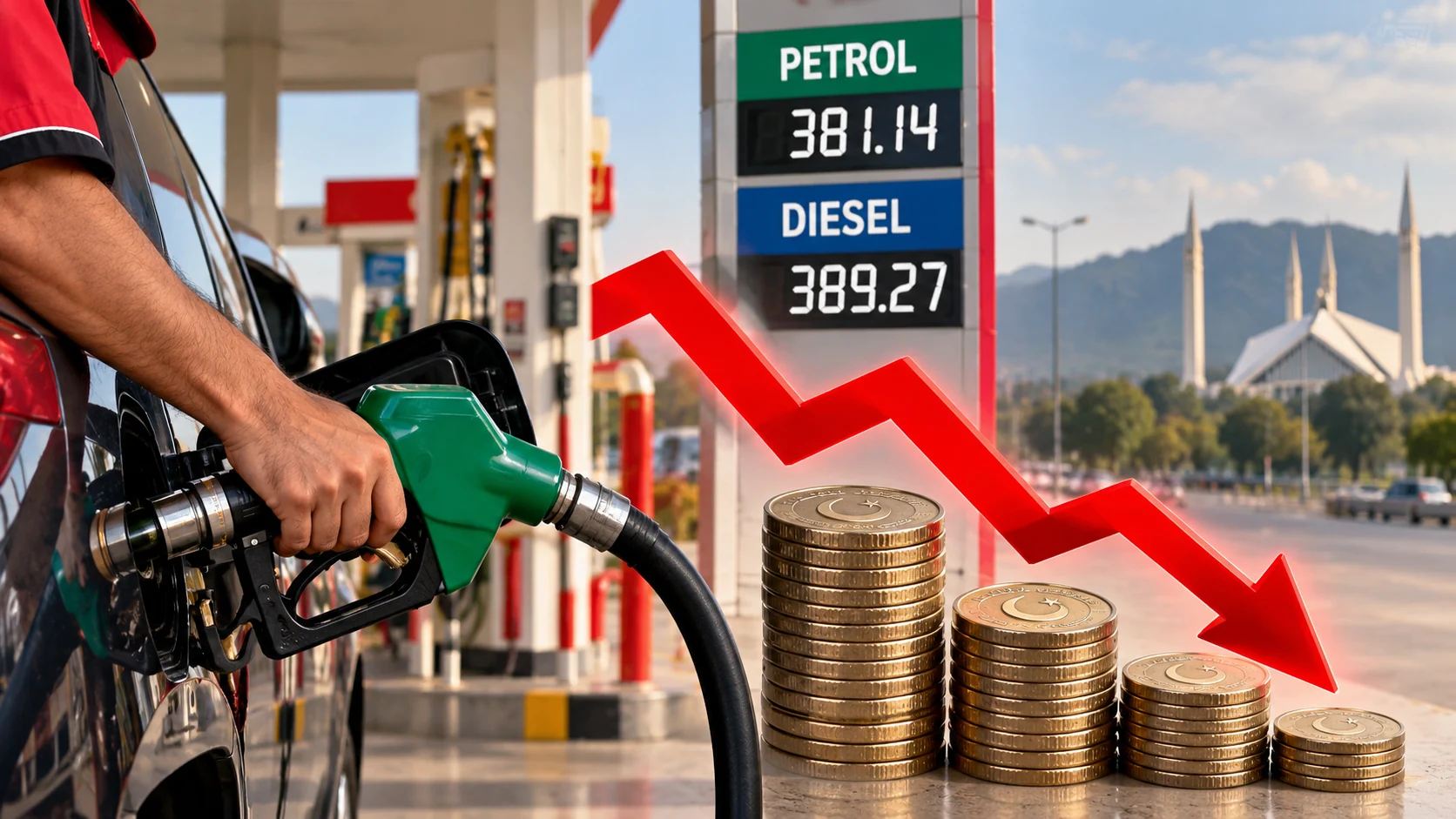
Petrol and diesel prices have been reduced in Pakistan from October 20, providing some relief to motorists and transport operators as the government introduces a system of daily fuel price reviews.
Petrol has fallen by Rs5.16 to Rs381.14 per litre, while high-speed diesel has been reduced by Rs7.69 to Rs389.27 per litre, according to the Petroleum Division.
The previous prices were Rs386.30 for petrol and Rs396.96 for diesel.
For a motorist buying 50 litres of petrol, the reduction means a saving of Rs258. A transport operator purchasing 100 litres of diesel will pay Rs769 less.
Pakistan introduces daily fuel price reviews
The price reduction comes alongside a change in how petroleum prices are determined.
Under the new system, the Oil and Gas Regulatory Authority (OGRA) will calculate fuel prices using a rolling seven-day average of international petroleum rates.
Previously, prices were reviewed at longer intervals. The new arrangement is intended to reflect international market movements more frequently.
This means petrol and diesel prices could change more often, depending on global oil prices and other factors affecting domestic fuel costs.
The use of a seven-day average may also reduce the immediate impact of sudden changes in international prices.
Will lower diesel prices reduce transport costs?
Diesel is an important expense for goods transport, buses and other commercial vehicles.
The latest reduction lowers fuel costs for operators, although it remains unclear whether transport fares or freight charges will be adjusted.
Transport costs also depend on vehicle maintenance, wages, tolls and other expenses.
Any reduction in freight charges could eventually benefit consumers, particularly through the transportation of food and other essential goods.
However, a decrease in diesel prices does not automatically lead to lower retail prices.
What happens next?
The new daily pricing system will require motorists and businesses to keep track of more frequent changes in notified rates.
Its impact will become clearer as the government implements the system and publishes subsequent price adjustments.
For now, consumers will benefit from lower petrol and diesel prices, while the longer-term effect on transport costs and household expenses remains to be seen.