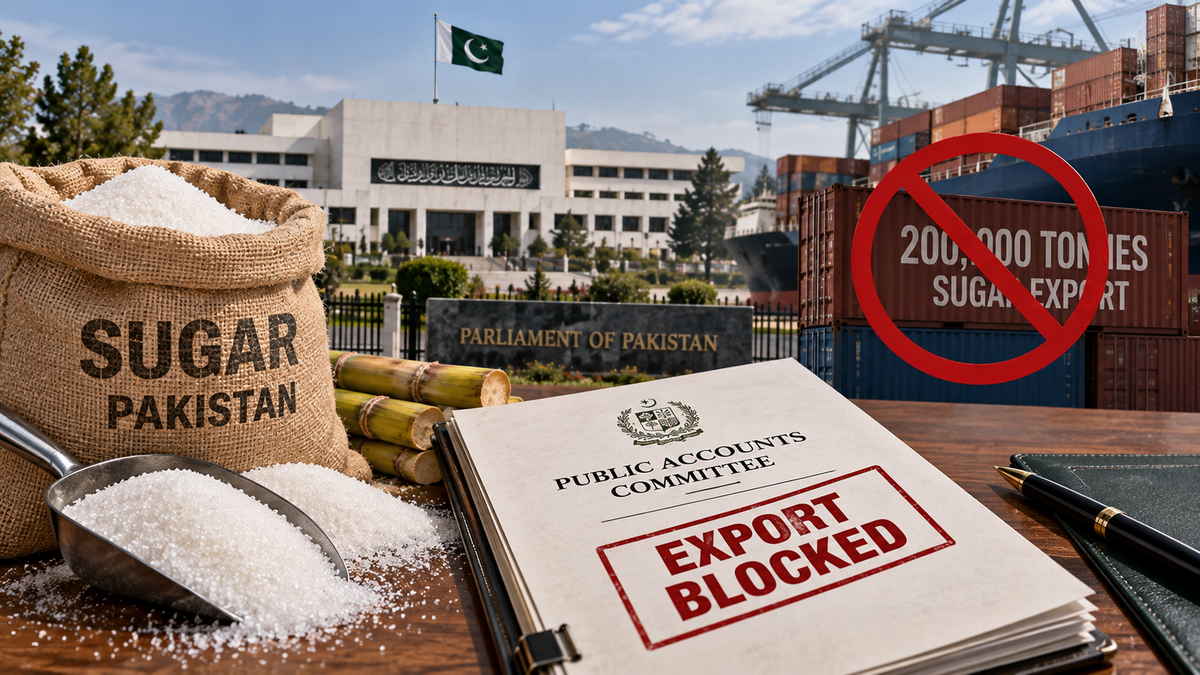
ISLAMABAD: Parliament’s Public Accounts Committee has halted a government move to export 200,000 tonnes of sugar, stepping into a politically sensitive commodity market only a day after the Sugar Advisory Board cleared the proposed exports.
The PAC directed the government not to proceed with sugar exports until the committee has submitted its recommendations, effectively putting the Sugar Advisory Board’s decision on hold.
The parliamentary committee also told the government not to move ahead with planned wheat imports without its recommendations, bringing two of Pakistan’s most important food commodities under closer parliamentary scrutiny.
The Sugar Advisory Board, chaired by National Food Security Minister Rana Tanveer Hussain, had cleared exports after reviewing domestic consumption, requirements and available stocks. The government maintains that sufficient sugar is available to prevent shortages in the local market.
The minister had also directed officials to monitor sugar stocks and prices in major cities and instructed mill owners to clear outstanding payments owed to sugarcane growers.
The PAC’s intervention means those assurances will now face additional examination before exports can proceed.
Sugar exports are closely watched in Pakistan because decisions to allow overseas sales can become controversial if domestic prices subsequently rise or supplies tighten. The central policy question is whether the country genuinely has enough surplus sugar to export without creating pressure for consumers later.
The committee’s intervention on wheat reflects a different but related concern.
Pakistan’s wheat procurement system has faced considerable disruption following Punjab’s decision not to conduct the large-scale procurement traditionally used to support the market.
An Auditor General report presented to the committee said farmers’ confidence had been damaged after Punjab, which had previously purchased around four million tonnes of wheat at the fixed support price, did not procure wheat in the subsequent cycle.
The federal government is considering imports to cover a supply shortfall, but the PAC has now told officials not to proceed until the committee has examined the situation.
The food ministry has been given a week to provide a comprehensive briefing on the wheat crisis, while the committee expects to send its recommendations to the prime minister later this month.
Taken together, the sugar and wheat directives amount to a significant parliamentary intervention in the government’s management of food commodities.
They also expose the difficult balance facing policymakers. Exporting a genuine sugar surplus can bring foreign exchange into the country and support producers, but exports become problematic if domestic supply has been overestimated. Wheat presents the reverse problem: imports can address shortages, but poorly timed purchases can depress local prices and hurt farmers.
The immediate effect is clear. The proposed 200,000-tonne sugar export cannot proceed under the current decision without further PAC scrutiny, while planned wheat imports have also been placed on hold pending the committee’s recommendations.
The next test will come when the food ministry presents its stock, production and consumption figures to parliament — data that will determine whether the government’s assumptions about both commodities withstand closer examination.