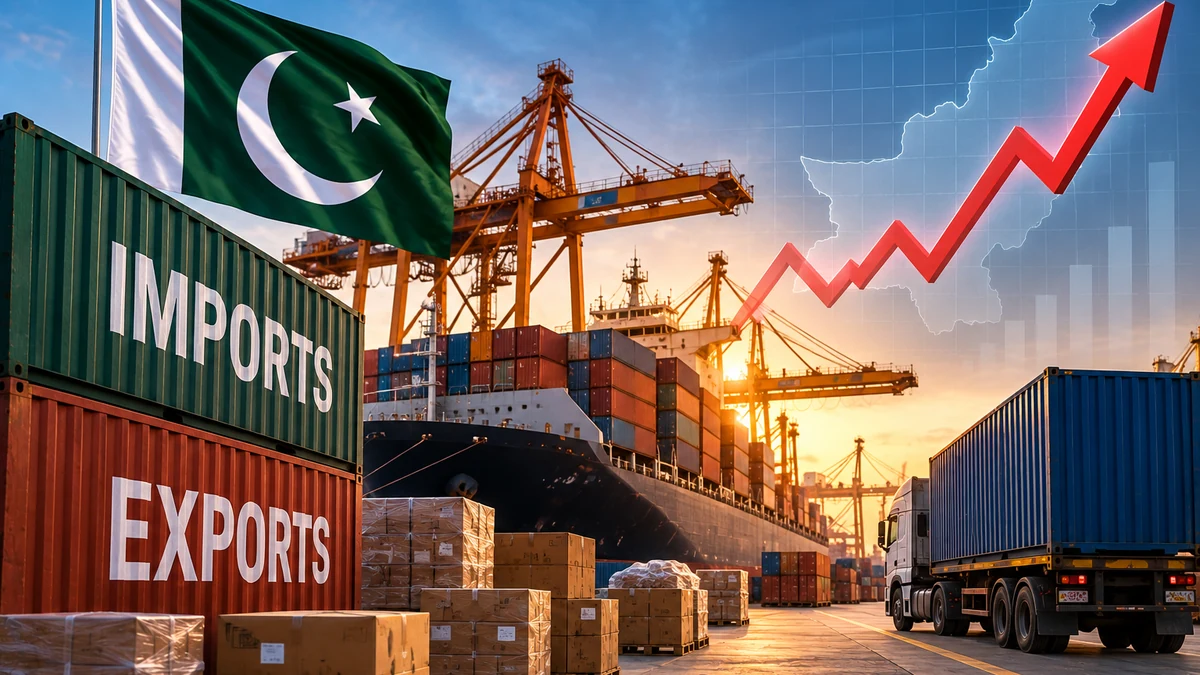
Pakistan’s exports increased during the first three months of the 2026–27 financial year, but a larger rise in imports pushed the country’s goods trade deficit to $10.79 billion.
Figures from the Pakistan Bureau of Statistics show the deficit increased by more than 15% compared with $9.37 billion during July to September last year.
A trade deficit occurs when a country spends more on imported goods than it earns from selling goods abroad.
Pakistan exported approximately $8.42 billion worth of goods during the quarter, nearly 11% more than the $7.59 billion recorded a year earlier.
Imports reached about $19.22 billion, rising more than 13% from $16.97 billion in the corresponding period.
The figures show that Pakistani businesses sold more goods overseas, an encouraging development for exporters. However, spending on imported products also increased, widening the difference between the two totals.
In September alone, exports reached around $2.94 billion, up 17.6% from a year earlier. Imports stood at approximately $6.49 billion, leaving a monthly goods trade deficit of about $3.56 billion.
Export earnings help Pakistan obtain foreign currency and support industries that sell to international markets. Imports include products and materials needed by consumers and businesses.
The goods trade deficit is one part of Pakistan’s wider international financial position. Money sent home by overseas Pakistanis and earnings from services also contribute to the country’s foreign currency inflows.
The latest figures highlight the importance of continued export growth as Pakistan works to strengthen its external trade position.