KARACHI — Pakistan raised Rs880 billion through an auction of short-term government borrowing instruments, with interest rates increasing compared with the previous auction.
These instruments, known as Treasury bills or T-bills, allow the government to borrow money from banks and other investors for periods of three, six or 12 months.
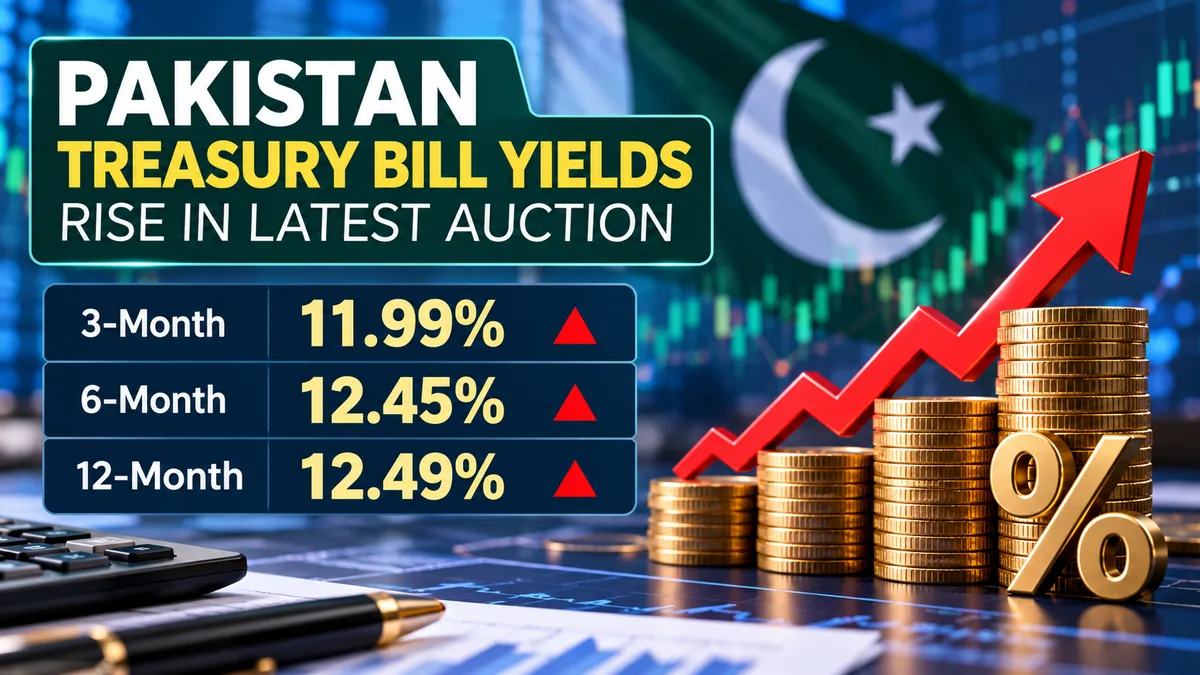
The interest rate on six-month bills rose from 11.70% to 12.45%, the largest increase among the three options. The rate on three-month bills climbed to 11.99%, while the 12-month rate reached 12.49%.
Higher rates mean the government must pay more to borrow money through these bills.
Investors submitted bids worth approximately Rs2.73 trillion, substantially more than the Rs880 billion ultimately raised. This showed strong interest in government securities despite the increase in borrowing costs.
The auction included Rs400.25 billion accepted through competitive bids and Rs479.8 billion through non-competitive bids.
At the time of the auction, the State Bank of Pakistan’s policy interest rate stood at 11.5%. Treasury bill rates can differ from that benchmark because investors consider inflation, future interest rates and other economic conditions.
For ordinary Pakistanis, Treasury bill rates matter because government borrowing costs can influence interest rates across the financial system.
Banks and investors closely follow these auctions when deciding where to place funds. Businesses also monitor borrowing conditions because financing costs affect investment decisions.
The latest auction showed that demand for government bills remained strong, while the government accepted higher rates across all three repayment periods.