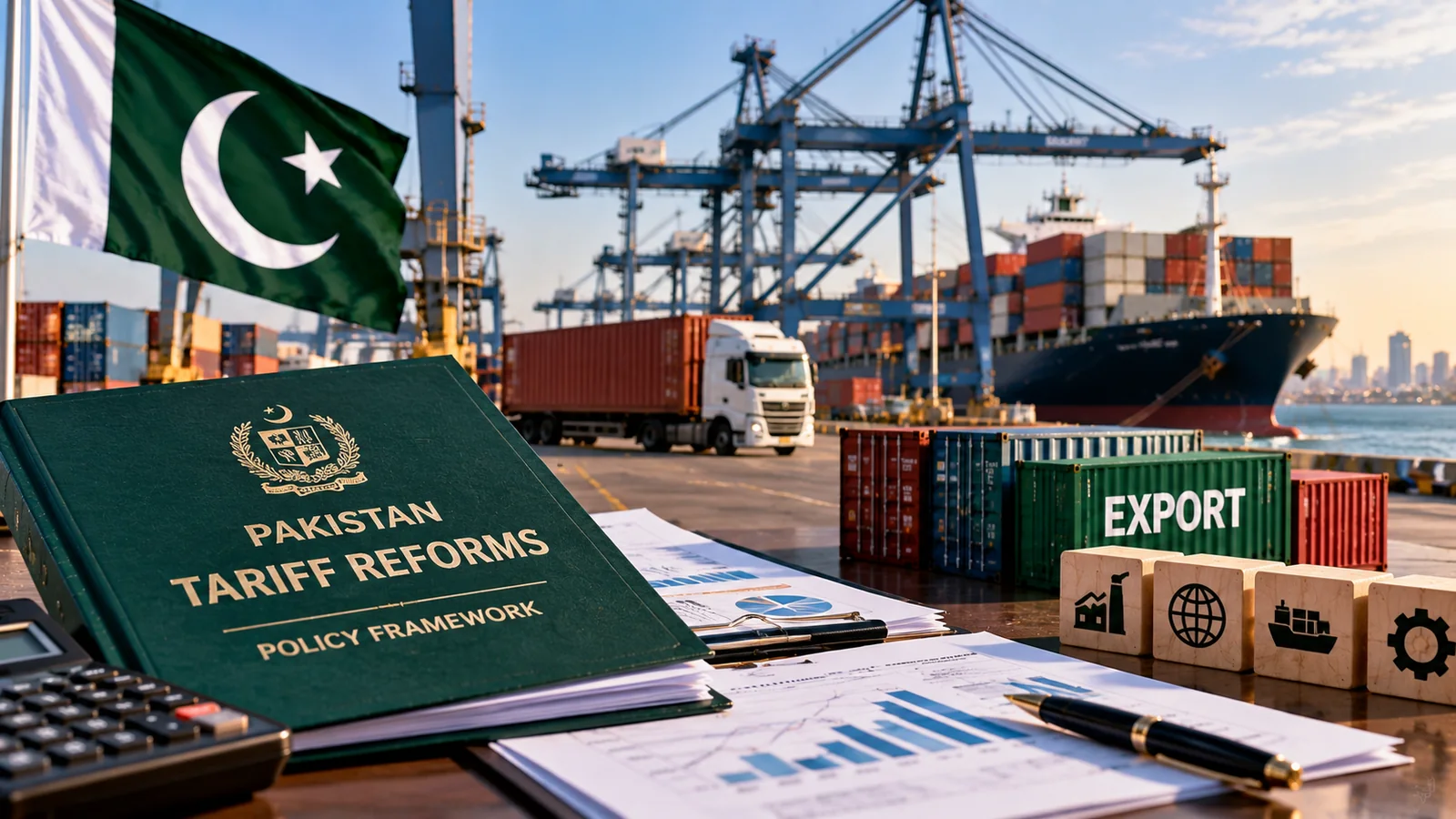
Finance Minister Muhammad Aurangzeb has reaffirmed the government’s commitment to tariff reforms, saying Pakistan must improve export competitiveness and avoid returning to economic growth driven primarily by consumption and imports.
Speaking at a policy discussion at Lahore University of Management Sciences on Saturday, Aurangzeb said the country needed a more sustainable growth model supported by productivity, investment and exports.
He argued that earlier periods of consumption-led expansion had increased demand for imports, contributed to balance-of-payments pressures and ultimately forced Pakistan to seek emergency financial support.
The minister said prolonged protection of domestic industries could not continue indefinitely. Tariff reforms, including measures to reduce the cost of imported inputs, were intended to help Pakistani businesses compete more effectively in international markets.
He also highlighted the need for changes in taxation, energy and financing to support industrial development and job creation.
Aurangzeb said differences between federal and provincial regulatory requirements created difficulties for businesses and called for greater coordination to make investment easier.
Discussing public finances, he said domestic debt-management operations had helped reduce debt-servicing costs to Rs6.9 trillion against a budgeted Rs8.2 trillion in the previous fiscal year.
The minister also referred to improvements in Pakistan’s credit ratings and investor interest in its recent Panda bond issuance.
His remarks outlined the government’s policy direction rather than announcing a new tariff schedule or immediate changes to import duties.
The central objective, he said, was to move from economic stabilisation towards growth that could be sustained without recurring external financing pressures.