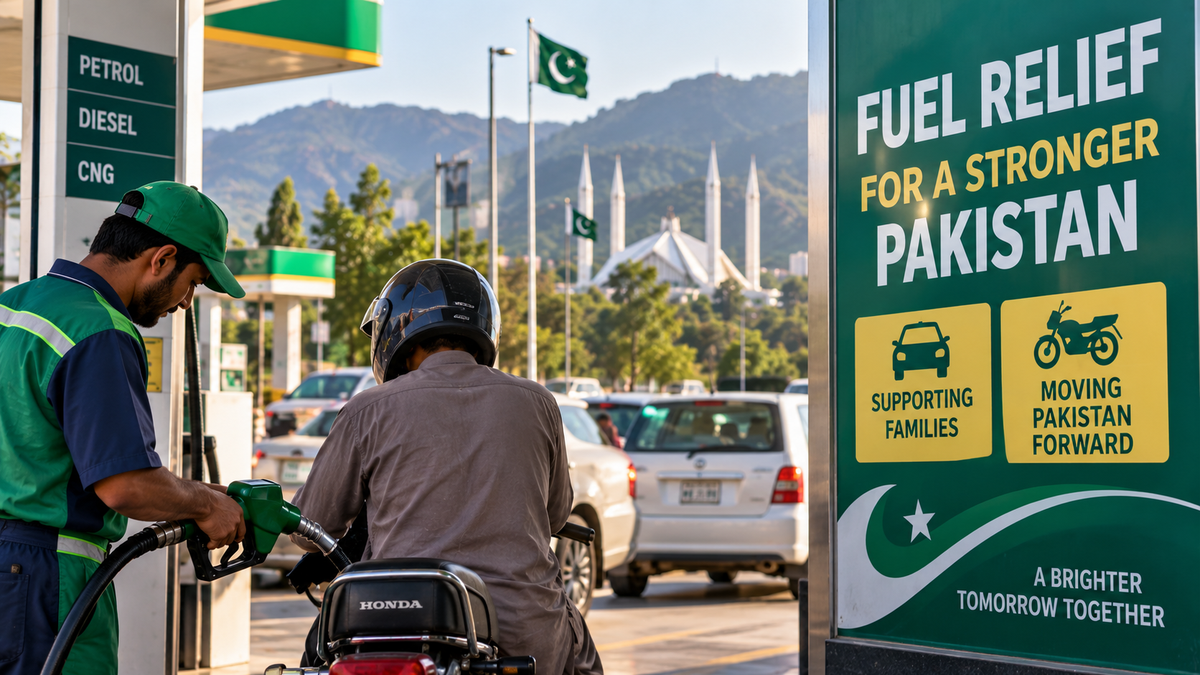
Pakistan has launched a targeted petrol-relief scheme offering eligible motorcycle, rickshaw and small-car users a Rs100-per-litre discount within monthly consumption limits, as the government seeks to cushion households from sharply higher fuel prices.
Under the scheme announced by Prime Minister Shehbaz Sharif, motorcycles, rickshaws, Qingqi rickshaws and other eligible two- and three-wheelers can receive the Rs100-per-litre relief on up to 20 litres of petrol each month. Owners of cars with engine capacities of up to 800cc can receive the same discount on up to 30 litres per month.
Registration began on September 13. The government said implementation in Islamabad would begin during the night between Monday and Tuesday, while the scheme would extend to the rest of Pakistan, Azad Jammu and Kashmir and Gilgit-Baltistan during the night between Wednesday and Thursday.
The Ministry of Information Technology has also outlined an SMS-based registration and token process. Applicants are required to register their identity and vehicle information and obtain a fuel token that can be presented when purchasing subsidised petrol.
What the relief is worth
At the maximum monthly quota, the scheme provides up to Rs2,000 of monthly relief for an eligible two- or three-wheeler user and up to Rs3,000 for an eligible small-car owner.
The programme follows a rapid rise in domestic fuel prices. Petrol was raised to Rs375.82 per litre in the latest revision, while high-speed diesel increased to Rs403.32 per litre. The relief scheme applies to petrol used by the specified vehicle categories; it is not a general Rs100 reduction in the national pump price.
Business Recorder reported that the Petroleum Division has proposed a three-month programme costing about Rs75 billion and covering roughly 11.8 million users. Those financing and coverage estimates form part of the proposed implementation framework and should not be read as evidence that every eligible user will necessarily claim the full allowance.
Why it matters
The structure makes the measure more targeted than an across-the-board fuel-price cut. Motorcycles and small vehicles account for a large share of everyday personal transport, while the monthly caps limit the amount of subsidised fuel available to each registered vehicle.
That targeting is important because a universal reduction in petroleum prices would carry a much larger fiscal cost and would also benefit consumers with larger vehicles and higher fuel consumption.
The scheme’s effectiveness will depend on registration, verification and the ability of filling stations and government systems to process the discount reliably. It will also depend on how the government finances the relief if elevated international oil prices persist.
What happens next
The first operational test will come with the Islamabad rollout, followed by the wider national launch. Registration uptake, verification problems, reimbursement to fuel retailers and the eventual fiscal cost will determine whether the programme delivers the promised relief at scale.
Pakistan Report reporting is based on the Prime Minister’s announcement, government information carried by Radio Pakistan, and September 13–14 reporting by Business Recorder and Geo News.