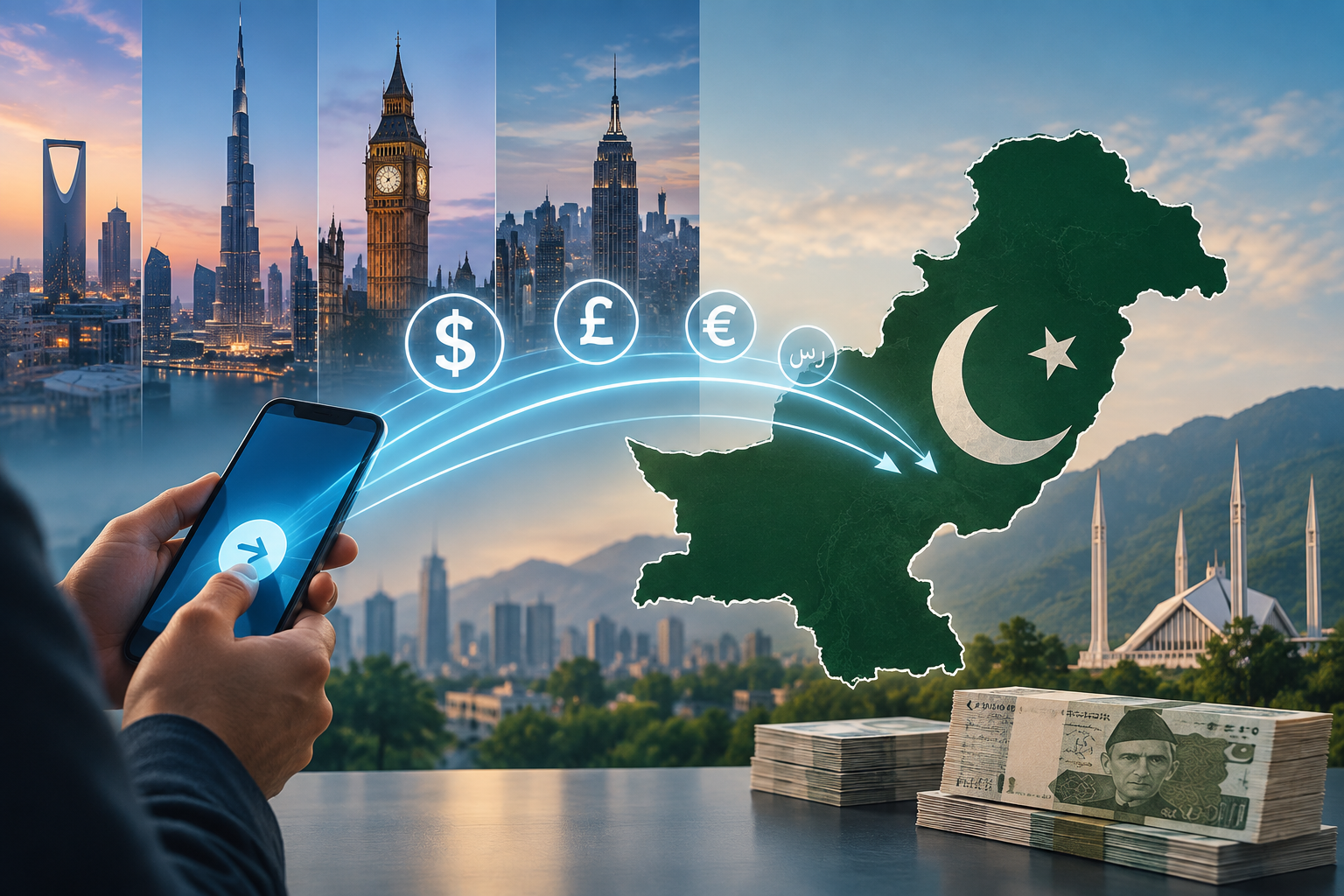
Pakistan received approximately $3.66 billion in workers’ remittances in August 2026, up 16.5% from a year earlier, according to State Bank of Pakistan data.
Inflows were also 0.7% higher than in July, extending a strong start to the 2026–27 financial year. During July and August combined, overseas workers sent around $7.3 billion to Pakistan, an increase of 14.7% from approximately $6.4 billion in the corresponding period last year.
Main sources of remittances
Saudi Arabia remained the largest source in August, accounting for about $873.5 million. The United Arab Emirates contributed approximately $749.8 million, followed by the United Kingdom with $563.7 million and the United States with $308.9 million.
These figures show the importance of both Gulf labour markets and Pakistani communities in Western countries.
Why the inflows matter
Remittances support households receiving money from relatives working overseas. Families may use these funds for food, education, healthcare, housing and other expenses.
They also provide foreign currency to Pakistan’s economy. Unlike government borrowing, workers’ remittances do not create a repayment obligation for the state. Strong inflows can therefore help the country finance imports and ease pressure on its external payments position.
However, remittance growth can change from month to month. Employment conditions abroad, exchange-rate incentives and the use of formal transfer channels all influence reported flows.
Pakistan’s reliance on Gulf countries means economic conditions in Saudi Arabia and the UAE remain especially important. Changes in regional business activity or overseas employment could eventually affect transfers.
Outlook for FY27
The first two months provide an encouraging signal, but they are not enough to predict remittances for the full year. Future State Bank releases will show whether the pace continues as Pakistan manages its import bill and foreign debt payments.
For now, the August data indicate that overseas Pakistanis remain a major source of financial support for both their families and the wider economy.